


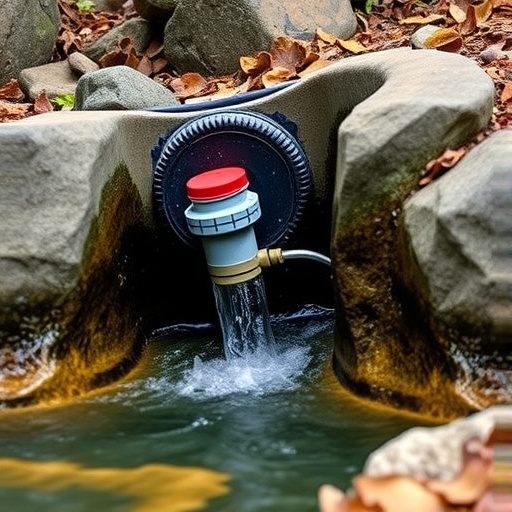
In a groundbreaking study published in the Environmental Science and Pollution Research, researchers from Brazil have unraveled new insights into the efficiency of low-rate trickling filters within wastewater treatment plants (WWTPs). These systems, often overshadowed by more technologically advanced treatment options, have shown immense potential in addressing environmental pollution while minimizing operational costs. The research, spearheaded by de Oliveira-Avellar and colleagues, focuses on a full-scale WWTP located in southern Brazil, providing critical data on the interplay between natural ventilation and trickling filter effectiveness.
Trickling filters, a biologically-based water treatment technology, utilize a bed of media to support the growth of microorganisms that degrade organic matter in wastewater. Despite their simplicity, they have been largely underutilized in modern wastewater treatment strategies. However, as environmental concerns rise and operational expenses climb, researchers are revisiting this age-old technology. This study emphasizes a targeted investigation of trickling filters’ performance under real-world conditions, a vital step in understanding their viability as a sustainable solution.
Natural ventilation plays a crucial role in enhancing the aerobic processes within trickling filters. The study identifies that adequate airflow is essential for optimizing microbial activity, which directly impacts the breakdown of pollutants. The researchers implemented extensive monitoring systems to assess air quality and flow rates alongside basin conditions. The coupling of these parameters allowed a comprehensive evaluation of how ventilation affects overall treatment efficiency, a relationship previously under-explored in the academic literature.
The research team employed a variety of diagnostic tools, including gas chromatography and spectrometry, to quantify the types of gases emitted and capture data on the biological activity within the filters. Such detailed analysis provides unprecedented insight into the dynamics of chemical transformations during wastewater treatment. The outcomes revealed that enhancing air circulation within the trickling filters significantly improved organic matter removal rates while simultaneously decreasing the production of malodorous compounds.
Another exciting aspect of the study is the cost-effectiveness associated with low-rate trickling filters. Traditional large-scale treatment plants typically require substantial investment in both infrastructure and energy consumption. In contrast, the findings suggest that a low-rate trickling filter combined with natural ventilation systems could offer a significantly cheaper alternative while still achieving desirable treatment outcomes. This insight is particularly relevant for developing countries, where budgeting constraints often impede the implementation of advanced technologies.
Moreover, the implications of this study extend beyond operational efficiencies; it opens a pathway for implementing more environmentally friendly practices in wastewater management. With the global push toward sustainability, the findings advocate for a reevaluation of existing strategies in favor of solutions that prioritize eco-friendliness while remaining effective. By harnessing natural processes, the need for chemical additives and intensive mechanical processes can be minimized.
The performance metrics gathered through the extensive data analysis revealed varying degrees of pollutant removal efficiency across different climatic conditions. The researchers found that locales experiencing hotter, drier climates benefitted more from natural ventilation strategies than regions with high humidity. These discoveries prompt considerations for scalable designs that can adapt to diverse environmental settings, making them even more appealing for widespread adoption.
As part of their conclusions, the researchers underscore the importance of tailored approaches for optimizing treatment plants. Not all locations will yield the same results with identical systems. The study suggests that by integrating environmental data with technological frameworks, operators can strategize maintenance schedules, adjust operational parameters, and ultimately enhance the overall treatment efficacy.
While the study presents strong evidence in favor of the low-rate trickling filter approach, it also recognizes the challenges that persist. Maintenance of the media within the filters and ensuring adequate microbial populations remain key considerations. Addressing these challenges will be essential for fostering trust among stakeholders inclined to adopt this method. Nonetheless, the researchers posit that promising results pave the way for broader recognition and application in the field.
In addition to its significant environmental contributions, this research resonates with the current discourse on climate change and resource scarcity. As water resources become increasingly strained worldwide, innovative and cost-effective solutions must gain traction. By presenting the findings from this full-scale WWTP, de Oliveira-Avellar and the team not only provoke thought but also inspire action toward renewing interest in low-impact treatment techniques.
The study showcases the synergy between traditional methods and modern scientific inquiry, highlighting how age-old practices can be reimagined and optimized. This methodology aligns with contemporary scientific paradigms that advocate for the mixing of established technologies with fresh insights. It emphasizes the need for constant reevaluation of our approaches to environmental management.
Furthermore, this research opens the door for future explorations into the optimization of wastewater treatment technologies. Given its findings can be applied across various contexts, the hope is that further investigation and subsequent innovations in the field will emerge, driving the trend toward more sustainable ecological practices.
Ultimately, as water scarcity and pollution remain pressing global challenges, studies like this serve as a clarion call for innovation in wastewater management. By advocating for a renaissance in low-rate trickling filters with natural ventilation, de Oliveira-Avellar et al. have taken a significant step towards a more sustainable and cost-effective future in environmental science and pollution control. The findings not only illuminate possibilities for existing WWTP operators but also set a precedent for new constructions that aim for eco-sustainability while tarnishing pollution’s grip on the environment.
This crucial research underscores the potential of integrating simplicity and effectiveness within wastewater treatment strategies, aligning them with the larger goals of reducing environmental footprints and ensuring water quality. It is now up to policymakers and environmental engineers to heed this message and reconsider the framework of modern wastewater treatment, embracing the future with a more innovative, eco-conscious approach.
Cite Scienmag News
Violet Maxwell. (November 21, 2025). Diagnosing Low-Rate Trickling Filters in WWTPs. Scienmag. https://scienmag.com/diagnosing-low-rate-trickling-filters-in-wwtps/
Violet Maxwell. "Diagnosing Low-Rate Trickling Filters in WWTPs." Scienmag, 21 November 2025, https://scienmag.com/diagnosing-low-rate-trickling-filters-in-wwtps/. Accessed 4 September 2026.
Violet Maxwell. "Diagnosing Low-Rate Trickling Filters in WWTPs." Scienmag. November 21, 2025. https://scienmag.com/diagnosing-low-rate-trickling-filters-in-wwtps/


