


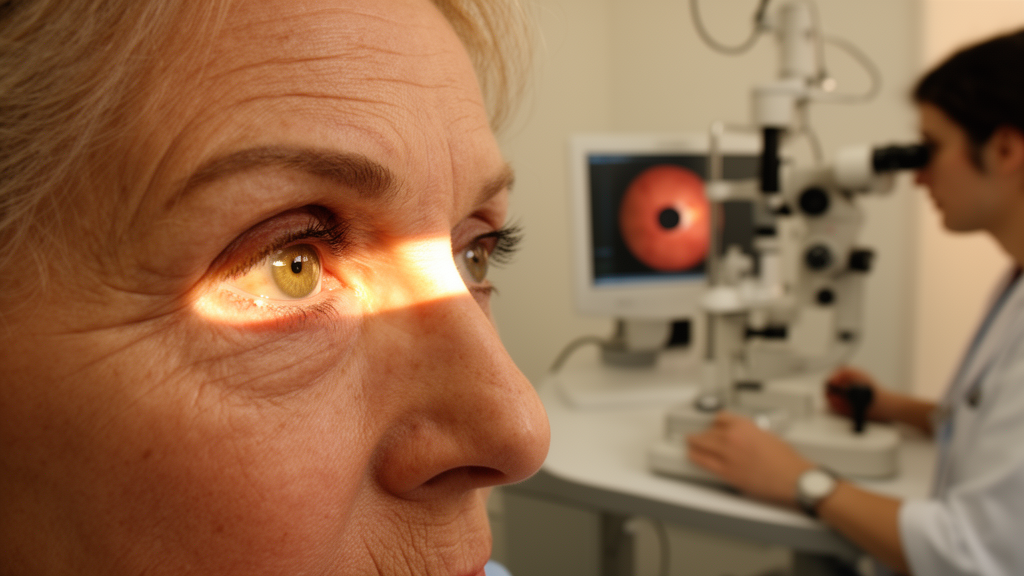
The human retina has long been dismissed as little more than a window onto the back of the eye, a convenient place for ophthalmologists to peer at blood vessels. But a sweeping new analysis suggests it may also function as something far more consequential: a visible outpost of the aging brain, one whose deterioration could foreshadow dementia years before the first memory lapses appear. In a systematic review and meta-analysis published in Frontiers in Endocrinology, a team of researchers led by Omar Subih of Alfaisal University in Riyadh pooled data from fourteen observational studies encompassing nearly 2.9 million people with diabetes and found that those with diabetic retinopathy faced a strikingly elevated long-term risk of developing dementia.
The finding is all the more compelling because it emerged from a statistical landscape riddled with contradiction. When the researchers combined crude, cross-sectional comparisons of cognitive impairment between patients with and without retinopathy, the association essentially vanished, yielding a pooled odds ratio of 1.07 with a confidence interval that comfortably included the null. Yet when they turned to longitudinal studies that tracked incident dementia over follow-up periods ranging from roughly four to nearly sixteen years, a different picture emerged: diabetic retinopathy was associated with a 55 percent higher incidence of dementia, with a hazard ratio of 1.55 and a p-value of 0.001. The temporal distinction, the authors argue, is the key. Retinopathy may not simply coexist with cognitive decline; it may precede it, functioning as a prognostic marker for future deterioration.
That interpretation rests on a conceptual shift that has been gathering momentum in ophthalmology and neuroscience alike. Diabetic retinopathy was once classified purely as a microvascular complication, the consequence of chronically elevated glucose damaging the delicate capillaries of the retina. But imaging and electrophysiological studies have revealed that the disease is also neurodegenerative. Inner retinal thinning, depletion of retinal ganglion cells, reactive gliosis, and functional deficits measurable by electroretinogram all appear before clinically detectable microvascular lesions. In other words, the diabetic eye begins to lose neurons before it begins to leak. Early impairment of the neurovascular unit, evidenced by diminished vasomotor responses to hyperoxic and flickering light stimuli, mirrors the neurovascular dysfunction observed in cerebral pathologies such as stroke and Alzheimer’s disease.
The parallels extend deep into the brain itself. Neuroimaging studies have shown that type 2 diabetes is associated with brain atrophy, particularly in the hippocampus and temporal lobe, along with a higher burden of small infarcts and white matter hyperintensities. Functional imaging reveals disrupted neural signaling in regions responsible for emotion and cognition, including the frontal lobe and amygdala, even in the early stages of cognitive decline. Against this backdrop, the retina, which shares its embryological origin with the cerebral blood barriers, becomes a plausible sentinel: accessible, photographable, and structurally akin to the tissue it mirrors.
The mechanistic hypotheses underpinning this link are as varied as they are tantalizing. Hyperglycemia-driven endothelial dysfunction, oxidative stress, inflammation, vascular endothelial growth factor signaling, and the accumulation of advanced glycation end products have all been proposed as processes that damage both retinal and cerebral neurovascular tissues. Elevated serum levels of advanced glycation end products have been documented in diabetic patients with mild cognitive impairment, and their receptors, once engaged, activate nuclear factor kappa B in neurovascular tissues of both the retina and the brain, amplifying oxidative stress and inflammation. A separate line of reasoning implicates the hyperinsulinemic state of early type 2 diabetes: high insulin levels consume insulin-degrading enzyme, the very enzyme responsible for clearing amyloid-beta, potentially accelerating the formation of the senile plaques that define Alzheimer’s pathology.
Perhaps the most intriguing hypothesis concerns tau. Glycogen synthase kinase 3 beta, an enzyme whose activity is heightened in diabetes, phosphorylates tau protein, and in patients with diabetic retinopathy this hyperphosphorylated tau contributes to synaptic degeneration in retinal ganglion cells before microvascular changes become visible. The same tau pathology, aggregated into neurofibrillary tangles, is a hallmark of Alzheimer’s disease in the brain. If retinal neurodegeneration truly precedes microvascular damage in the diabetic eye, as several studies suggest, then the retina may be offering clinicians a live preview of processes unfolding in the cerebral cortex.
Yet the new meta-analysis is careful to temper enthusiasm with statistical humility. The longitudinal synthesis, while statistically significant, carried an I-squared of 97.8 percent, indicating that nearly all of the variability in effect estimates across studies was attributable to heterogeneity rather than chance. The 95 percent prediction interval, spanning 0.65 to 3.68, crossed the null value, meaning that the magnitude and even the direction of the association could differ substantially in future settings. A leave-one-out sensitivity analysis confirmed that no single study drove the result, with pooled estimates ranging from 1.36 to 1.66 depending on which cohort was excluded, but the underlying diversity of populations, retinopathy definitions, dementia ascertainment methods, and adjustment strategies remains formidable.
The subtype findings are equally unsettled. Some large population-based studies, including the Atherosclerosis Risk in Communities cohort and the Cardiovascular Health Study, found that retinopathy was associated with vascular or cerebrovascular-related dementia but not with Alzheimer’s disease, a pattern consistent with the small-vessel-disease hypothesis, which holds that diabetic retinopathy is a visible marker of systemic microangiopathy affecting end organs including the brain. Conversely, two nationwide Korean cohorts reported significant associations with both Alzheimer’s disease and vascular dementia, with comparable effect sizes across subtypes. Because definitions, populations, and analytical models differed so widely, the authors declined to pool these subtype estimates, leaving the question of mechanism deliberately open.
The limitations of the evidence base are acknowledged candidly by the review team. All fourteen included studies were observational, meaning that residual and unmeasured confounding cannot be excluded, and the covariates adjusted for varied substantially from study to study. Only one study specifically evaluated type 1 diabetes, so the findings predominantly reflect type 2 disease. Inconsistent severity categories prevented a reliable dose-response analysis, and although the largest and most recent cohort, a 2025 South Korean study of more than 784,000 people, reported a hazard ratio of 2.74 for dementia among those with diabetic macular retinopathy, the pooled estimate is heavily influenced by that single outlier. Administrative coding and medical-record ascertainment in several studies may have introduced misclassification of both exposure and outcome, and the restriction to English-language full-text publications may have introduced language and publication biases that could not be formally assessed.
What the analysis does establish, with reasonable confidence, is that diabetic retinopathy deserves attention not merely as an ocular complication but as a potential systemic warning sign. The authors are explicit that the evidence does not establish causality, nor does it demonstrate that routine cognitive screening based solely on retinopathy status improves clinical outcomes. But they argue that future investigations should employ multimodal biomarker approaches, combining amyloid and tau imaging, vascular MRI markers, and quantitative retinal microvascular assessment, to disentangle the relative contributions of vascular and neurodegenerative pathology. If the retina truly is the brain’s most accessible mirror, then the humble eye examination, already a cornerstone of diabetes care, may one day double as an early-warning system for the mind. For now, the message is one of cautious vigilance: the eyes may indeed hold clues to cognitive futures, but the science is still learning how to read them.
Subject of Research: The association between diabetic retinopathy and cognitive impairment or dementia in patients with diabetes mellitus
Article Title: The association between diabetic retinopathy and cognitive impairment in patients with diabetes mellitus: a systematic review and meta-analysis
Article References: Subih, O., Al Mustafa, W. A., AlOmem, T. A., Alrasheed, A. M., Altunaiji, M. S., Alhasan, A. A. M., Alshehri, A. I. A., Alshahrani, B. M., Alharbi, R. J. M., Alshatti, A. M., Al Mutairi, M. E., Alkhaldi, S. M., & Bifari, I. N. (2026). The association between diabetic retinopathy and cognitive impairment in patients with diabetes mellitus: a systematic review and meta-analysis. Frontiers in Endocrinology, 17, Article 1881602. https://doi.org/10.3389/fendo.2026.1881602
Image Credits: AI Generated
DOI: 10.3389/fendo.2026.1881602
Keywords: diabetic retinopathy, dementia, cognitive impairment, Alzheimer's disease, vascular dementia, meta-analysis, systematic review, diabetes mellitus, neurodegeneration, retina, small vessel disease, brain imaging
Cite Scienmag News
Cassandra Pierce. (October 15, 2026). Diabetic Eye Damage May Signal Dementia Risk Years Before Memory Fails, Major Meta-Analysis Finds. Scienmag. https://scienmag.com/diabetic-eye-damage-may-signal-dementia-risk-years-before-memory-fails-major-meta-analysis-finds/
Cassandra Pierce. "Diabetic Eye Damage May Signal Dementia Risk Years Before Memory Fails, Major Meta-Analysis Finds." Scienmag, 15 October 2026, https://scienmag.com/diabetic-eye-damage-may-signal-dementia-risk-years-before-memory-fails-major-meta-analysis-finds/. Accessed 15 October 2026.
Cassandra Pierce. "Diabetic Eye Damage May Signal Dementia Risk Years Before Memory Fails, Major Meta-Analysis Finds." Scienmag. October 15, 2026. https://scienmag.com/diabetic-eye-damage-may-signal-dementia-risk-years-before-memory-fails-major-meta-analysis-finds/


