


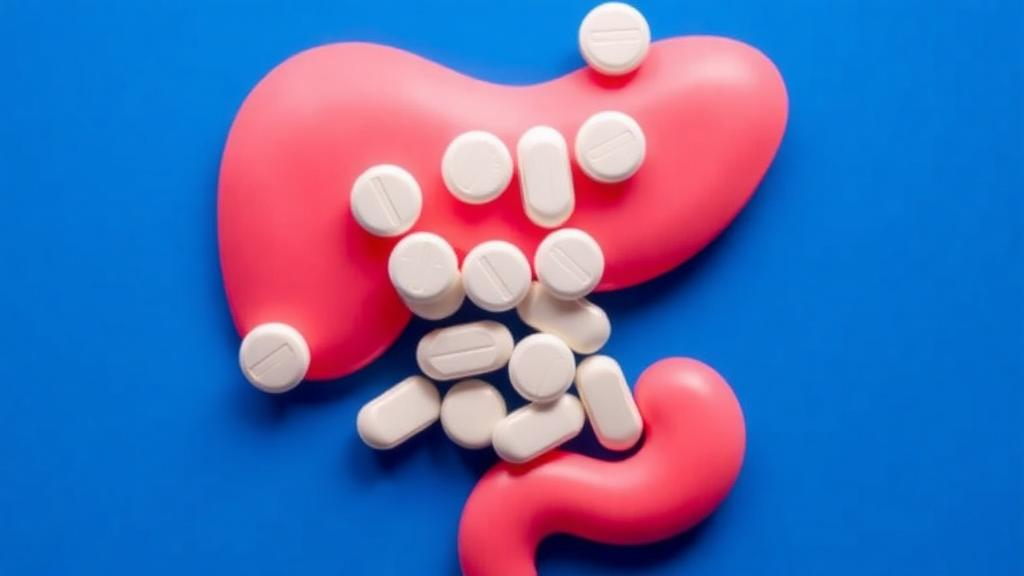
Metformin, the world’s most widely prescribed diabetes medication, may do far more than lower blood sugar. A new study published in the Journal of Translational Medicine suggests that the cheap, decades-old drug can blunt the devastating inflammatory injury that makes severe acute pancreatitis so much more dangerous in people with obesity. The research, led by Xian-Wen Guo and colleagues at the First Affiliated Hospital of Xiamen University, points to an unexpected mechanism: metformin appears to work partly by reshaping the gut microbiota and boosting a microbe-linked metabolite that coaxes fat-tissue immune cells into a healing, anti-inflammatory state. The finding adds a striking new entry to the growing list of metformin’s possible benefits and hints at a gut-fat-immune axis that could be targeted in one of medicine’s most feared abdominal emergencies.
Acute pancreatitis is a sudden inflammation of the pancreas that ranges from a brief, self-limiting illness to a catastrophic, multi-organ failure. Severe acute pancreatitis, or SAP, carries a substantial risk of death, and clinicians have long observed that patients with obesity fare markedly worse. Excess white adipose tissue is not a passive energy store; it is metabolically active and densely populated with macrophages, the scavenger immune cells that can either fuel inflammation or resolve it. In obesity, the fat depots surrounding and infiltrating the pancreas become a reservoir of inflammatory signaling, and leaked fatty acids can poison pancreatic tissue directly. Understanding why obesity amplifies pancreatic injury, and how to interrupt that process, has become a pressing question in gastroenterology and intensive care.
The Xiamen team approached the problem from an unusual angle: the microbial communities living in the mouth and the gut. The researchers first mined public microbiome datasets from patients with acute pancreatitis, comparing those with obesity to those without. The comparison revealed that the oral microbiota of obese patients with pancreatitis was distinctly enriched, with computational functional prediction pointing to heightened activity in ubiquinol biosynthesis and lipid-related metabolic pathways. In other words, the microbial ecosystems of obese and non-obese patients were not just different in composition but potentially different in what they were doing biochemically, setting the stage for the team’s animal experiments.
To test causality, the researchers turned to a mouse model of diet-induced obesity. One group of mice was fed a high-fat diet until they became obese, while controls ate a normal diet; both were then induced to develop severe acute pancreatitis. The results were stark. Obese mice suffered significantly worse pancreatic and lung injury than their lean counterparts, confirming that obesity actively aggravates the disease rather than merely correlating with it. Deep sequencing of fecal samples showed that obesity also reshaped the gut microbiota, reducing its alpha diversity, a standard measure of ecological richness that is frequently lower in inflammatory and metabolic disease. Meanwhile, metabolomic profiling of epididymal white adipose tissue revealed that the metabolite landscape inside the fat itself had shifted dramatically in obese animals with pancreatitis.
The pivotal step came when the team integrated the two datasets. Correlation analyses linking the gut microbiome to the adipose tissue metabolome uncovered meaningful associations between specific microbial patterns and specific fat-derived metabolites, suggesting that gut microbes and fat chemistry are in conversation during severe pancreatitis. This gut-fat axis, the researchers reasoned, might be a lever that could be pulled therapeutically. Enter metformin. When obese mice with severe pancreatitis were treated with the drug, the consequences were unmistakable: pancreatic and lung injury were reduced, and the animals’ inflammatory burden eased compared with untreated obese controls.
How was a diabetes drug calming a pancreatic storm? The answer, at least in part, lay in the immune cells embedded in fat. Using flow cytometry, the team showed that metformin promoted M2 polarization of adipose tissue macrophages, shifting these cells from a pro-inflammatory, tissue-damaging phenotype toward an anti-inflammatory, repair-oriented one. Immunohistochemistry backed this up at the tissue level: levels of interleukin-10, a signature anti-inflammatory cytokine produced by M2 macrophages, rose in both the pancreas and the white adipose tissue of treated animals. In effect, metformin appeared to recruit the fat’s own immune residents to the side of resolution rather than destruction.
The metabolomic data offered a concrete candidate for the messenger. Metformin treatment significantly altered the composition of the gut microbiota, though notably it did not restore alpha diversity, and it modified obesity-associated changes in fat metabolites that were tied to the microbiome. Two metabolites stood out as upregulated: hexanoylcarnitine, an acylcarnitine with microbial associations, and isomaltose, a disaccharide sugar. To determine whether hexanoylcarnitine was merely a bystander or an active player, the researchers moved to the culture dish. They modeled pancreatitis-like conditions in RAW264.7 macrophage cells by treating them with lipopolysaccharide, a bacterial toxin, together with palmitic acid, a saturated fatty acid abundant in obese adipose tissue. When they then added L-hexanoylcarnitine to these stressed cells, the macrophages shifted toward the M2 phenotype, showing increased expression of Pparg mRNA, a master transcriptional regulator of M2 identity, and elevated levels of CD206, a canonical M2 surface protein.
That single experiment ties the whole story together into a coherent, if still preliminary, mechanistic chain. Obesity disrupts the gut microbiota and rewrites the metabolite profile of white adipose tissue, worsening pancreatic and lung injury in severe pancreatitis. Metformin intervenes by further remodeling the microbial community, which raises levels of microbe-associated hexanoylcarnitine, and that metabolite in turn pushes adipose tissue macrophages into their anti-inflammatory M2 state, boosting interleukin-10 and damping tissue damage. It is a striking illustration of how a drug’s benefits can travel through an ecosystem rather than a single molecular target, and it reframes the fat depot not just as a victim of inflammation but as a modifiable immune organ.
The caveats deserve equal emphasis. The mouse findings come from a diet-induced model, and the human data were limited to reanalyzed public microbiome datasets rather than a prospective clinical trial of metformin in obese patients with pancreatitis. Macrophage behavior in cultured RAW264.7 cells, while informative, does not capture the full complexity of living adipose tissue. The authors are transparent that their work identifies a potential mechanism, not a validated therapy, and metformin is not currently an established treatment for acute pancreatitis in any patient group. Clinical translation would require carefully designed trials in obese patients at high risk of severe disease, with attention to dosing, timing, and the gastrointestinal tolerability issues that can complicate metformin use in acutely ill people.
Even so, the study’s implications are hard to ignore. Metformin is inexpensive, generically available, and already taken by hundreds of millions of people worldwide, with a long safety record and a growing portfolio of proposed anti-inflammatory effects. If the gut-microbiota-to-adipose-macrophage pathway described here holds up in humans, it could open a rational route to protecting a vulnerable patient population from one of pancreatology’s worst outcomes, using a drug that costs pennies. It also adds to a broader shift in biomedical thinking: the recognition that metabolites produced in dialogue with our microbial residents can act as chemical instructions for the immune system. In this study, one such instruction, hexanoylcarnitine, told fat-resident macrophages to stand down. For patients with obesity facing severe acute pancreatitis, learning to send that message deliberately could one day make the difference between recovery and catastrophe.
Subject of Research: Metformin, gut microbiota-derived metabolites, and adipose tissue macrophage polarization in obesity-related severe acute pancreatitis
Article Title: Metformin ameliorates injury in obesity-related severe acute pancreatitis and modulates a gut microbiota-associated metabolite that promotes M2 polarization of adipose tissue macrophages
Article References: Guo, X.-W., Sui, Y.-C., Zhang, J.-Y., Hao, Y., Li, J., & Sheng, L.-P. (2026). Metformin ameliorates injury in obesity-related severe acute pancreatitis and modulates a gut microbiota-associated metabolite that promotes M2 polarization of adipose tissue macrophages. Journal of Translational Medicine. https://doi.org/10.1186/s12967-026-08993-3
Image Credits: AI Generated
DOI: 10.1186/s12967-026-08993-3
Keywords: metformin, severe acute pancreatitis, obesity, gut microbiota, adipose tissue macrophages, M2 polarization, hexanoylcarnitine, metabolomics, interleukin-10, white adipose tissue, inflammation, Journal of Translational Medicine
Cite Scienmag News
Daisy Hatcher. (October 2, 2026). Diabetes Drug Metformin Shows Promise Against Deadly Pancreatitis in Obesity, Gut Microbe Study Finds. Scienmag. https://scienmag.com/diabetes-drug-metformin-shows-promise-against-deadly-pancreatitis-in-obesity-gut-microbe-study-finds/
Daisy Hatcher. "Diabetes Drug Metformin Shows Promise Against Deadly Pancreatitis in Obesity, Gut Microbe Study Finds." Scienmag, 2 October 2026, https://scienmag.com/diabetes-drug-metformin-shows-promise-against-deadly-pancreatitis-in-obesity-gut-microbe-study-finds/. Accessed 4 October 2026.
Daisy Hatcher. "Diabetes Drug Metformin Shows Promise Against Deadly Pancreatitis in Obesity, Gut Microbe Study Finds." Scienmag. October 2, 2026. https://scienmag.com/diabetes-drug-metformin-shows-promise-against-deadly-pancreatitis-in-obesity-gut-microbe-study-finds/


