


When oil spills into the ocean, the damage begins within minutes. Lighter hydrocarbons evaporate, the slick spreads into a thin rainbow sheen, waves whip the remaining oil into a water-in-oil emulsion, and microbes start chewing through the hydrocarbon molecules. A new comprehensive review published in Environmental Science and Pollution Research by Mrinmoy Dhar, Amiya Ojha, Palash Dey and Deeplina Das brings together decades of oil spill research into a single framework, combining historical case studies, bibliometric analysis, oil behavior science, detection technologies and remediation strategies. Its central conclusion is striking: bioremediation emerges as the most environmentally sustainable and cost-effective way to clean spilled oil, while remote sensing paired with machine learning offers the greatest promise for finding and tracking slicks in the first place.
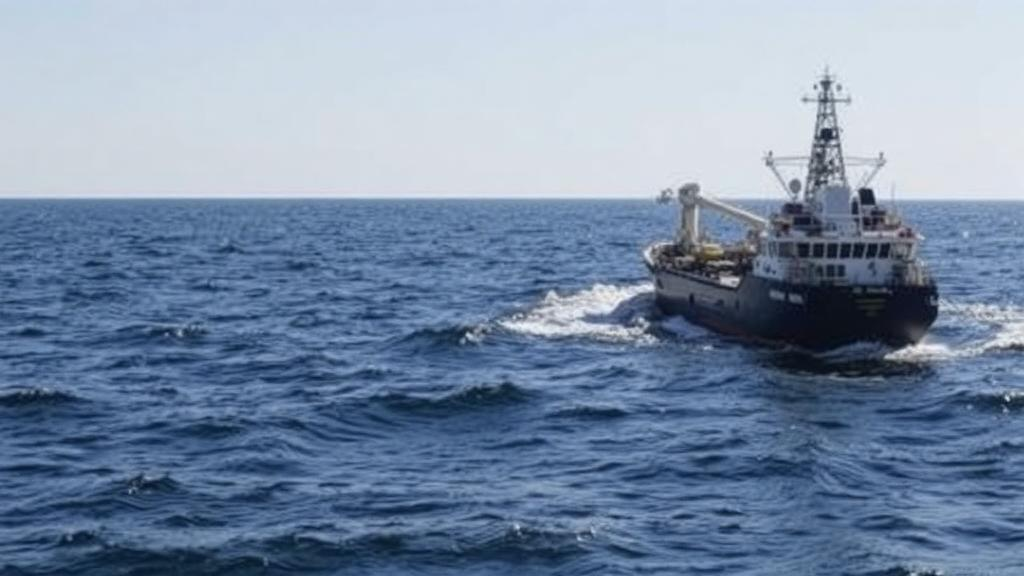
The review’s authors, based at ICFAI University Tripura and the National Institute of Technology Agartala in India, ground their analysis in the hard lessons of history. Catastrophes such as the Exxon Valdez, Deepwater Horizon and Hebei Spirit spills have left long-term ecological fingerprints that researchers are still documenting today. Comparative studies cited in the review show that spilled oil can persist in sediments and shorelines for decades, affecting everything from seabird populations to mangrove forests. The 1990-91 Gulf War, for example, left Iranian mangroves degraded for years, while the Prestige disaster off Galicia reshaped both coastal ecosystems and regional politics. Even relatively recent incidents, such as a sanctioned tanker spilling oil in the Baltic Sea near Gotland, demonstrate that the threat has not receded.
Understanding why oil spills are so damaging requires understanding how oil behaves once it hits water. The review details the physicochemical properties of spilled crude, including density, viscosity and the composition of hydrocarbon fractions, and explains how weathering processes transform the slick over time. Evaporation strips the lightest components, leaving behind denser residues that can sink or persist. Emulsification, driven by wave action, can multiply the volume of the pollutant several-fold. Oil also interacts with suspended sediments to form oil-particle aggregates, and recent work shows that marine bacteria play a surprising role in the formation and migration of these aggregates, potentially accelerating the natural removal of oil from the water column. Polycyclic aromatic hydrocarbons, the most toxic fraction, bioaccumulate and travel through marine food webs, reaching coral reef ecosystems and, ultimately, human consumers of seafood.
Detecting a slick quickly and accurately is the first battle, and the review devotes extensive attention to the technology involved. Synthetic aperture radar remains the workhorse of satellite-based oil spill detection because oil dampens the small wind-driven ripples on the sea surface, creating dark patches that stand out against the brighter ocean. Sensors operating in the C-band, such as those on Sentinel-1A, have been used to map spills along the east coast of India, while dual-polarized Radarsat-2 and TerraSAR-X imagery can help distinguish mineral oil slicks from look-alike ocean phenomena. Yet radar has well-known pitfalls: low-wind areas, algal blooms and rain cells can all mimic oil, producing false positives that complicate response decisions.
Optical and hyperspectral remote sensing complement radar by characterizing what the slick actually is. Hyperspectral sensors can identify different types of spilled oil and, in the shortwave infrared domain, estimate slick thickness and emulsion content. Thermal infrared imaging adds another layer of discrimination, and recent research combines hyperspectral data with thermal infrared to improve classification accuracy. For submerged oil, which is far harder to detect than floating slicks, high-spectral polarization detection based on multi-dimensional information represents a cutting-edge frontier. Laser-induced fluorescence, deployed from ships, aircraft and even unmanned underwater vehicles, exploits the fact that petroleum compounds fluoresce when excited by ultraviolet light, allowing responders to map oil that other sensors miss.
The review also highlights how machine learning is transforming spill detection. Algorithms trained on satellite imagery can classify slicks, estimate their thickness and predict their drift, dramatically improving the accuracy and efficiency of response operations. Drone-based fluorosensors and unmanned surface vehicles carrying laser fluorosensors extend monitoring to scales and conditions that crewed aircraft cannot safely reach. In situ sensors are advancing too: dual-modality capacitive-ultrasonic devices can measure floating oil thickness directly, capacitance arrays can detect small leaks from underground tanks, and fiber-optic hydrophones track acoustic signatures in the water column. The authors argue that integrating these active and passive technologies into unified monitoring systems, enhanced by artificial intelligence, should be a research priority.
Once oil is found, the cleanup toolbox offers several options, each with trade-offs. Physical containment with floating booms is the classic first response, but booms perform poorly under strong waves and currents, and structural analysis shows their effectiveness depends heavily on hydrodynamic conditions. Skimmers, from weir-type designs to sponge-covered drums with advanced oleophilic coatings, recover oil mechanically, while sorbents, including hydrophobic chitosan-based materials and natural by-products, soak up slicks at small scales. Chemical dispersants break slicks into droplets that microbes can degrade faster, though their effectiveness in stimulating biodegradation depends on careful formulation and application. In situ burning can remove large volumes of oil quickly, and offshore field experiments have quantified both its burn efficiency and its emissions, but the technique raises air quality concerns and is weather-dependent.
Against these options, the review finds bioremediation to be the most sustainable and economical path. Hydrocarbon-degrading bacteria, including metabolically versatile strains such as Rhodococcus erythropolis isolated from spill-affected lakes, can be deployed as native or engineered consortia, sometimes immobilized on carriers like rice husk biochar to boost their performance in seawater. Biosurfactants produced by microbes such as Pseudomonas cepacia help disperse oil with low ecotoxicity. Fungi contribute through mycoremediation, with species like Trametes, Ganoderma and Trichoderma breaking down stubborn petroleum compounds in soils and sediments, while microalgae such as Nannochloropsis oculata and Chlorella vulgaris can degrade dissolved oil in coastal waters. Plant-based approaches, from duckweed in constructed wetlands to mangroves and salt-marsh grasses, round out the biological toolkit.
Looking forward, the authors identify clear research gaps. They call for integrated monitoring systems that fuse satellite, aerial and in situ data, for environmentally sustainable remediation technologies that avoid trading one form of pollution for another, and for predictive modeling tools that can forecast spill trajectories and ecological consequences before responders arrive on scene. They also connect the agenda to global policy, noting that better oil spill management directly supports United Nations Sustainable Development Goals 6 on clean water and sanitation and 14 on life below water. The bibliometric analysis embedded in the review maps publication trends and emerging themes, giving researchers a roadmap of where the field is heading and where investment is most needed.
The message for policymakers and the public is that oil spill response is entering a data-driven, biology-powered era. Satellites and artificial intelligence can now spot a slick within hours, and carefully managed microbial communities can finish the job that booms and skimmers begin. No single technology is sufficient on its own, but the review makes a compelling case that combining smart detection with sustainable bioremediation offers the best chance of protecting marine and freshwater ecosystems from one of humanity’s most persistent forms of pollution.
Subject of Research: Oil spill detection technologies and sustainable remediation strategies in aquatic environments
Article Title: Managing oil spills in aquatic environments: detection techniques and sustainable remediation strategies
Article References: Dhar, M., Ojha, A., Dey, P., & Das, D. (2026). Managing oil spills in aquatic environments: detection techniques and sustainable remediation strategies. Environmental Science and Pollution Research. https://doi.org/10.1007/s11356-026-38257-y
Image Credits: AI Generated
DOI: 10.1007/s11356-026-38257-y
Keywords: oil spills, bioremediation, remote sensing, machine learning, synthetic aperture radar, marine pollution, biosurfactants, mycoremediation, in situ burning, oil spill booms, aquatic pollution, sustainable development goals
Cite Scienmag News
Violet Maxwell. (October 2, 2026). From Satellites to Superbugs: The New Science of Fighting Oil Spills at Sea. Scienmag. https://scienmag.com/from-satellites-to-superbugs-the-new-science-of-fighting-oil-spills-at-sea/
Violet Maxwell. "From Satellites to Superbugs: The New Science of Fighting Oil Spills at Sea." Scienmag, 2 October 2026, https://scienmag.com/from-satellites-to-superbugs-the-new-science-of-fighting-oil-spills-at-sea/. Accessed 4 October 2026.
Violet Maxwell. "From Satellites to Superbugs: The New Science of Fighting Oil Spills at Sea." Scienmag. October 2, 2026. https://scienmag.com/from-satellites-to-superbugs-the-new-science-of-fighting-oil-spills-at-sea/


