

Saturday, October 24, 2026
Science
No Result
View All Result
  • Login
  • HOME
  • SCIENCE NEWS
  • CONTACT US
  • HOME
  • SCIENCE NEWS
  • CONTACT US
No Result
View All Result
Scienmag
No Result
View All Result
Home Science News Medicine

Designer Amphotericin Derivatives Outperform Parent Drug as CFTR Surrogates in Airway Cells

October 24, 2026
in Medicine
Ophelia Keating
By Ophelia Keating Scienmag Editorial Profile - Health Services Research
Reading Time: 3 mins read
0
Designer Amphotericin Derivatives Outperform Parent Drug as CFTR Surrogates in Airway Cells

Designer Amphotericin Derivatives Outperform Parent Drug as CFTR Surrogates in Airway Cells

65
SHARES
587
VIEWS
Share on FacebookShare on Twitter
ADVERTISEMENT

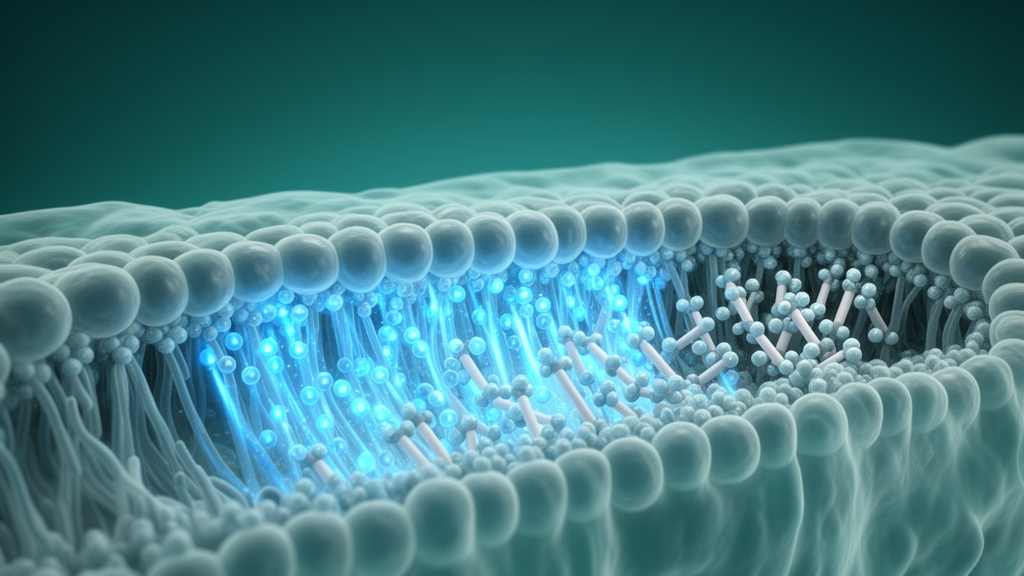
Synthetic derivatives of the ion channel-forming natural product amphotericin B can outperform the parent compound at standing in for the defective anion channel in cystic fibrosis airway epithelia, according to a peer-reviewed study published in Nature Communications. Earlier work had shown that amphotericin B, which inserts into cell membranes and forms ion channels, could serve as a small-molecule surrogate for the cystic fibrosis transmembrane conductance regulator, or CFTR, and restore host defenses in cultured cystic fibrosis airway epithelia. That approach carried two significant limitations, however.

Amphotericin-based channels favor cation permeability, whereas CFTR is fundamentally an anion channel. In addition, the AmB channels lose their capacity to increase the pH of the airway surface liquid in cystic fibrosis airway epithelia at high concentrations. These properties led the team to hypothesize that chemically tuning such channels to favor anion permeability would improve their capacity to restore physiology in disease-relevant model systems.

To test that hypothesis, the researchers synthesized AmB-AA, a derivative of amphotericin B bearing an added positively charged appendage. This structural change produced ion channels with an improved relative permeability to anions. In cultured cystic fibrosis airway epithelia, AmB-AA increased airway surface liquid pH more effectively than amphotericin B, and it maintained that benefit at both low and high concentrations, addressing the concentration-dependent loss of activity seen with the parent compound.

The team then pushed the design further with a second derivative, C2'epiAmB-AA. This molecule was engineered to minimize cholesterol binding, and in doing so it reduced toxicity to cultured cystic fibrosis airway epithelia. Crucially, C2'epiAmB-AA functioned as an effective surrogate for CFTR in primary cultured airway epithelia obtained from people with cystic fibrosis, the disease-relevant model tissue for this line of research.

The findings demonstrate that both the selectivity and the toxicity of a molecular prosthetic can be addressed rationally rather than accepting the properties of a naturally occurring molecule. By adding a positive charge to bias the channel toward anions and further modifying the structure to reduce cholesterol interactions, the researchers improved physiological performance and the toxicity profile in cultured epithelia simultaneously. Important caveats remain.

All results come from laboratory models: cultured airway epithelia, including primary cultures derived from people with cystic fibrosis, not from living patients. Increasing airway surface liquid pH in a culture model is a measured laboratory outcome and a step toward therapy, not a demonstrated clinical benefit. Even with those limits, the study offers a concrete demonstration that molecular prosthetics can be iteratively engineered, in much the way an engineer refines a mechanical prosthesis, to better match the biological function they are meant to replace.

Anion-selective derivatives of amphotericin B now represent a measured improvement over the natural product that started this approach in cystic fibrosis airway models.

Subject of Research: Engineering anion-selective amphotericin B derivatives as molecular prosthetics for the CFTR channel in cystic fibrosis airway epithelia

Article Title: Molecular prosthetics for CFTR designed for anion selectivity outperform amphotericin B in cystic fibrosis airway epithelia

Article References: Marin-Toledo, J. P., Greenan, D. M., Celis, N., Haske, L., Lewandowska, A., Rakowski, C. K., Shastry, S., Gworek, B., Maji, A., Green, K. J., Welsh, M. J., Thornell, I. M., Pogorelov, T. V., & Burke, M. D. (2026). Molecular prosthetics for CFTR designed for anion selectivity outperform amphotericin B in cystic fibrosis airway epithelia. Nature Communications. https://doi.org/10.1038/s41467-026-78819-9

Image Credits: AI Generated

DOI: 10.1038/s41467-026-78819-9

Keywords: cystic fibrosis, CFTR, amphotericin B, molecular prosthetics, ion channels, anion selectivity, airway surface liquid pH, airway epithelia, drug design, cholesterol binding, Nature Communications, Molecular

Cite Scienmag News

Ophelia Keating. (October 24, 2026). Designer Amphotericin Derivatives Outperform Parent Drug as CFTR Surrogates in Airway Cells. Scienmag. https://scienmag.com/designer-amphotericin-derivatives-outperform-parent-drug-as-cftr-surrogates-in-airway-cells/


Ophelia Keating. "Designer Amphotericin Derivatives Outperform Parent Drug as CFTR Surrogates in Airway Cells." Scienmag, 24 October 2026, https://scienmag.com/designer-amphotericin-derivatives-outperform-parent-drug-as-cftr-surrogates-in-airway-cells/. Accessed 24 October 2026.

Ophelia Keating. "Designer Amphotericin Derivatives Outperform Parent Drug as CFTR Surrogates in Airway Cells." Scienmag. October 24, 2026. https://scienmag.com/designer-amphotericin-derivatives-outperform-parent-drug-as-cftr-surrogates-in-airway-cells/

Tags: airway epitheliaairway surface liquid pHairway surface liquid pH regulationamphotericin Bamphotericin B chemical modificationsAmphotericin B derivativesanion selectivityanion-permeable channel designCFTRCFTR channel replacementcholesterol bindingcystic fibrosiscystic fibrosis airway epithelial therapyCystic fibrosis ion channel surrogatesdrug designion channel permeability optimizationion channelsmembrane ion channel engineeringmolecularmolecular prostheticsnatural product derivatives in medicineNature Communications.synthetic ion channel modulatorstargeted drug development for cystic fibrosis
Share26Tweet16
Previous Post

Simple Blood Sugar-and-Fat Score Tracks Severity of Clogged Leg Arteries in Hospitalized Patients

Next Post

Zinc Oxide Nanoparticles Beat Magnesium and Copper Oxides in Dye-Degrading Showdown

Related Posts

VACtívate course boosts vaccination knowledge across 20 Colombian cities
Medicine

VACtívate course boosts vaccination knowledge across 20 Colombian cities

October 24, 2026
Review Maps Emerging Immunotherapy Options in Ovarian Cancer
Medicine

Review Maps Emerging Immunotherapy Options in Ovarian Cancer

October 24, 2026
Depression and Suicidality Most Reported Mental Health Problems in HIV-Positive African Adolescents
Medicine

Depression and Suicidality Most Reported Mental Health Problems in HIV-Positive African Adolescents

October 24, 2026
Lab study finds extremely low salivary transmission of Oropouche virus in Aedes albopictus and Culex quinquefasciatus
Medicine

Lab study finds extremely low salivary transmission of Oropouche virus in Aedes albopictus and Culex quinquefasciatus

October 24, 2026
Headache Patterns May Signal Surgical Success in Drug-Resistant Focal Epilepsy
Medicine

Headache Patterns May Signal Surgical Success in Drug-Resistant Focal Epilepsy

October 24, 2026
Brain rewires energy metabolism to protect memory in late-stage sleeping sickness
Biology

Brain rewires energy metabolism to protect memory in late-stage sleeping sickness

October 24, 2026
Next Post
Zinc Oxide Nanoparticles Beat Magnesium and Copper Oxides in Dye-Degrading Showdown

Zinc Oxide Nanoparticles Beat Magnesium and Copper Oxides in Dye-Degrading Showdown

  • Mothers who receive childcare support from maternal grandparents show more optimized

    Mothers who receive childcare support from maternal grandparents show more parental warmth, finds NTU Singapore study

    27656 shares
    Share 11059 Tweet 6912
  • University of Seville Breaks 120-Year-Old Mystery, Revises a Key Einstein Concept

    1061 shares
    Share 424 Tweet 265
  • Bee body mass, pathogens and local climate influence heat tolerance

    682 shares
    Share 273 Tweet 171
  • Researchers record first-ever images and data of a shark experiencing a boat strike

    546 shares
    Share 218 Tweet 137
  • Groundbreaking Clinical Trial Reveals Lubiprostone Enhances Kidney Function

    531 shares
    Share 212 Tweet 133
Science

Embark on a thrilling journey of discovery with Scienmag.com—your ultimate source for cutting-edge breakthroughs. Immerse yourself in a world where curiosity knows no limits and tomorrow’s possibilities become today’s reality!

RECENT NEWS

  • Zinc Oxide Nanoparticles Beat Magnesium and Copper Oxides in Dye-Degrading Showdown
  • Designer Amphotericin Derivatives Outperform Parent Drug as CFTR Surrogates in Airway Cells
  • Simple Blood Sugar-and-Fat Score Tracks Severity of Clogged Leg Arteries in Hospitalized Patients
  • Poverty, Tradition and Law Converge to Sustain Child Marriage in Iran

Categories

  • Agriculture
  • Anthropology
  • Archaeology
  • Athmospheric
  • Biology
  • Biotechnology
  • Blog
  • Bussines
  • Cancer
  • Chemistry
  • Climate
  • Earth Science
  • Editorial Policy
  • Marine
  • Mathematics
  • Medicine
  • Pediatry
  • Policy
  • Psychology & Psychiatry
  • Science Education
  • Science News
  • Social Science
  • Space
  • Technology and Engineering

Subscribe to Blog via Email

Enter your email address to subscribe to this blog and receive notifications of new posts by email.

Join 5,152 other subscribers

© 2025 Scienmag - Science Magazine

Welcome Back!

Login to your account below

Forgotten Password?

Retrieve your password

Please enter your username or email address to reset your password.

Log In
No Result
View All Result
  • HOME
  • SCIENCE NEWS
  • CONTACT US

© 2025 Scienmag - Science Magazine

Discover more from Science

Subscribe now to keep reading and get access to the full archive.

Continue reading