


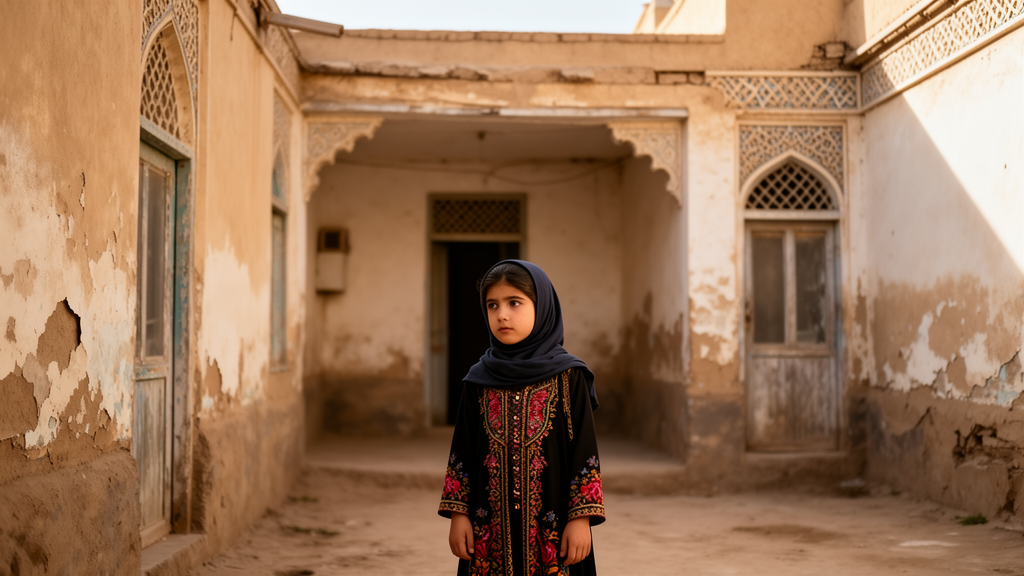
Child marriage in Iran arises from the convergence of three interlocking forces — structural poverty, the reproduction of traditional norms, and legal legitimization through Article 1041 of the Civil Code — according to a critical interpretive synthesis published in BMC Psychology. The review, authored by Osman Mahmoudi, examined 118 scholarly sources spanning quantitative and qualitative studies, jurisprudential-legal texts, historical analyses and realist narrative accounts. Data were analyzed using thematic synthesis and axial coding to identify recurring patterns in the factors that contribute to child marriage and the consequences that follow it.
The synthesis frames child marriage as a phenomenon situated at the intersection of patriarchal structures, poverty and legal ambiguity, resulting in profound physical and psychological trauma among affected women. Rather than treating the practice as the product of a single cause, the review traces how economic deprivation, inherited social expectations and permissive legal provisions reinforce one another, allowing early marriage to persist despite its documented harms.
At the psychological level, the reviewed literature links child marriage to a loss of voice and agency among girls and women, disruption of identity formation, and grief over a lost childhood. These findings emerge from narrative and qualitative accounts in which affected women describe constrained life trajectories shaped by decisions made before they could meaningfully consent. The synthesis characterizes these outcomes as dimensions of disempowerment that accumulate across the life course rather than as isolated incidents of distress.
The legal-religious analysis identifies a clear tension between traditional jurisprudential rulings and contemporary requirements. The review points, for instance, to principles such as the prohibition of harm (lā ḍarar) and rational repugnance, arguing that these jurisprudential concepts underscore the need for legal reform. Article 1041 of the Civil Code, which the synthesis identifies as the provision legitimizing child marriage, is presented as a structural pillar of the phenomenon and as the primary target of the reform agenda the review proposes.
An examination of coping strategies revealed that passive submission and constrained adaptation predominate among women affected by child marriage. The synthesis interprets these patterns as reflections of the limited options available to women whose marriages were arranged or imposed in childhood, rather than as freely chosen responses. This finding connects the psychological consequences of early marriage back to the structural conditions that produce it.
Among intervention approaches, the review found that narrative therapy and couple-therapy models — including approaches drawing on Emotionally Focused Therapy and Cognitive Behavioral Therapy — showed favorable outcomes in the individual studies reviewed. However, the author cautions that the small number and limited comparability of these studies mean the synthesis cannot establish which approach is most effective, nor can it support population-level claims about marital dissolution rates. The evidence on interventions therefore remains preliminary and study-specific.
The review concludes that child marriage in Iran constitutes a structural and multidimensional social problem perpetuated through the subjugation and disempowerment of women. Addressing it, the synthesis argues, requires a multifaceted approach encompassing fundamental reform of Article 1041 of the Civil Code, implementation of poverty-reduction and educational policies, and specialized clinical interventions aimed at rebuilding the identity and attachment security of women affected by child marriage.
As a critical interpretive synthesis, the study integrates scientific, legal and narrative literature rather than pooling effect sizes, and its conclusions about interventions are bounded by the comparability limits of the underlying studies.
Subject of Research: A Comprehensive examination of the social, legal, and psychological dimensions of child marriage in Iran: a critical interpretive synthesis
Article Title: A Comprehensive examination of the social, legal, and psychological dimensions of child marriage in Iran: a critical interpretive synthesis
Article References: Mahmoudi, O. (2026). A Comprehensive examination of the social, legal, and psychological dimensions of child marriage in Iran: a critical interpretive synthesis. BMC Psychology. https://doi.org/10.1186/s40359-026-05832-4
Image Credits: AI Generated
DOI: 10.1186/s40359-026-05832-4
Keywords: Comprehensive, examination, social, legal, psychological, dimensions, child, marriage, Iran, critical, interpretive, synthesis
Cite Scienmag News
Glenn Wilkins. (October 24, 2026). Poverty, Tradition and Law Converge to Sustain Child Marriage in Iran. Scienmag. https://scienmag.com/poverty-tradition-and-law-converge-to-sustain-child-marriage-in-iran/
Glenn Wilkins. "Poverty, Tradition and Law Converge to Sustain Child Marriage in Iran." Scienmag, 24 October 2026, https://scienmag.com/poverty-tradition-and-law-converge-to-sustain-child-marriage-in-iran/. Accessed 24 October 2026.
Glenn Wilkins. "Poverty, Tradition and Law Converge to Sustain Child Marriage in Iran." Scienmag. October 24, 2026. https://scienmag.com/poverty-tradition-and-law-converge-to-sustain-child-marriage-in-iran/


