

Thursday, October 22, 2026
Science
No Result
View All Result
  • Login
  • HOME
  • SCIENCE NEWS
  • CONTACT US
  • HOME
  • SCIENCE NEWS
  • CONTACT US
No Result
View All Result
Scienmag
No Result
View All Result
Home Science News Climate

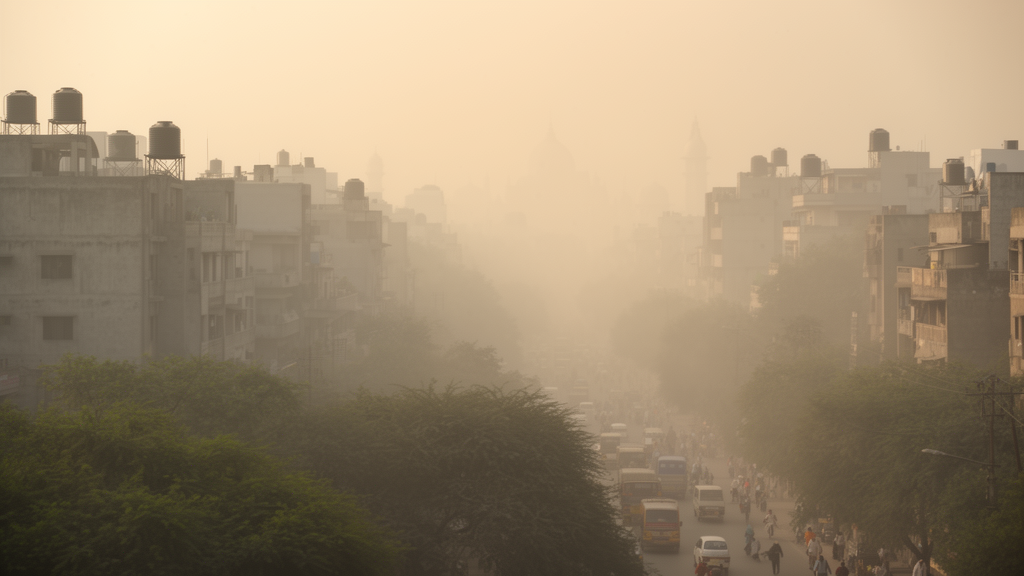
Delhi’s urban form shapes PM2.5 differently across scales, study finds

October 22, 2026
in Climate
Russell Cooper
By Russell Cooper Scienmag Editorial Profile - Environmental Pollution
Reading Time: 3 mins read
0
Delhi’s urban form shapes PM2.5 differently across scales, study finds

Delhi’s urban form shapes PM2.5 differently across scales, study finds

65
SHARES
587
VIEWS
Share on FacebookShare on Twitter
ADVERTISEMENT

A multiscale spatial analysis found that the relationship between Delhi’s urban form and fine-particle pollution changed across the city and between four study years. Using satellite-derived PM2.5 estimates for 2010, 2015, 2020 and 2023, the research combined urban-form metrics with environmental, meteorological and socioeconomic variables in global and geographically weighted regression models. The multiscale model explained more of the observed variation than the global model, with adjusted R-squared values ranging from 0.825 to 0.908 across the selected years.

The study examined PM2.5 at approximately 1-kilometre resolution, allowing the analysis to compare pollution patterns across Delhi rather than treating the city as a single uniform environment. The researchers used land-use and land-cover data to derive metrics of fragmentation, sprawl, compactness and diversity through FRAGSTATS. These morphological measures were assessed alongside vegetation index, precipitation, temperature, wind speed, population density and GDP per capita. The resulting comparison tested whether the same urban characteristics had consistent effects throughout the metropolitan area or operated differently from one location to another.

Multiscale Geographically Weighted Regression, or MGWR, outperformed the global regression model in explaining the spatial variation in PM2.5. Its stronger performance indicates that relationships within the city are not adequately represented by one citywide coefficient applied everywhere. Instead, the importance and direction of urban-form, environmental, meteorological and socioeconomic relationships can vary across space and at different spatial scales. The abstract does not provide the coefficient values for individual predictors, so it does not establish which particular urban-form metric increased or decreased PM2.5 at a given location.

The study also found that the urban-form metrics associated with PM2.5 differed among 2010, 2015, 2020 and 2023, suggesting that the morphological characteristics of the city and their relationships with particle pollution were not fixed over the 13-year period. Environmental and meteorological variables generally had stronger and more spatially heterogeneous effects at finer operational scales. By contrast, urban-form and socioeconomic relationships were described as weaker but broader and more spatially stable. This contrast means that citywide planning variables may persist across larger areas even as local conditions and the operative scales of influence change.

The results do not demonstrate that altering urban form alone would reduce Delhi’s PM2.5. The analysis is observational and depends on satellite-derived pollution estimates, land-cover data and statistical associations; it does not isolate the causal effect of a particular development pattern or planning intervention. The study is also limited to the selected years, the variables included in the models and the spatial resolution available for the data. Nevertheless, its adjusted R-squared range and the advantage of MGWR over a global model support the use of multiscale spatial methods when analysing pollution in a large, internally varied city. The findings point to an air-quality strategy that evaluates urban form together with green infrastructure, climate-responsive design and local environmental conditions rather than relying only on metropolitan averages.

Subject of Research: Multiscale analysis of urban morphology and PM2.5 variation in Delhi

Article Title: Multiscale spatial assessment of urban morphology on PM2.5 dynamics in Delhi using MGWR model

Article References: Sen, H., & Gupta, L. (2026). Multiscale spatial assessment of urban morphology on PM2.5 dynamics in Delhi using MGWR model. Air Quality, Atmosphere & Health, 19(11), Article 244. https://doi.org/10.1007/s11869-026-02131-0

Image Credits: AI Generated

DOI: 10.1007/s11869-026-02131-0

Keywords: Delhi, PM2.5, urban morphology, MGWR, air pollution, satellite data, spatial modelling, land use, meteorology, urban planning, Multiscale, spatial

Cite Scienmag News

Russell Cooper. (October 22, 2026). Delhi’s urban form shapes PM2.5 differently across scales, study finds. Scienmag. https://scienmag.com/delhis-urban-form-shapes-pm2-5-differently-across-scales-study-finds/

Russell Cooper. "Delhi’s urban form shapes PM2.5 differently across scales, study finds." Scienmag, 22 October 2026, https://scienmag.com/delhis-urban-form-shapes-pm2-5-differently-across-scales-study-finds/. Accessed 22 October 2026.

Russell Cooper. "Delhi’s urban form shapes PM2.5 differently across scales, study finds." Scienmag. October 22, 2026. https://scienmag.com/delhis-urban-form-shapes-pm2-5-differently-across-scales-study-finds/


Tags: Air pollutionDelhiDelhi urban formenvironmental and socioeconomic factorsfine-particle pollution across city scalesgeographically weighted regressionimpact of urban form on air pollutionland useland-use and land-cover metricsmeteorologyMGWRmultiscalemultiscale regression modelsPM2.5PM2.5 pollution spatial analysissatellite datasatellite-derived air quality dataSpatialspatial modellingspatial variability of PM2.5urban morphologyurban morphology and air pollutionurban planningurban sprawl and air quality
Share26Tweet16
Previous Post

Research report: Pluronic F-127-functionalized magnetic ternary hybrid nanoparticles for co-delivery of paclitaxel and psoralen: a synergistic strategy to overcome multidrug resistance in triple-negative breast cancer

Next Post

Social support linked to better health literacy in rural diabetes study

Related Posts

Nanoplastics shift acute chlorpyrifos toxicity in marine amphipods
Climate

Nanoplastics shift acute chlorpyrifos toxicity in marine amphipods

October 22, 2026
National transitions in childhood lower respiratory infection burden attributable to household versus ambient particulate matter pollution, 1990–2023: Timing, persistence, and uncertainty in GBD 2023
Climate

National transitions in childhood lower respiratory infection burden attributable to household versus ambient particulate matter pollution, 1990–2023: Timing, persistence, and uncertainty in GBD 2023

October 22, 2026
Carbamazepine increases marbled crayfish movement in laboratory exposure study
Climate

Carbamazepine increases marbled crayfish movement in laboratory exposure study

October 22, 2026
Behavioral Model Links Waste Bank Retention to Landfill Pressure
Climate

Behavioral Model Links Waste Bank Retention to Landfill Pressure

October 22, 2026
Sentinel-5P/TROPOMI review maps air-pollution applications and limitations
Climate

Sentinel-5P/TROPOMI review maps air-pollution applications and limitations

October 22, 2026
Terrain and road proximity statistically associated with spring persistence in Nepal
Climate

Terrain and road proximity statistically associated with spring persistence in Nepal

October 22, 2026
Next Post
Social support linked to better health literacy in rural diabetes study

Social support linked to better health literacy in rural diabetes study

  • Mothers who receive childcare support from maternal grandparents show more optimized

    Mothers who receive childcare support from maternal grandparents show more parental warmth, finds NTU Singapore study

    27656 shares
    Share 11059 Tweet 6912
  • University of Seville Breaks 120-Year-Old Mystery, Revises a Key Einstein Concept

    1061 shares
    Share 424 Tweet 265
  • Bee body mass, pathogens and local climate influence heat tolerance

    682 shares
    Share 273 Tweet 171
  • Researchers record first-ever images and data of a shark experiencing a boat strike

    546 shares
    Share 218 Tweet 137
  • Groundbreaking Clinical Trial Reveals Lubiprostone Enhances Kidney Function

    531 shares
    Share 212 Tweet 133
Science

Embark on a thrilling journey of discovery with Scienmag.com—your ultimate source for cutting-edge breakthroughs. Immerse yourself in a world where curiosity knows no limits and tomorrow’s possibilities become today’s reality!

RECENT NEWS

  • Social support linked to better health literacy in rural diabetes study
  • Delhi’s urban form shapes PM2.5 differently across scales, study finds
  • Research report: Pluronic F-127-functionalized magnetic ternary hybrid nanoparticles for co-delivery of paclitaxel and psoralen: a synergistic strategy to overcome multidrug resistance in triple-negative breast cancer
  • Blockchain adoption in insurance follows divergent paths across stakeholders

Categories

  • Agriculture
  • Anthropology
  • Archaeology
  • Athmospheric
  • Biology
  • Biotechnology
  • Blog
  • Bussines
  • Cancer
  • Chemistry
  • Climate
  • Earth Science
  • Editorial Policy
  • Marine
  • Mathematics
  • Medicine
  • Pediatry
  • Policy
  • Psychology & Psychiatry
  • Science Education
  • Science News
  • Social Science
  • Space
  • Technology and Engineering

Subscribe to Blog via Email

Enter your email address to subscribe to this blog and receive notifications of new posts by email.

Join 5,151 other subscribers

© 2025 Scienmag - Science Magazine

Welcome Back!

Login to your account below

Forgotten Password?

Retrieve your password

Please enter your username or email address to reset your password.

Log In
No Result
View All Result
  • HOME
  • SCIENCE NEWS
  • CONTACT US

© 2025 Scienmag - Science Magazine

Discover more from Science

Subscribe now to keep reading and get access to the full archive.

Continue reading