


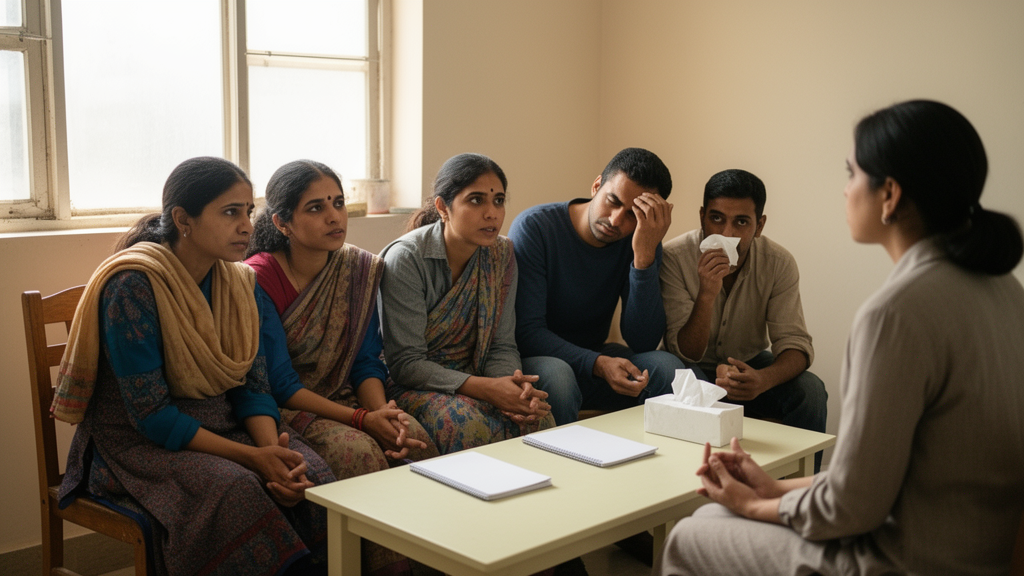
A phenomenological study of 10 parents in India’s Delhi–National Capital Region identified five recurring psychosocial challenges associated with raising children aged 6 to 12 with neurodevelopmental disabilities: emotional distress and caregiver burnout; isolation and stigma; lack of awareness and guidance; institutional barriers and limited access to support; and coping and social support systems. The findings arise from interviews with fathers and mothers rather than a population survey, so they describe the experiences of participating families without establishing how common each challenge is across India or elsewhere.
Researchers used a qualitative phenomenological design to explore and interpret the parents’ lived psychosocial experiences. They conducted dyadic interviews with 10 parents whose children had neurodevelopmental disabilities, including autism spectrum disorder, intellectual disability or specific learning disability. The interviews were structured around a researcher-developed Psychosocial Challenges Interview Schedule, which was validated by 24 professionals. This instrument assessed six domains: sense of competence and achievement; social interaction and peer relationships; encouragement and motivation; emotional understanding and coping; self-esteem and identity formation; and the role of family and environment.
The interview data were transcribed and analyzed thematically using Braun and Clarke’s 2006 approach to identify recurring experiences. Emotional distress and caregiver burnout formed one of the five principal themes, showing that the difficulties described by parents extended beyond the practical responsibilities of day-to-day caregiving. A second theme concerned isolation and stigma. These findings were interpreted against the Indian socio-cultural context described in the study, where the authors identified limited awareness, stigma and inadequate institutional support as factors adding to parental stress and emotional burden. The interviews do not quantify these pressures or separate the contribution of each factor.
Parents also described a lack of awareness and guidance, with one of the study’s central themes centering on insufficient information and direction. Institutional barriers and difficulties accessing support emerged as another major theme, further complicating the psychosocial experience of caregiving. At the same time, the analysis identified coping and social support systems as resources within the participants’ accounts. The supplied abstract does not specify which particular coping strategies or support systems were available to each family, how frequently they were used or whether they were adequate. As a qualitative analysis of a small regional sample, the research cannot demonstrate causal relationships, estimate prevalence or establish that the five themes represent all parents’ experiences.
Across the interviews, participants expressed a strong need for formal psychosocial counselling, training, educational modules and community-based support systems. The authors conclude that the results provide qualitative support for designing evidence-based interventions and a structured, culturally appropriate psychosocial training program or module aimed at strengthening parental well-being and fostering inclusive educational participation. The study did not test such a program or measure whether counselling, training or community support improves parental outcomes, educational participation or family resilience. Its contribution is instead an account of how 10 parents described their experiences, including distress, burnout, isolation, stigma, informational gaps and barriers to institutional help. Because the sample was small and confined to the Delhi–National Capital Region, the findings are best understood as a focused account of the participating caregivers rather than a population-level estimate or proof of intervention effectiveness.
Subject of Research: Parents’ lived psychosocial challenges in raising children with neurodevelopmental disabilities
Article Title: A phenomenological study of psychosocial challenges faced by parents of children with neurodevelopmental disabilities: a qualitative study
Article References: Srivastava, A., & Begum, S. (2026). A phenomenological study of psychosocial challenges faced by parents of children with neurodevelopmental disabilities: a qualitative study. BMC Psychology. https://doi.org/10.1186/s40359-026-05180-3
Image Credits: AI Generated
DOI: 10.1186/s40359-026-05180-3
Keywords: neurodevelopmental disabilities, parent caregiving, caregiver burnout, psychosocial stress, stigma, social isolation, qualitative interviews, phenomenology, social support, Delhi, phenomenological, psychosocial
Cite Scienmag News
Glenn Wilkins. (October 26, 2026). Delhi parents describe burnout, stigma and support barriers. Scienmag. https://scienmag.com/delhi-parents-describe-burnout-stigma-and-support-barriers/
Glenn Wilkins. "Delhi parents describe burnout, stigma and support barriers." Scienmag, 26 October 2026, https://scienmag.com/delhi-parents-describe-burnout-stigma-and-support-barriers/. Accessed 26 October 2026.
Glenn Wilkins. "Delhi parents describe burnout, stigma and support barriers." Scienmag. October 26, 2026. https://scienmag.com/delhi-parents-describe-burnout-stigma-and-support-barriers/


