


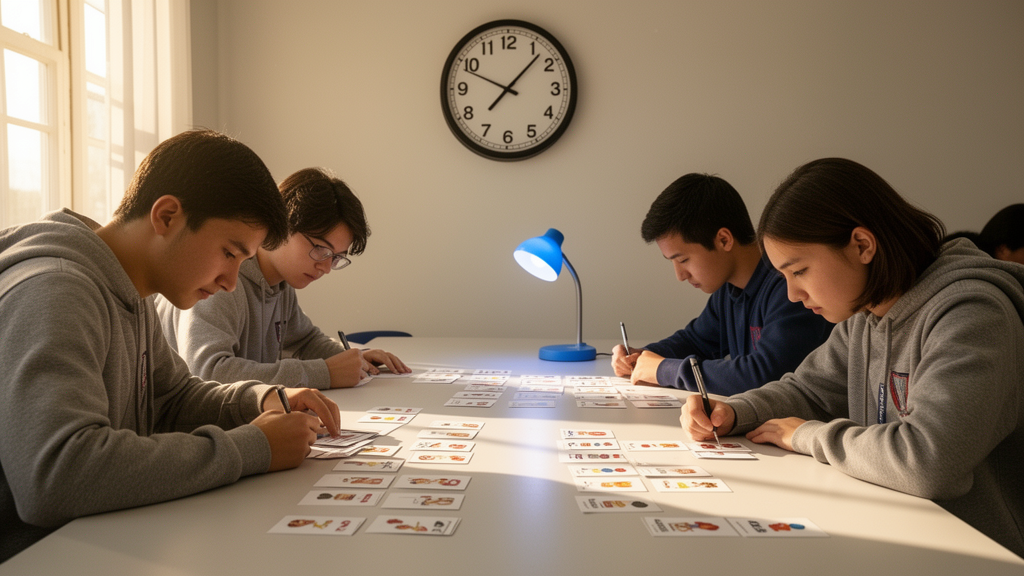
A brief visual alert changed how university students with elevated depressive symptoms detected words and remembered emotional information, according to a laboratory study of the Attentional Boost Effect, or ABE. The research found that both depression-prone participants and healthy controls showed a robust ABE: words presented at the same time as a detected target were later recognized more accurately than words paired with non-target events. The finding indicates that this transient memory-enhancement response remained behaviorally measurable in the depression-prone group, while also showing that the presence of an alert altered how emotional valence influenced attention and recognition.
The study, published in BMC Psychology, used a mixed factorial design involving 81 right-handed university students. Forty-two participants were classified as depression-prone, and 39 were healthy controls. Depression-prone status was based on a Beck Depression Inventory–Second Edition score of at least 14, followed by a Structured Clinical Interview for DSM-5 confirming that participants did not meet diagnostic criteria for major depressive disorder. The researchers therefore studied vulnerability to depression rather than diagnosed clinical depression, an important distinction for interpreting the results. Participants completed both a standard ABE task and a version in which an orange circle appeared immediately before every target event as an exogenous alerting cue.
During encoding, participants silently read two-character Chinese words while responding to red target circles and withholding responses to green distractor circles. In the alerting condition, the orange circle predicted that the next word would be accompanied by a red target. A serial subtraction task separated encoding from the subsequent old/new recognition test and was intended to reduce short-term rehearsal. Recognition accuracy for target-paired minus distractor-paired words served as the ABE index. The experiment manipulated group, cue presence, emotional valence and target pairing, while separate analyses examined target-detection accuracy, reaction time and recognition performance. Positive and negative words were deliberately matched in arousal ratings, with both categories rated as more arousing than neutral words, so emotional direction could be examined without treating arousal as an uncontrolled alternative explanation.
Target detection was accurate above chance in every condition, indicating that participants performed the central task effectively. Without an alerting cue, positive words were detected more accurately than neutral and negative words, while neutral words were detected more accurately than negative ones. Reaction times followed a similar broad pattern: responses to positive words were faster than responses to neutral or negative words, and neutral words were detected faster than negative ones. An orange cue sharply changed this profile. Participants responded substantially faster with the cue, and the significant cue-by-valence interaction showed that the valence differences evident without the cue largely disappeared when it was present. The cue therefore did not merely add a general speed advantage; it altered the relationship between emotional category and task performance.
The clearest memory finding was a robust ABE across both groups and both cue conditions. Words paired with detected targets were recognized substantially more accurately than distractor-paired words, with a large effect for stimulus type. There was no reliable main effect of group on target-detection accuracy, reaction time, overall recognition or the magnitude of the boost. Bayesian analyses favored the null hypothesis of no group difference, producing Bayes factors for the null of 3.2 to 6.7. Equivalence testing also found that group differences in ABE magnitude remained within a preselected small-to-moderate equivalence boundary of Cohen’s d = ±0.40 across all cue-by-valence combinations. The authors described this convergence as moderate evidence that depression proneness did not substantially weaken the behavioral boost, while emphasizing that it was not definitive proof of identical underlying brain processes.
Alerting cues nevertheless changed the emotional pattern of the boost. Without a cue, the ABE was larger for neutral words than for either positive or negative words, and positive and negative information did not differ from one another. With a cue, no significant valence differences appeared in ABE magnitude, but the positive-word boost was significantly larger than it had been without a cue. The increase for negative words was only a nonsignificant trend, and neutral words showed no significant cue-related change. In other words, the cue did not produce a uniform increase for every emotional category. It specifically strengthened the ABE for positive information and reduced the prominence of the neutral-word advantage seen in the uncued condition.
The authors discuss the results in relation to two partially separable cognitive processes. One is a valence-driven emotional-processing pathway, associated in their model with sustained regulation within prefrontal-limbic networks. The other is a transient arousal-driven pathway, associated with phasic activation of the locus coeruleus-noradrenergic system. Target detection has previously been linked to a brief alerting response that enhances encoding of information appearing at the same moment, whereas emotional bias is more often associated with longer-term control and regulation processes. The preserved ABE in depression-prone participants is therefore consistent with the possibility that these systems can remain partly independent, but the study did not directly measure transient arousal, persistent emotional processes or their neural circuits. The behavioral results show that the cue and emotional category interacted; they do not establish a clean dissociation between two underlying pathways.
Group differences were generally weak, and several interactions involving group were marginal or supported only limited evidence for the null hypothesis. A three-way interaction among group, cue and valence in ABE magnitude fell just below the conventional significance threshold, at p = 0.094, while the four-way interaction in recognition accuracy reached p = 0.05. These results are compatible with the possibility that depression-related vulnerability may depend on context rather than appearing as a uniform deficit, but the study does not establish a distinct response pattern in the depression-prone group. The more defensible finding is that no substantial group difference emerged in the central boost measure, while cues changed emotional processing across participants. Treating the marginal interactions as proof of special sensitivity would exceed the statistical evidence.
Several limitations constrain how far the findings can travel. The sample consisted entirely of university students, and the depression-prone group was selected through a single screening assessment followed by a structured interview. The healthy controls had an unusually low average BDI-II score of 1.13, which may have exaggerated apparent group separation even though the ABE comparison remained stable. Depression-proneness was measured at one time point, without systematic information about symptom duration, recurrence or functional impairment. The task used Chinese words rather than images, sounds or ecologically rich material, and the orange cue had a fixed role and intensity. Positive and negative words were matched on arousal, but semantic concreteness, familiarity, personal relevance and other possible influences were not fully separated. Direct physiological measurements would also be needed to identify the neural process behind the behavioral boost.
Taken together, the results offer a precise behavioral picture rather than a clinical solution. Depression-prone students retained a measurable ABE comparable to that of healthy controls, arguing against the idea that elevated depressive symptoms necessarily disable every transient cognitive-enhancement mechanism. At the same time, the alerting cue altered both task efficiency and the emotional structure of memory, showing that the alerting state can change which information receives an encoding advantage. The practical implication is a testable hypothesis for future research: brief external alerts may help prioritize task-relevant or positive information when internal cognitive control is strained. The study itself did not test a treatment, improve anyone’s mood or establish a therapeutic protocol. It instead provides preliminary evidence for studying whether transient arousal modulation could reshape attention and memory in depression-vulnerable populations, alongside direct neural measures, repeated symptom assessment and comparisons involving clinically diagnosed depression.
Subject of Research: Effects of alerting cues and emotional valence on attentional memory enhancement in depression-prone university students
Article Title: Transient arousal-driven or valence-driven? The effects of alerting cues on the attentional boost effect in depression-prone individuals
Article References: Zhang, M., Li, X., Xie, Q., Wang, Y., Liu, L., Huang, L., & Huang, F. (2026). Transient arousal-driven or valence-driven? The effects of alerting cues on the attentional boost effect in depression-prone individuals. BMC Psychology, 14(1), Article 1296. https://doi.org/10.1186/s40359-026-05313-8
Image Credits: AI Generated
DOI: 10.1186/s40359-026-05313-8
Keywords: attentional boost effect, depression proneness, alerting cues, emotional valence, memory enhancement, arousal, attention, depression vulnerability, behavioral neuroscience, Chinese words, Transient, arousal-driven
Cite Scienmag News
Glenn Wilkins. (October 26, 2026). Alerting Cues Shape Memory Boost in Depression-Prone Students. Scienmag. https://scienmag.com/alerting-cues-shape-memory-boost-in-depression-prone-students/
Glenn Wilkins. "Alerting Cues Shape Memory Boost in Depression-Prone Students." Scienmag, 26 October 2026, https://scienmag.com/alerting-cues-shape-memory-boost-in-depression-prone-students/. Accessed 26 October 2026.
Glenn Wilkins. "Alerting Cues Shape Memory Boost in Depression-Prone Students." Scienmag. October 26, 2026. https://scienmag.com/alerting-cues-shape-memory-boost-in-depression-prone-students/


