


Deep-sea mining is rapidly emerging as a contentious frontier in the global quest for critical minerals, promising to unlock vast reserves beneath the ocean floor. However, new scientific research indicates that mining activities in the Clarion Clipperton Zone (CCZ), a remote and ecologically sensitive region in the Eastern Pacific Ocean, could pose severe threats to marine life, including whales and dolphins. These studies, conducted by an international team of marine biologists, acoustics experts, and ecologists, highlight the urgent need for comprehensive environmental assessments before commercial exploitation begins.
Located hundreds of miles offshore, the CCZ is an expansive deep-sea environment characterized by polymetallic nodules scattered across its seabed. These nodules contain valuable metals such as nickel, copper, manganese, and cobalt, essential for modern technologies like electric vehicle batteries and renewable energy infrastructure. The Canadian firm The Metals Company has announced plans to explore and potentially mine large swaths of this area, sparking scientific and environmental debates. Despite its economic allure, the ecological complexity of the CCZ remains poorly understood, particularly concerning its biodiversity and sensitivity to human-induced disturbances.
Marine mammals are among the most acoustically sensitive inhabitants of the marine ecosystem, relying heavily on sound for communication, navigation, and foraging. The first of two pivotal studies, published recently, systematically reviews the sensitivity of various taxonomic groups within the CCZ to anthropogenic noise generated by mining operations. Researchers reveal that just 35% of the species classes present in this area have been examined for potential noise impacts, underscoring significant knowledge gaps. Notably, soniferous fish and cetaceans — animals dependent on acoustic cues — exhibit heightened vulnerability to chronic, low-frequency noise pollution.
Deep-sea mining involves the extraction of polymetallic nodules using heavy machinery that disturbs the ocean floor, generating wide-reaching noise and sediment plumes. Sound propagates efficiently underwater, often traveling through specialized oceanic channels like the SOFAR channel, allowing noises to affect marine organisms across hundreds of kilometres. Chronic exposure to such noise can disrupt intricate behaviors essential for survival, including mating calls, mother-calf bonding, and hunting strategies. The cascade effects on marine food webs and ecological networks could be profound, yet remain poorly quantified.
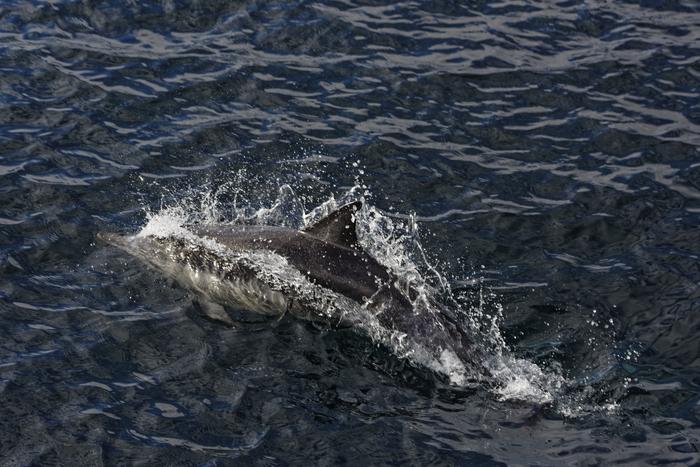
The second study offers groundbreaking insights derived from extensive fieldwork aboard the Greenpeace vessel Arctic Sunrise. Over a focused 13-day period, the researchers employed both visual surveys and passive acoustic monitoring techniques to detect the presence of cetaceans in the CCZ. Sonar and hydrophone recordings registered 74 distinct acoustic signals attributable to whales and dolphins, while observers logged six visual sightings. Species identified included endangered sperm whales, Risso’s dolphins, common dolphins, and numerous unidentified dolphin groups. These observations confirm that this remote deep-sea landscape supports a diversity of cetacean life.
The presence of sperm whales, a species listed as vulnerable on the IUCN Red List, is particularly alarming given their known sensitivity to underwater noise and long-term exposure risks. These marine mammals use low-frequency clicks for echolocation and communication, which mining noise could mask, leading to behavioural changes such as habitat abandonment or impaired foraging. Displacement from critical habitats could jeopardize reproduction and survival, compounding existing pressures from climate change and ocean pollution. The notion that the CCZ might be a significant habitat or migratory corridor amplifies conservation concerns.
Noise pollution from mining extends beyond cetaceans to affect a myriad of other taxa within the CCZ ecosystem. Soniferous fish, crustaceans, and benthic invertebrates show sensitivity to acoustic disturbances, which can alter behaviors like spawning, feeding, and predator avoidance. The sediment plumes arising from mining excavation pose additional threats by smothering benthic organisms, disrupting filter-feeders, and impairing visual and chemical cues essential for species interactions. Limited data on plume dynamics and sediment dispersion hinder accurate risk assessments, creating an urgent call for multidisciplinary research.
Experts emphasize that the CCZ houses long-lived, slow-growing species adapted to a stable and resource-scarce environment. Disturbances to these communities may have irreversible impacts, given their limited reproductive rates and ecological resilience. Conservation frameworks traditionally focused on coastal and shallow-water ecosystems may not be adequate to protect these deep-sea habitats. Consequently, the precautionary principle is advocated, ensuring that seabed mining initiatives undergo rigorous environmental impact evaluations and incorporate noise mitigation strategies before any commercial activities proceed.
Dr Kirsten Young, a marine ecologist at the University of Exeter and lead author of the cetacean study, underscores the difficulty inherent in predicting ecological outcomes in this largely unexplored environment. She highlights that many ocean species, including marine mammals, are finely tuned to their acoustic surroundings. The interplay between mining-generated noise and habitat use remains difficult to model but is thought to influence crucial biological processes. “Chronic, pervasive noise” may act as a pervasive stressor with far-reaching ecosystem consequences, necessitating both scientific attention and regulatory oversight.
Greenpeace International’s Louisa Casson, participating in the Arctic Sunrise expedition, echoed these concerns by labeling the planned mining operations a “dangerous industry” that threatens fragile deep-sea ecosystems. Activist groups advocate for a moratorium on seabed mining until more is understood about the potential impacts on marine biodiversity and ecosystem functions. Their position reflects a broader debate about balancing technological advancement and resource extraction with the stewardship of ocean health and species protection.
The syntheses derived from these two seminal papers provide a vital foundation for future environmental policymaking regarding ocean mining. Published in the journals Frontiers in Marine Science and Marine Pollution Bulletin, these studies not only document the vulnerability of cetaceans and other taxa but also emphasize the glaring knowledge voids hindering impact assessments. Stakeholders must engage interdisciplinary experts, incorporate advanced acoustic sampling, and foster international cooperation to mitigate irreversible ecological damage in the CCZ and other deep-sea mining hotspots.
As the global demand for metals intensifies, the CCZ’s polymetallic nodules will undoubtedly attract increasing industrial interest. Nevertheless, the mounting evidence presented by these researchers makes a compelling argument for urgent caution. Protecting one of the planet’s largest and most mysterious oceanic biomes is not merely an environmental imperative; it is crucial to maintaining the biological integrity of the Earth’s interconnected marine systems. Future research must prioritize filling scientific gaps around noise impacts, sediment plume behavior, and deep-sea species ecology to inform responsible management of these precious underwater frontiers.
News Publication Date: 24-Jun-2025
Web References:
- https://www.sciencedirect.com/science/article/abs/pii/S0025326X25006101
- http://dx.doi.org/10.3389/fmars.2025.1511075/abstract
Cite Scienmag News
Violet Maxwell. (June 24, 2025). Deep-Sea Mining Poses Threat to Fragile Remote Ocean Ecosystems. Scienmag. https://scienmag.com/deep-sea-mining-poses-threat-to-fragile-remote-ocean-ecosystems/
Violet Maxwell. "Deep-Sea Mining Poses Threat to Fragile Remote Ocean Ecosystems." Scienmag, 24 June 2025, https://scienmag.com/deep-sea-mining-poses-threat-to-fragile-remote-ocean-ecosystems/. Accessed 4 September 2026.
Violet Maxwell. "Deep-Sea Mining Poses Threat to Fragile Remote Ocean Ecosystems." Scienmag. June 24, 2025. https://scienmag.com/deep-sea-mining-poses-threat-to-fragile-remote-ocean-ecosystems/


