Wednesday, October 28, 2026
Science
No Result
View All Result
  • Login
  • HOME
  • SCIENCE NEWS
  • CONTACT US
  • HOME
  • SCIENCE NEWS
  • CONTACT US
No Result
View All Result
Scienmag
No Result
View All Result
Home Science News Chemistry

Deep learning model predicts rice protein interactions from sequence data

October 28, 2026
in Biology, Chemistry
Alan Morgan
By Alan Morgan Scienmag Editorial Profile - Precision Agriculture
Reading Time: 3 mins read
0
Deep learning model predicts rice protein interactions from sequence data

Deep learning model predicts rice protein interactions from sequence data

65
SHARES
587
VIEWS
Share on FacebookShare on Twitter
ADVERTISEMENT

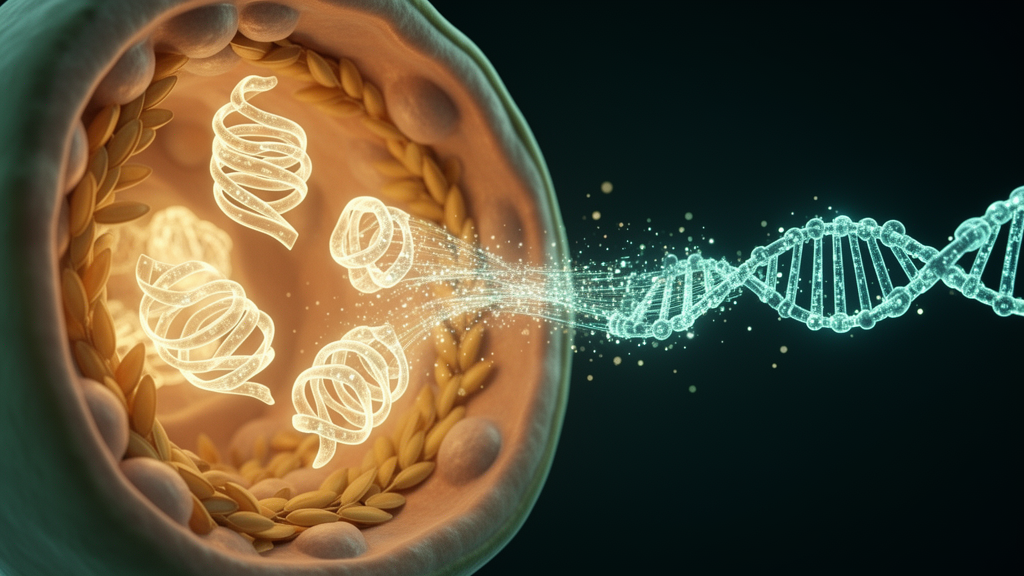
Researchers have developed a deep learning framework that predicts protein-protein interactions in rice directly from amino acid sequences, offering a computational shortcut to mapping the molecular networks that underpin the crop’s metabolism and stress responses.

The model, called RCNNricePPI, was described in a peer-reviewed article published in the journal Amino Acids on 15 October 2026. The work was carried out by a team including Neeraj Budhlakoti, Nitesh Kumar Sharma, Sharanbasappa D Madival, Anshuman Singh, Sudhir Srivastava, Dwijesh Chandra Mishra, Mahender Kumar Singh, Atul Kumar and Girish Kumar Jha.

Protein-protein interactions are fundamental to cellular regulation, metabolism and stress-response pathways in rice, but the experimentally characterized interaction networks for the crop remain incomplete. The new tool is designed to prioritize candidate interactions for subsequent experimental investigation rather than to replace laboratory validation.

RCNNricePPI combines word2vec-derived amino acid embedding with a Siamese recurrent convolutional neural network that integrates convolutional layers with bidirectional gated recurrent units. In this architecture, pairs of protein sequences are processed in parallel branches, allowing the network to learn representations that capture similarities and differences between the two sequences.

The training data were curated from publicly available interaction resources, with the researchers removing self-interactions, redundant pairs and low-quality sequences. To reduce protein-level information leakage, model development and evaluation used a protein-aware partitioning strategy, including protein-disjoint five-fold cross-validation and an independent held-out test set.

At a classification threshold of 0.40, the model achieved an accuracy of 0.8996, a balanced accuracy of 0.7451 and an AUROC of 0.8295. A baseline logistic regression comparison reached values of 0.6459, 0.6964 and 0.7820 for the same metrics, respectively.

Performance was also assessed according to protein novelty. The model recorded AUROC values of 0.9259 for pairs where both proteins had been seen during training, 0.7995 for pairs with one unseen protein, and 0.7340 for pairs where both proteins were unseen. These figures indicate that prediction is strongest for familiar proteins and degrades as novelty increases.

Architectural ablation studies and comparisons with conventional machine learning approaches further supported the contribution of the integrated architecture, according to the authors’ reported results.

RCNNricePPI is implemented as an accessible web-based resource and is freely available at riceppi.biodb.in. The published version is an early-release, peer-reviewed accepted article that is citable and carries a permanent DOI, subject to further edits before the final Version of Record.

By narrowing the pool of candidate interactions for laboratory follow-up, the framework may help researchers studying how rice responds to environmental stress, though the reported results are computational performance measures and the authors position the tool as a starting point for experimental work rather than a validated source of biological findings.

Subject of Research: Deep learning prediction of protein-protein interactions in rice

Article Title: RCNNricePPI: leveraging deep learning to predict rice protein-protein interactions for climate-responsive agriculture

Article References: Budhlakoti, N., Sharma, N. K., Madival, S. D., Singh, A., Srivastava, S., Mishra, D. C., Singh, M. K., Kumar, A., & Jha, G. K. (2026). RCNNricePPI: leveraging deep learning to predict rice protein-protein interactions for climate-responsive agriculture. Amino Acids. https://doi.org/10.1007/s00726-026-03562-w

Image Credits: AI Generated

DOI: 10.1007/s00726-026-03562-w

Keywords: rice, protein-protein interactions, deep learning, RCNNricePPI, amino acid sequences, bioinformatics, machine learning, computational biology, stress response, Amino Acids journal, leveraging, deep

Cite Scienmag News

Alan Morgan. (October 28, 2026). Deep learning model predicts rice protein interactions from sequence data. Scienmag. https://scienmag.com/deep-learning-model-predicts-rice-protein-interactions-from-sequence-data/

Alan Morgan. "Deep learning model predicts rice protein interactions from sequence data." Scienmag, 28 October 2026, https://scienmag.com/deep-learning-model-predicts-rice-protein-interactions-from-sequence-data/. Accessed 28 October 2026.

Alan Morgan. "Deep learning model predicts rice protein interactions from sequence data." Scienmag. October 28, 2026. https://scienmag.com/deep-learning-model-predicts-rice-protein-interactions-from-sequence-data/

Tags: amino acid sequence analysisamino acid sequencesAmino Acids journalbioinformaticsbioinformatics tools for crop genomicscomputational biologycomputational modeling of crop stress responsesDeepdeep learningdeep learning architecture for biological sequence analysisDeep learning protein interaction prediction in riceexperimental validation of predicted protein interactionsLeveragingMachine learningmachine learning in plant molecular biologymolecular network mapping in riceprotein-protein interaction network prioritizationprotein-protein interactionsRCNNricePPIriceSiamese recurrent convolutional neural networks for protein interactionsStress Responsestress response pathways in riceword2vec embedding for protein sequences
Share26Tweet16
Previous Post

Hospital patients carry more throat Gram-negative bacilli than healthy people, French study finds

Next Post

Machine Learning Model Predicts Nitrogen in Treated Wastewater with SHAP and LIME Explanations

Related Posts

Scientists Crack Gene Tools for Ambrosia Beetle Fungal Partners
Biotechnology

Scientists Crack Gene Tools for Ambrosia Beetle Fungal Partners

October 28, 2026
Validated HPLC and TLC methods confirm purity of zirconium-89 PSMA tracer for clinical use
Medicine

Validated HPLC and TLC methods confirm purity of zirconium-89 PSMA tracer for clinical use

October 28, 2026
Fruit Fly Heart Platform Pinpoints Best Segment for Modeling Cardiomyopathy
Biology

Fruit Fly Heart Platform Pinpoints Best Segment for Modeling Cardiomyopathy

October 28, 2026
Hawthorn Extract Yields Stable Selenium Nanoparticles With Antifungal and Antidiabetic Activity
Biotechnology

Hawthorn Extract Yields Stable Selenium Nanoparticles With Antifungal and Antidiabetic Activity

October 28, 2026
Great ape centromeres reveal a shared size-and-homogeneity signature
Biology

Great ape centromeres reveal a shared size-and-homogeneity signature

October 28, 2026
Mined diagnostic sequences reveal ordered illness paths tied to suicide death
Biotechnology

Mined diagnostic sequences reveal ordered illness paths tied to suicide death

October 28, 2026
Next Post
Machine Learning Model Predicts Nitrogen in Treated Wastewater with SHAP and LIME Explanations

Machine Learning Model Predicts Nitrogen in Treated Wastewater with SHAP and LIME Explanations

  • Mothers who receive childcare support from maternal grandparents show more optimized

    Mothers who receive childcare support from maternal grandparents show more parental warmth, finds NTU Singapore study

    27656 shares
    Share 11059 Tweet 6912
  • University of Seville Breaks 120-Year-Old Mystery, Revises a Key Einstein Concept

    1061 shares
    Share 424 Tweet 265
  • Bee body mass, pathogens and local climate influence heat tolerance

    682 shares
    Share 273 Tweet 171
  • Researchers record first-ever images and data of a shark experiencing a boat strike

    546 shares
    Share 218 Tweet 137
  • Groundbreaking Clinical Trial Reveals Lubiprostone Enhances Kidney Function

    531 shares
    Share 212 Tweet 133
Science

Embark on a thrilling journey of discovery with Scienmag.com—your ultimate source for cutting-edge breakthroughs. Immerse yourself in a world where curiosity knows no limits and tomorrow’s possibilities become today’s reality!

RECENT NEWS

  • Surgery Still Dominates Early Stage Melanoma Care, but Higher-Stage Patients Face Mounting Treatment Burden
  • Stretchable strain sensor array keeps its linear response under heat and humidity
  • Web-Based Cognitive Screening Tool Shows Reliable Repeat Scores in Children with Intellectual Disabilities
  • Scientists Crack Gene Tools for Ambrosia Beetle Fungal Partners

Categories

  • Agriculture
  • Anthropology
  • Archaeology
  • Athmospheric
  • Biology
  • Biotechnology
  • Blog
  • Bussines
  • Cancer
  • Chemistry
  • Climate
  • Earth Science
  • Editorial Policy
  • Marine
  • Mathematics
  • Medicine
  • Pediatry
  • Policy
  • Psychology & Psychiatry
  • Science Education
  • Science News
  • Social Science
  • Space
  • Technology and Engineering

Subscribe to Blog via Email

Enter your email address to subscribe to this blog and receive notifications of new posts by email.

Join 5,151 other subscribers

© 2025 Scienmag - Science Magazine

Welcome Back!

Login to your account below

Forgotten Password?

Retrieve your password

Please enter your username or email address to reset your password.

Log In
No Result
View All Result
  • HOME
  • SCIENCE NEWS
  • CONTACT US

© 2025 Scienmag - Science Magazine

Discover more from Science

Subscribe now to keep reading and get access to the full archive.

Continue reading