


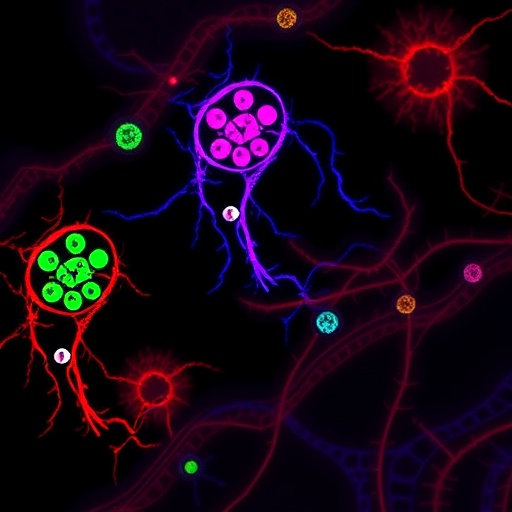
In a groundbreaking study published recently in Cell Death Discovery, researchers reveal the complex interplay of programmed cell death pathways triggered by Mycobacterium tuberculosis (Mtb) infection in human macrophages. This research offers unprecedented insight into the cellular mechanisms that govern host-pathogen dynamics and opens compelling avenues for therapeutic intervention against tuberculosis (TB), a disease that continues to challenge global public health. The meticulous work of Ding, Augenstreich, Poddar, and colleagues lays bare how Mtb manipulates macrophage cell death processes to its advantage, emphasizing the intricate molecular battles waged within infected cells.
Macrophages serve as the first line of immune defense against invading pathogens, including Mtb, the causative agent of TB. Upon infection, macrophages orchestrate a series of defensive responses, including activating programmed cell death pathways to contain and eliminate pathogens. The study elucidates how Mtb cleverly modulates these pathways, sometimes promoting survival and at other times inducing cell death, to facilitate its persistence within the host. Understanding these dualistic strategies is critical, as it reveals why Mtb is notoriously difficult to eradicate despite robust immune responses.
The research focuses primarily on three distinct forms of programmed cell death: apoptosis, necroptosis, and pyroptosis. Apoptosis traditionally eliminates infected cells in a controlled manner that prevents inflammatory damage, whereas necroptosis and pyroptosis are inflammatory forms of cell death that can amplify immune responses but may also damage host tissues. By infecting human macrophages with Mtb and profiling the activation of these pathways, the authors dissect how the pathogen influences the host cell fate decisions to its strategic benefit.
Detailed molecular analyses show that Mtb triggers an intricate signaling cascade involving caspases, receptor-interacting protein kinases (RIPKs), and inflammasomes, crucial regulators of apoptosis, necroptosis, and pyroptosis, respectively. For instance, activation of caspase-3 and -7 drives apoptotic death, limiting bacterial spread. However, Mtb can inhibit caspase activity to thwart apoptosis, tipping the balance toward necroptosis and pyroptosis, which enhance inflammation but may inadvertently assist bacterial dissemination. These findings underscore the tug-of-war between host defense mechanisms and pathogen evasion tactics at the cellular level.
Intriguingly, the study also highlights how different strains of Mtb vary in their capacity to manipulate cell death pathways. Virulent clinical isolates appeared more adept at suppressing apoptosis and promoting inflammatory necrotic forms of cell death. The authors hypothesize that such strain-specific differences could account for variability in disease progression and immune responses among TB patients, emphasizing the need for personalized approaches to therapy.
The comprehensive transcriptomic and proteomic profiling conducted unveiled novel regulators of programmed cell death during Mtb infection. Among these, the expression of specific long non-coding RNAs and microRNAs stood out as modulators of key death pathway components. These non-coding elements may represent untapped therapeutic targets, capable of restoring the balance of cell death in favor of effective pathogen clearance.
Moreover, the research elucidates the role of mitochondrial dynamics and reactive oxygen species (ROS) generation in shaping macrophage responses during Mtb infection. Dysfunctional mitochondria and elevated ROS levels were linked to heightened pyroptotic activity, potentially exacerbating tissue inflammation. The findings suggest that interventions aimed at preserving mitochondrial integrity might modulate cell death outcomes to benefit host immunity.
This study also sheds light on the spatial and temporal aspects of programmed cell death during Mtb infection. Using time-lapse microscopy and live-cell imaging, the authors demonstrate that apoptosis tends to occur early post-infection, while necroptosis and pyroptosis predominate in later stages. Such a temporal shift may reflect evolving host-pathogen interactions and changing immune landscapes within granulomatous lesions characteristic of TB.
Importantly, the researchers provide compelling evidence that pharmacological modulation of these death pathways substantially alters Mtb survival within macrophages. Pharmacological inducers of apoptosis reduced bacterial load significantly, whereas inhibitors of necroptosis and pyroptosis dampened damaging inflammation. These findings suggest that tailored manipulation of programmed cell death could enhance host defenses while minimizing immunopathology.
The implications of these discoveries extend beyond fundamental biology. Tuberculosis remains one of the leading causes of infectious deaths worldwide, compounded by rising antibiotic resistance. Understanding and harnessing host cell death dynamics offer novel strategies to complement existing antimicrobial therapies. Targeting the host’s own cellular machinery may circumvent traditional drug resistance mechanisms, providing a much-needed edge in the fight against this ancient scourge.
Another fascinating angle addressed by the study is the interplay between programmed cell death and autophagy, another crucial cellular process involved in pathogen clearance. Mtb appears to simultaneously inhibit autophagy and tweak cell death signaling to create a niche favorable for its replication. The authors suggest that combined therapeutic approaches targeting both autophagic and cell death pathways could synergistically improve infection outcomes.
In conclusion, this breakthrough research paints a vivid picture of the molecular chess game played between Mtb and human macrophages. By unmasking the sophisticated tactics used by the pathogen to hijack programmed cell death pathways, it paves the way for innovative host-directed therapies aimed at tipping the scales toward bacterial clearance and disease resolution. The future of TB treatment may lie as much in controlling host cellular processes as in combating the microbe itself.
As the global health community grapples with persistent TB burdens and emerging drug-resistant strains, studies like this offer critical hope. They exemplify how in-depth mechanistic insights can drive the development of next-generation therapeutics that are desperately needed. The characterization of programmed cell death pathways in Mtb-infected macrophages marks a milestone in TB research, with ramifications that could shape clinical practice and policy for years to come.
Ultimately, this work by Ding and collaborators stands as a testament to the power of modern molecular biology and immunology in decoding host-pathogen interactions. It highlights the complexity of immune responses and the ingenious strategies pathogens evolve to survive. As scientists continue to unravel these interactions, the prospect of ending global tuberculosis through targeted host modulation appears increasingly within reach.
Cite Scienmag News
Kristina Jarvis. (June 8, 2026). Decoding Cell Death in Tuberculosis-Infected Macrophages. Scienmag. https://scienmag.com/decoding-cell-death-in-tuberculosis-infected-macrophages/
Kristina Jarvis. "Decoding Cell Death in Tuberculosis-Infected Macrophages." Scienmag, 8 June 2026, https://scienmag.com/decoding-cell-death-in-tuberculosis-infected-macrophages/. Accessed 3 September 2026.
Kristina Jarvis. "Decoding Cell Death in Tuberculosis-Infected Macrophages." Scienmag. June 8, 2026. https://scienmag.com/decoding-cell-death-in-tuberculosis-infected-macrophages/


