

Tuesday, October 20, 2026
Science
No Result
View All Result
  • Login
  • HOME
  • SCIENCE NEWS
  • CONTACT US
  • HOME
  • SCIENCE NEWS
  • CONTACT US
No Result
View All Result
Scienmag
No Result
View All Result
Home Science News Biology

Cytogenetic and anatomical study reveals chromosome count and reproductive traits of the mealybug Orbuspedum machinator

October 20, 2026
in Biology, Science News
Drew Townsend
By Drew Townsend Scienmag Editorial Profile - Cell Biology
Reading Time: 2 mins read
0
Fungus-farming mealybug reveals rare chromosomes and live birth strategy

Fungus-farming mealybug reveals rare chromosomes and live birth strategy

65
SHARES
587
VIEWS
Share on FacebookShare on Twitter
ADVERTISEMENT

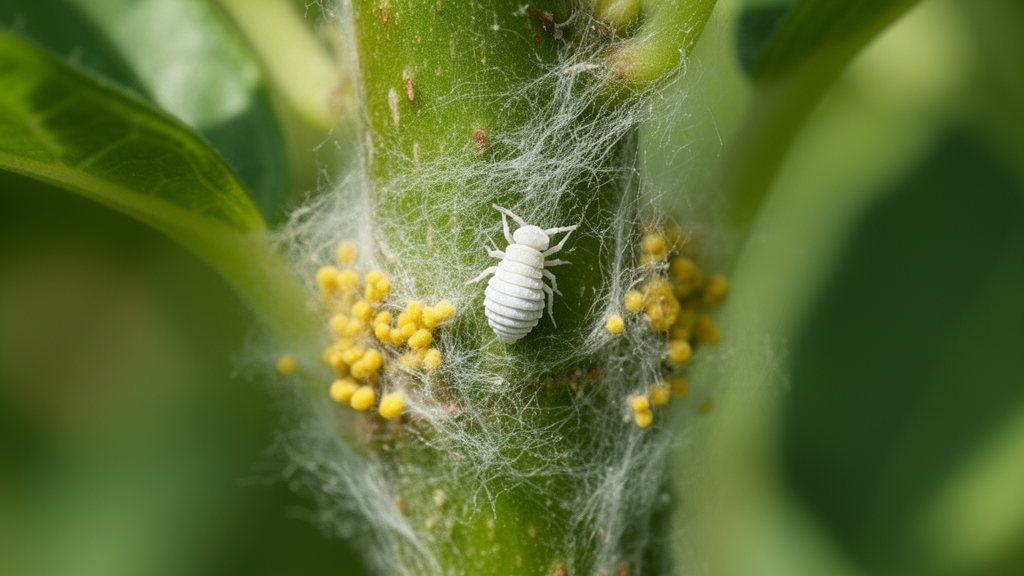
A cytogenetic and anatomical study of the legless mealybug Orbuspedum machinator found that females have a diploid chromosome number of 18, a complement not previously reported among the legless mealybugs known to the author. The species is associated with conical domiciles made from wax and densely packed fungal hyphae. Females inhabit these structures, which grow alongside the insects as the mealybugs supply the fungus with honeydew.

In November 2023, the author revisited the species’ type locality in southern Thailand and collected gravid females for cytogenetic and reproductive studies. Chromosome preparations from female embryos showed 18 chromosomes of broadly similar length. About half of the embryos studied contained cells with the characteristic Lecanoid heterochromatinization of the paternal chromosome set, a pattern associated with the unusual meiosis of lecanoid scale insects. In this system, paternal and maternal chromosome sets segregate during the second meiotic division, and only maternal-origin nuclei produce sperm.

The paternal heterochromatinization was interpreted as evidence of bisexual reproduction in the studied population, although adult males and male larvae were not found. The author proposed that the much smaller males may live separately from the larger females in different parts of a host plant or on different plants, as is known to occur among scale insects. Anatomical examination of the available females found a reproductive system resembling that of other studied legless mealybugs: paired lateral oviducts join an enlarged common oviduct, while a spermatheca and accessory glands connect to its proximal portion.

The study also documented complete ovoviviparity, with embryonic development occurring inside the ovarioles and oviducts. After hatching, primolarvae leave the maternal fungal domicile through its apical opening. These findings concern a collection of females and embryos from one population in Thailand, and the absence of observed males means that the proposed separate male lifestyle remains an explanation rather than a directly documented result. The reported symbiotic association with a sooty mold of the genus Capnodium was also described previously as unusual among scale insects and other animals known to the author.

Subject of Research: Karyotype and reproductive anatomy of the symbiotic mealybug Orbuspedum machinator

Article Title: Karyotype and reproductive traits of the unique symbiotic mealybug Orbuspedum machinator G.-Z. ( Homoptera , Coccinea )

Article References: Gavrilov-Zimin, I. A. (2023). Karyotype and reproductive traits of the unique symbiotic mealybug Orbuspedum machinator G.-Z. (Homoptera, Coccinea). Comparative Cytogenetics, 17, 283-286. https://doi.org/10.3897/compcytogen.17.116550

Image Credits: AI Generated

DOI: 10.3897/compcytogen.17.116550

Keywords: Orbuspedum machinator, mealybug, cytogenetics, karyotype, reproductive biology, ovoviviparity, Lecanoid heterochromatinization, fungal symbiosis, reproductive, traits, unique, symbiotic

Cite Scienmag News

Drew Townsend. (October 20, 2026). Cytogenetic and anatomical study reveals chromosome count and reproductive traits of the mealybug Orbuspedum machinator. Scienmag. https://scienmag.com/cytogenetic-and-anatomical-study-reveals-chromosome-count-and-reproductive-traits-of-the-mealybug-orbuspedum-machinator/


Drew Townsend. "Cytogenetic and anatomical study reveals chromosome count and reproductive traits of the mealybug Orbuspedum machinator." Scienmag, 20 October 2026, https://scienmag.com/cytogenetic-and-anatomical-study-reveals-chromosome-count-and-reproductive-traits-of-the-mealybug-orbuspedum-machinator/. Accessed 20 October 2026.

Drew Townsend. "Cytogenetic and anatomical study reveals chromosome count and reproductive traits of the mealybug Orbuspedum machinator." Scienmag. October 20, 2026. https://scienmag.com/cytogenetic-and-anatomical-study-reveals-chromosome-count-and-reproductive-traits-of-the-mealybug-orbuspedum-machinator/

Tags: bisexual reproduction in mealybugschromosome count in scale insectscytogenetic analysis of mealybugscytogeneticsfungal hyphae association with insectsfungal symbiosishabitat and behavior of Orbuspedum machinatorkaryotypeLecanoid heterochromatinizationmale and female segregation in scale insectsmealybugMealybug cytogeneticsOrbuspedum machinatorOrbuspedum machinator reproductionovoviviparityReproductiveReproductive biologyreproductive strategies of mealybugsreproductive traits of legless mealybugssymbiotictraitsuniquewax domiciles of mealybugs
Share26Tweet16
Previous Post

Review documents about 48 harvestman species in Georgia and identifies taxonomic gaps

Next Post

Vegetation plots yield first syntaxonomic classification of Armenia’s dry grasslands and thorn-cushion communities

Related Posts

Pharmaceutical Marketing: How Psychology, Neuromarketing, and Regulation Shape Patient Behavior
Medicine

Research report: Theoretical, psychological, and regulatory dimensions of modern pharmaceutical marketing: implications for patient behavior and healthcare systems

October 20, 2026
Armenia’s dry grasslands hide a wealth of plant communities new to science
Science News

Vegetation plots yield first syntaxonomic classification of Armenia’s dry grasslands and thorn-cushion communities

October 20, 2026
Georgia’s harvestmen reveal a hidden Caucasus biodiversity hotspot
Science News

Review documents about 48 harvestman species in Georgia and identifies taxonomic gaps

October 20, 2026
Georgia’s owlflies get their first DNA barcode checklist, revealing a Mediterranean newcomer
Science News

Barcode-assisted inventory records Deleproctophylla owlfly in Georgia for the first time

October 20, 2026
River and coastal wetlands emerge as powerful carbon sinks in Germany and Scotland
Science News

Case studies from Germany and Scotland indicate climate change mitigation potential of riverine and coastal wetlands

October 20, 2026
Fossil Rodents Reveal an Early Miocene Haven in Spain During a Time of Migration
Science News

Early Miocene rodent fossils reveal changing muroid assemblages in Spain’s Ribesalbes-Alcora Basin

October 20, 2026
Next Post
Armenia’s dry grasslands hide a wealth of plant communities new to science

Vegetation plots yield first syntaxonomic classification of Armenia’s dry grasslands and thorn-cushion communities

  • Mothers who receive childcare support from maternal grandparents show more optimized

    Mothers who receive childcare support from maternal grandparents show more parental warmth, finds NTU Singapore study

    27656 shares
    Share 11059 Tweet 6912
  • University of Seville Breaks 120-Year-Old Mystery, Revises a Key Einstein Concept

    1061 shares
    Share 424 Tweet 265
  • Bee body mass, pathogens and local climate influence heat tolerance

    682 shares
    Share 273 Tweet 171
  • Researchers record first-ever images and data of a shark experiencing a boat strike

    546 shares
    Share 218 Tweet 137
  • Groundbreaking Clinical Trial Reveals Lubiprostone Enhances Kidney Function

    531 shares
    Share 212 Tweet 133
Science

Embark on a thrilling journey of discovery with Scienmag.com—your ultimate source for cutting-edge breakthroughs. Immerse yourself in a world where curiosity knows no limits and tomorrow’s possibilities become today’s reality!

RECENT NEWS

  • Research report: Theoretical, psychological, and regulatory dimensions of modern pharmaceutical marketing: implications for patient behavior and healthcare systems
  • Vegetation plots yield first syntaxonomic classification of Armenia’s dry grasslands and thorn-cushion communities
  • Cytogenetic and anatomical study reveals chromosome count and reproductive traits of the mealybug Orbuspedum machinator
  • Review documents about 48 harvestman species in Georgia and identifies taxonomic gaps

Categories

  • Agriculture
  • Anthropology
  • Archaeology
  • Athmospheric
  • Biology
  • Biotechnology
  • Blog
  • Bussines
  • Cancer
  • Chemistry
  • Climate
  • Earth Science
  • Editorial Policy
  • Marine
  • Mathematics
  • Medicine
  • Pediatry
  • Policy
  • Psychology & Psychiatry
  • Science Education
  • Science News
  • Social Science
  • Space
  • Technology and Engineering

Subscribe to Blog via Email

Enter your email address to subscribe to this blog and receive notifications of new posts by email.

Join 5,150 other subscribers

© 2025 Scienmag - Science Magazine

Welcome Back!

Login to your account below

Forgotten Password?

Retrieve your password

Please enter your username or email address to reset your password.

Log In
No Result
View All Result
  • HOME
  • SCIENCE NEWS
  • CONTACT US

© 2025 Scienmag - Science Magazine

Discover more from Science

Subscribe now to keep reading and get access to the full archive.

Continue reading