


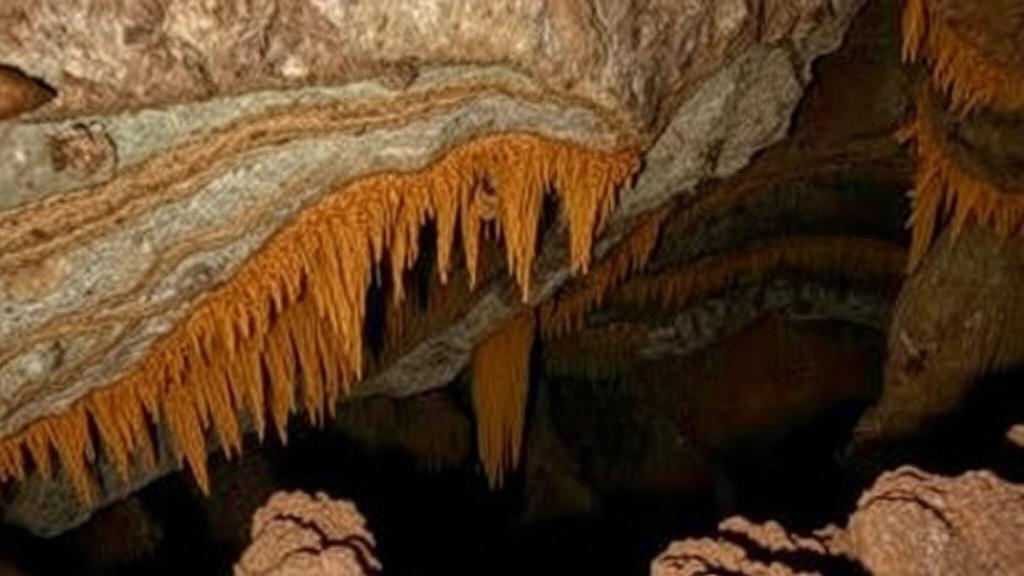
Costa Rica’s familiar image as a biodiversity haven conceals a second world hidden beneath its forests, mountains and volcanic slopes. Caves and other subterranean spaces there host a poorly documented community that includes bats, blind or pale fish, cave-adapted crabs, whip scorpions, insects, amphibians, reptiles and mammals. A comprehensive review combining 62 historical sources with field observations from 2015 to 2018 has produced the clearest picture yet of this elusive ecosystem: at least 123 animal species have been recorded in Costa Rican caves, alongside 82 records identifiable only to a broad taxonomic level. The database now contains 959 observations from 127 locations, but that represents only about 30% of the more than 435 natural caves and artificial subterranean sites known in the country.
The new synthesis shows why Costa Rica’s underground life could be a major frontier for discovery. Although the nation possesses approximately 430 square kilometres of limestone and numerous karst landscapes, as well as volcanic caves with a combined mapped length of 2.2 kilometres, biological sampling has been sparse and uneven. Records were concentrated in two principal cave clusters: Barra Honda in the Tempisque Conservation Area and the Zona Sur karst area in the Osa Conservation Area. Most known sites with fauna records—91 of them—fall outside protected areas. Researchers therefore face a dual challenge: identifying what lives below ground and protecting the places that sustain rarely seen species before their distributions become too fragmented to understand.
Historical evidence reveals a long but intermittent scientific interest. The earliest reports of cave fauna date to 1965, and subsequent studies concentrated heavily on bats. Long-term work on Seba’s short-tailed bats began in Santa Rosa National Park in the late 1970s, while expeditions organized by the US National Speleological Society and European groups contributed species lists and observations. Yet only 23 of the 62 sources examined in the review were peer-reviewed articles, and many of the remainder were short reports or expedition notes whose identifications require caution. The review also added observations from 42 sites, including four without previous biospeleological records, demonstrating how quickly knowledge can expand when field teams revisit relatively familiar landscapes.
Bats dominate the available data because they are conspicuous, ecologically important and often present in large colonies. Thirty-six species have been recorded in or at the entrances of Costa Rican caves. Seba’s short-tailed bat was reported from 44 locations, the common vampire bat from 34, and the greater dog-like bat from 22. The richest assemblage found in the compiled dataset was at La Trampa, with 13 species, followed by Corredores with 11 and Gabinarraca and Emus with eight each. Eight bat species are regarded as cave-dependent, including several mustached bats, the Mexican funnel-eared bat and cave-roosting nectar and sword-nosed bats. Although all 36 were listed globally as Least Concern, that classification can obscure local vulnerability: a species with a wide geographic range may depend on a small number of undisturbed roosts within Costa Rica.
Several of the most important underground sites remain unprotected, including the bat-rich caves of Corredores, Gabinarraca, Damas and Emus. Barra Honda National Park demonstrates that effective karst conservation is possible: it was created to protect a distinctive limestone landscape, and 15 of the 16 known sites in the Barra Honda area lie within its boundaries. By contrast, only five of 63 sites in the Zona Sur karst region have any state protection. Artificial tunnels and abandoned mines also provide shelter for wildlife, yet they are frequently overlooked in monitoring programmes. The review warns that tourism, speleological visitation, pollution, disturbance and climate change could damage cave environments before their biological importance is fully recognized.
The invertebrates reveal an equally varied—and far less resolved—underground world. Researchers recorded 81 insect taxa, 43 arachnids, 11 springtails and bristletails, eight crustaceans and smaller numbers of snails, millipedes, centipedes, worms, copepods and flatworms. Whip scorpions, or amblypygids, appeared in 27 sites, while a cave in the country bears their Spanish common name, Amblipigio. Harvestmen, pseudoscorpions, scorpions, spiders and many mites were reported, but most were named only to order or family. Field observations added the first Costa Rican cave record of the true bug Amnestus subferrugineus and the first record of the genus Amnestus in the country’s caves. Such additions are modest individually but reveal how incomplete previous identification work has been.
Among the invertebrates, the freshwater crab Pseudothelphusa puntarenas, described from Emus cave in southern Costa Rica, is currently the country’s only known species formally described as a true cave dweller. It lacks conspicuous external modifications associated with cave life, yet it has been observed only underground and is categorized as Data Deficient globally. Some springtails and mites from Barra Honda display features suggestive of subterranean adaptation, as does a harvestman reported from southern Costa Rica. Long-term biological studies would be needed to determine whether these organisms are obligate cave inhabitants or species that merely exploit caves. The available evidence nevertheless points to a potentially important collection of specialized life waiting to be studied in detail.
Other vertebrates show that cave adaptation can involve changes in pigmentation, eyes and habitat use. Pale individuals of the three-barred catfish Rhamdia guatemalensis were observed in the Corredores and Bananal cave systems, while the Mexican tetra, also known as the blind cave fish, has been studied in a karst spring in Guanacaste. Both display traits associated with subterranean life, including pale coloration and reduced eyes, although their biology, taxonomy and evolutionary adaptations remain poorly understood. Frogs and toads are frequent visitors, and live tadpoles in southern Costa Rican subterranean lakes raise the possibility of underground breeding. Deep passages have also hosted night lizards, South American snapping turtles, white-lipped mud turtles and the aquatic prawn snake. These cases show that the caves are not empty refuges but active habitats embedded in wider ecological networks.
Scientists say the path forward is increasingly open to technology. Environmental DNA could detect animals difficult to observe or collect, while acoustic monitoring, improved traps and structured citizen-science programmes could extend fieldwork beyond specialist expeditions. Long-term sampling should target cave invertebrate communities, aquatic stygofauna, artificial structures and the Mesovoid Shallow Substratum—the network of small underground spaces beneath the soil surface that has yielded important discoveries elsewhere. Ecological questions also need attention: researchers should quantify population sizes, seasonal changes, food webs and the ecosystem services provided by subterranean organisms. For bats specifically, monitoring must extend beyond species lists to abundance, behavioural ecology and the disturbance sensitivity of major roosts. With most known caves still unstudied, the emerging picture is less a finished inventory than an invitation: Costa Rica’s subterranean world may contain many species still unknown to science, and the race to document them must begin with protecting the habitats that make those discoveries possible.
Subject of Research: The diversity, ecology and conservation of cave-dwelling fauna in Costa Rica
Article Title: Cave-dwelling fauna of Costa Rica: current state of knowledge and future research perspectives
Article References: Deleva, S., Ulloa, A., Oliveira, H. F. M., Simov, N., Didonna, F., & Chaverri, G. (2023). Cave-dwelling fauna of Costa Rica: current state of knowledge and future research perspectives. Subterranean Biology, 47, 29-62. https://doi.org/10.3897/subtbiol.47.113219
Image Credits: AI Generated
DOI: 10.3897/subtbiol.47.113219
Keywords: Costa Rica, cave fauna, biospeleology, subterranean biodiversity, karst ecosystems, bats, cave conservation, environmental DNA, stygofauna, troglobites, Cave-dwelling, fauna
Cite Scienmag News
Margaret Porter. (October 19, 2026). Costa Rica’s Caves Hide a Vastly Unmapped Animal World. Scienmag. https://scienmag.com/costa-ricas-caves-hide-a-vastly-unmapped-animal-world/
Margaret Porter. "Costa Rica’s Caves Hide a Vastly Unmapped Animal World." Scienmag, 19 October 2026, https://scienmag.com/costa-ricas-caves-hide-a-vastly-unmapped-animal-world/. Accessed 19 October 2026.
Margaret Porter. "Costa Rica’s Caves Hide a Vastly Unmapped Animal World." Scienmag. October 19, 2026. https://scienmag.com/costa-ricas-caves-hide-a-vastly-unmapped-animal-world/


