


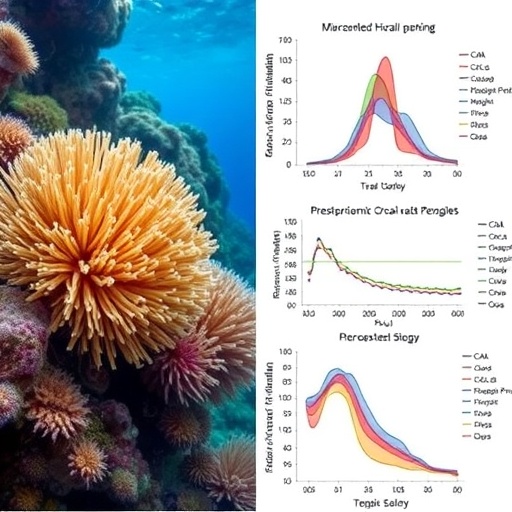
Recent advancements in marine biology have unveiled fascinating insights into the resilience of coral species, particularly through the lens of transcriptomic analysis. A groundbreaking study published in the journal Coral Reefs has drawn attention to the mechanisms by which a widespread species of the coral genus Acropora demonstrates remarkable resilience to heat stress. Conducted by a team of researchers led by David J.A. Stick, the study delves into the intricate genetic responses that may favorably influence coral survival amid escalating ocean temperatures linked to climate change.
Corals, as vital components of marine ecosystems, significantly contribute to biodiversity and provide essential services to coastal communities. However, the ongoing threat of global warming has rendered them increasingly vulnerable to bleaching, which occurs when corals expel their symbiotic algae under environmental stress, leading to severe population declines. In this light, understanding the genetic resilience mechanisms of corals to thermal stress has become paramount for marine conservation efforts.
The study utilized advanced transcriptomic technologies to assess gene expression profiles in Acropora corals subjected to elevated temperatures. By examining the transcriptomes—essentially the complete set of RNA transcripts produced by the genome—researchers could identify which genes are activated or suppressed in response to heat stress. This innovative approach allows for a deeper exploration into the biological underpinnings of coral adaptation and survival strategies.
Initial findings highlighted that specific stress response genes were significantly upregulated when corals were exposed to higher temperatures. These genes are believed to play crucial roles in cellular repair processes, protein stability, and antioxidant defense mechanisms, all of which are vital for combating oxidative stress induced by elevated thermal conditions. Such insights provide a promising avenue for understanding how certain Acropora species may effectively endure what could otherwise be lethal environmental conditions.
Furthermore, the research indicates that transcriptomic resilience might not be uniform across all coral species or even among different populations of the same species. Genetic variations and adaptability are key factors influencing the magnitude of a coral’s response to heat stress. This suggests that specific gene expressions may correlate with the geographic distribution of resilient populations, further substantiating the concept of local adaptation in response to environmental pressures.
Interestingly, the study reports that flexibility in gene expression was found to correlate with the historical temperature profiles of different coral populations. Corals residing in naturally warmer waters exhibited a more pronounced ability to activate stress response mechanisms when subjected to experimental heat stress. This local adaptation may provide critical insights into conservation strategies as it highlights the importance of preserving genetically diverse and regionally adapted coral populations.
Another notable aspect of the research is its potential implications for coral reef restoration initiatives. By identifying the genetic traits associated with heat resilience, scientists can better inform breeding programs aimed at enhancing the resilience of coral species in nurseries before reintroducing them into the wild. This could mitigate the impacts of climate change and help stabilize coral populations that are critical to marine ecosystems.
In addition to the implications for conservation, the study raises questions regarding the long-term sustainability of coral reefs under ongoing climate stressors. If resilience is linked to specific transcriptomic responses, will these response mechanisms hold up as ocean temperatures continue to rise? Researchers highlight that while some corals show promising adaptability, reliance on such mechanisms could exhaust their physiological capacities, particularly under prolonged or extreme stress conditions.
The dynamic nature of coral reef environments necessitates ongoing research into how various stressors—including heat, ocean acidification, and pollution—interact with the physiological responses of corals. Future investigations that integrate transcriptomic data with field observations could illuminate the complex interactions between genetic resilience and environmental change. Such holistic approaches are vital for formulating robust strategies to protect and conserve coral reefs in an era marked by rapid ecological transitions.
In conclusion, this groundbreaking research sheds light on the fascinating genetic resilience of Acropora corals in the face of heat stress, offering hope for the future of coral reefs. By elucidating the molecular mechanisms that confer stress resilience, this study provides a foundation for innovative conservation strategies that can mitigate the impacts of climate change on these critical ecosystems. It is crucial for policymakers, conservationists, and scientists to continue collaborating and sharing knowledge to ensure that coral reefs can thrive despite the challenges they face in a warming world.
As we navigate through the complexities of marine ecosystems, studies like this offer a glimmer of hope and serve as a call for urgent action. Protecting resilient coral populations may not only serve to preserve biodiversity but also safeguard the livelihoods of human communities that depend on healthy marine environments. The findings underscore the need for continued investment in research that merges ecological understanding with conservation practices, paving the way for a sustainable future for coral reefs globally.
Stick, D.J.A., Kennington, W.J., Castro-Sanguino, C. et al. Transcriptomic resilience to heat stress in a wide-spread Acropora coral.
Coral Reefs (2025). https://doi.org/10.1007/s00338-025-02722-w
Cite Scienmag News
Juliet Wilcox. (August 13, 2025). Coral’s Transcriptomic Response to Heat Stress Resilience. Scienmag. https://scienmag.com/corals-transcriptomic-response-to-heat-stress-resilience/
Juliet Wilcox. "Coral’s Transcriptomic Response to Heat Stress Resilience." Scienmag, 13 August 2025, https://scienmag.com/corals-transcriptomic-response-to-heat-stress-resilience/. Accessed 4 September 2026.
Juliet Wilcox. "Coral’s Transcriptomic Response to Heat Stress Resilience." Scienmag. August 13, 2025. https://scienmag.com/corals-transcriptomic-response-to-heat-stress-resilience/


