

Wednesday, October 21, 2026
Science
No Result
View All Result
  • Login
  • HOME
  • SCIENCE NEWS
  • CONTACT US
  • HOME
  • SCIENCE NEWS
  • CONTACT US
No Result
View All Result
Scienmag
No Result
View All Result
Home Science News Social Science

Consensus study maps treatment priorities for youths with disruptive behavior

October 21, 2026
in Social Science
Glenn Wilkins
By Glenn Wilkins Scienmag Editorial Profile - Clinical Psychology
Reading Time: 3 mins read
0
Consensus study maps treatment priorities for youths with disruptive behavior

Consensus study maps treatment priorities for youths with disruptive behavior

65
SHARES
587
VIEWS
Share on FacebookShare on Twitter
ADVERTISEMENT

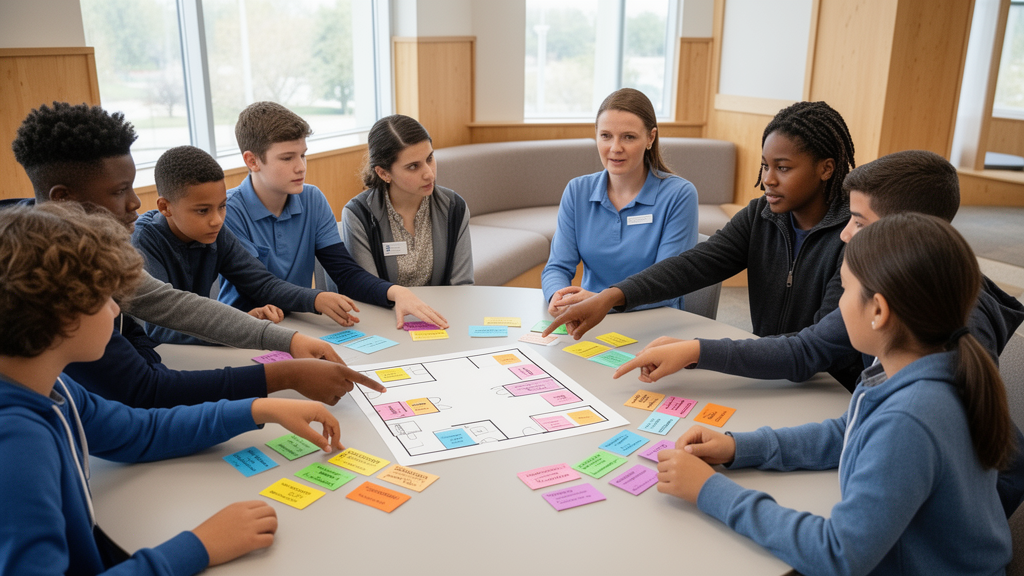
A modified Delphi study involving 86 parents, clinicians and researchers identified 26 high-priority treatment targets for children aged 3 to 12 and 30 for adolescents aged 13 to 18 with disruptive behavior and callous-unemotional traits. The consensus exercise provides a stakeholder-informed map for developing and testing treatments rather than identifying a single recommended intervention, and it did not test whether addressing any target improves outcomes. The findings were published in BMC Psychology.

Researchers evaluated 42 potential targets spanning behavioral, emotional, cognitive, family, peer, school and personality domains. Panel members rated targets for children and adolescents separately and also assessed their practical feasibility in real-world settings. The modified Delphi method is designed to build consensus among experts. Of the targets receiving high-priority ratings, 13 for children and 17 for adolescents were considered at least moderately feasible to address in outpatient care.

For children, the strongest priorities centered on the home. Panel members emphasized inconsistent parenting, low parental involvement and negative parental beliefs toward the child. Emotional skills, including empathy and the ability to regulate emotions, were also important, along with selected school and environmental factors. For adolescents, family and parenting factors remained important, but the priorities broadened to include peer-related and emotional targets, including difficulties with empathy, emotion processing and motivation to change. Several cognitive factors were also prioritized, including deviant goals and values and difficulties with moral reasoning. Aggressive, defiant and conduct-related behaviors remained core targets across both age groups.

Joyce Lui, an assistant professor in Concordia University’s Department of Psychology and the paper’s corresponding author, said the results do not point to one new treatment to pursue. Instead, they show which areas stakeholders consider important and feasible. The priorities may help researchers decide which elements to include in interventions and how those elements might be sequenced and dosed in future studies. Some peer- and school-related priorities could require greater involvement from and coordination with institutions outside clinical environments, particularly schools, rather than relying on outpatient care alone.

The findings also underscore the need for treatment to address more than a reduction in disruptive behavior. Lui noted that treatments focused on disruptive behavior already exist and work well, but they may need to be expanded to address the emotional, cognitive and relationship stresses associated with callous-unemotional traits, especially among adolescents. Callous-unemotional traits can include reduced empathy, limited guilt and lack of concern for others. The authors said they were not aware of an existing treatment designed specifically for youths with a callous and unemotional subgroup, and that evidence is mixed when standard treatments are adapted for those cases. The study itself did not compare treatments, establish their effectiveness or determine whether any prioritized target leads to better clinical outcomes. Further research is therefore needed to evaluate the usefulness, sequencing and dosing of different treatment components. The authors also cautioned that callous-unemotional traits are not fixed and should not be used to assume that affected youths cannot benefit from treatment.

Subject of Research: Stakeholder-prioritized treatment targets for youths with disruptive behavior and callous-unemotional traits

Article Title: Youths with disruptive behaviour and callous-unemotional traits need a broad range of treatments, Concordia study shows

Article References: Youths with disruptive behaviour and callous-unemotional traits need a broad range of treatments, Concordia study shows. Original publication (Bibliographic details unavailable.)

Image Credits: AI Generated

DOI: Not provided

Keywords: child mental health, adolescent mental health, disruptive behavior, callous-unemotional traits, Delphi consensus, treatment priorities, parenting, emotional regulation, empathy, school coordination, clinical psychology, Youths

Cite Scienmag News

Glenn Wilkins. (October 21, 2026). Consensus study maps treatment priorities for youths with disruptive behavior. Scienmag. https://scienmag.com/consensus-study-maps-treatment-priorities-for-youths-with-disruptive-behavior/


Glenn Wilkins. "Consensus study maps treatment priorities for youths with disruptive behavior." Scienmag, 21 October 2026, https://scienmag.com/consensus-study-maps-treatment-priorities-for-youths-with-disruptive-behavior/. Accessed 21 October 2026.

Glenn Wilkins. "Consensus study maps treatment priorities for youths with disruptive behavior." Scienmag. October 21, 2026. https://scienmag.com/consensus-study-maps-treatment-priorities-for-youths-with-disruptive-behavior/

Tags: Adolescent Mental Healthand peer intervention domainsBehavioralcallous-unemotional traitscallous-unemotional traits in adolescentsChild Mental Healthclinical psychologyDelphi consensusDelphi study in psychologydisruptive behaviorDisruptive behavior treatment prioritiesemotionalemotional regulationemotional regulation in youthempathyfamily and parenting factors in behavioral issuesfeasibility of behavioral targets in outpatient settingshigh-priority targets for disruptive behaviormulti-domain treatment mapping for childhood and adolescent conduct issuesparentingschool coordinationstakeholder consensus on child and adolescent mental healthtreatment development for disruptive youthtreatment prioritiesyouth behavioral intervention mappingYouths
Share26Tweet16
Previous Post

Observational Maryland study links chronic care management to lower acute care use

Next Post

Research report: Large-area textile-based piezoresistive sensor array for hull stress distribution mapping

Related Posts

Loneliness linked most strongly to depression among US cancer survivors
Social Science

Loneliness linked most strongly to depression among US cancer survivors

October 21, 2026
Evolutionary model identifies thresholds for agricultural data participation in China
Social Science

Evolutionary model identifies thresholds for agricultural data participation in China

October 21, 2026
Expert report finds modest anhedonia benefits from dopamine-targeting drugs
Social Science

Expert report finds modest anhedonia benefits from dopamine-targeting drugs

October 21, 2026
VR physiology laboratory competency questionnaire validated in undergraduate students
Social Science

VR physiology laboratory competency questionnaire validated in undergraduate students

October 21, 2026
Desk study maps failures in India’s honour-violence response
Social Science

Desk study maps failures in India’s honour-violence response

October 21, 2026
Social isolation shapes Japanese common toad tadpole behavior
Social Science

Social isolation shapes Japanese common toad tadpole behavior

October 21, 2026
Next Post
Research report: Large-area textile-based piezoresistive sensor array for hull stress distribution mapping

Research report: Large-area textile-based piezoresistive sensor array for hull stress distribution mapping

  • Mothers who receive childcare support from maternal grandparents show more optimized

    Mothers who receive childcare support from maternal grandparents show more parental warmth, finds NTU Singapore study

    27656 shares
    Share 11059 Tweet 6912
  • University of Seville Breaks 120-Year-Old Mystery, Revises a Key Einstein Concept

    1061 shares
    Share 424 Tweet 265
  • Bee body mass, pathogens and local climate influence heat tolerance

    682 shares
    Share 273 Tweet 171
  • Researchers record first-ever images and data of a shark experiencing a boat strike

    546 shares
    Share 218 Tweet 137
  • Groundbreaking Clinical Trial Reveals Lubiprostone Enhances Kidney Function

    531 shares
    Share 212 Tweet 133
Science

Embark on a thrilling journey of discovery with Scienmag.com—your ultimate source for cutting-edge breakthroughs. Immerse yourself in a world where curiosity knows no limits and tomorrow’s possibilities become today’s reality!

RECENT NEWS

  • Research report: Large-area textile-based piezoresistive sensor array for hull stress distribution mapping
  • Consensus study maps treatment priorities for youths with disruptive behavior
  • Observational Maryland study links chronic care management to lower acute care use
  • Public Health Institutions Face AI-Flooded Information and Defunded Evidence Systems

Categories

  • Agriculture
  • Anthropology
  • Archaeology
  • Athmospheric
  • Biology
  • Biotechnology
  • Blog
  • Bussines
  • Cancer
  • Chemistry
  • Climate
  • Earth Science
  • Editorial Policy
  • Marine
  • Mathematics
  • Medicine
  • Pediatry
  • Policy
  • Psychology & Psychiatry
  • Science Education
  • Science News
  • Social Science
  • Space
  • Technology and Engineering

Subscribe to Blog via Email

Enter your email address to subscribe to this blog and receive notifications of new posts by email.

Join 5,151 other subscribers

© 2025 Scienmag - Science Magazine

Welcome Back!

Login to your account below

Forgotten Password?

Retrieve your password

Please enter your username or email address to reset your password.

Log In
No Result
View All Result
  • HOME
  • SCIENCE NEWS
  • CONTACT US

© 2025 Scienmag - Science Magazine

Discover more from Science

Subscribe now to keep reading and get access to the full archive.

Continue reading