

Wednesday, October 21, 2026
Science
No Result
View All Result
  • Login
  • HOME
  • SCIENCE NEWS
  • CONTACT US
  • HOME
  • SCIENCE NEWS
  • CONTACT US
No Result
View All Result
Scienmag
No Result
View All Result
Home Science News Social Science

Social isolation shapes Japanese common toad tadpole behavior

October 21, 2026
in Social Science
Courtney Benton
By Courtney Benton Scienmag Editorial Profile - Science and Technology Policy
Reading Time: 3 mins read
0
Social isolation shapes Japanese common toad tadpole behavior

Social isolation shapes Japanese common toad tadpole behavior

65
SHARES
587
VIEWS
Share on FacebookShare on Twitter
ADVERTISEMENT

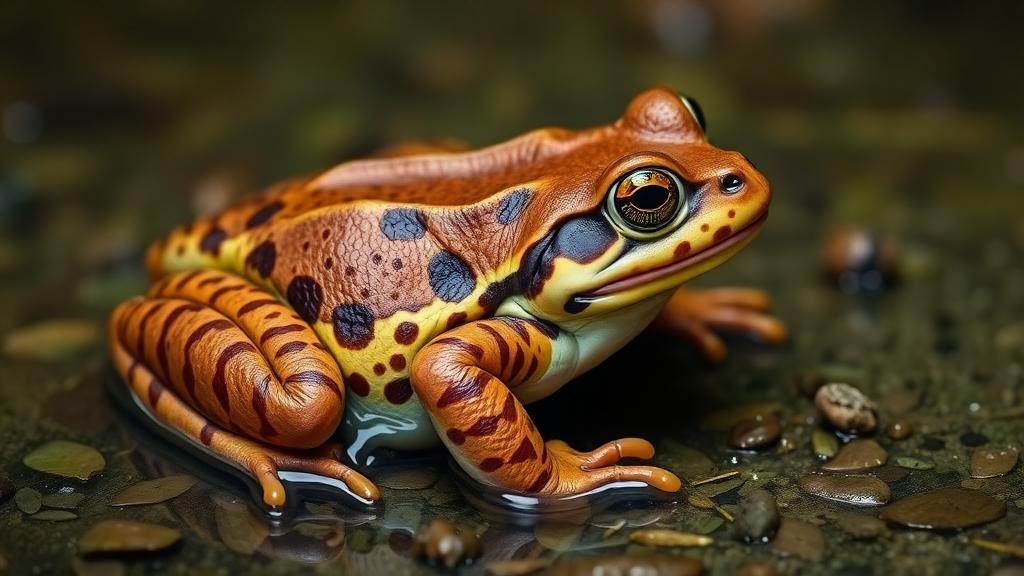
Japanese common toad tadpoles kept in solitary conditions spent more time away from other tadpoles than those raised with siblings, according to a peer-reviewed experimental study published in Animal Cognition. The results suggest that early social experience can shape association behavior more strongly than kinship or the surrounding water environment, although the researchers found no significant sibling preference in the tested species.

Lead author Kazuko Hase of Kyoto University collected Bufo formosus tadpoles from four egg masses collected around the University of Tokyo’s Botanical Gardens and treated each egg mass as a sibling group. After hatching, the tadpoles were assigned to rearing conditions that combined tap water or pond water with either group rearing alongside 20 siblings or solitary rearing. Following two weeks, the researchers tested whether the tadpoles preferred associating with siblings or with nonsiblings.

Each choice test placed sibling, nonsibling and neutral zones in an experimental tank. Investigators tracked the movement of focal tadpoles for 60 minutes and compared the time each animal spent in the three zones. The tracked sample comprised 47 group-reared and 43 solitary-reared tadpoles. The analysis found that tadpoles did not prefer siblings under either rearing condition, indicating a lack of the sibling association preference reported in some other tadpole species. The findings also showed that solitary-reared animals generally had a reduced tendency to approach others, whether they were siblings or nonsiblings.

Solitary-reared tadpoles spent a significantly greater proportion of their time in the neutral zone than group-reared tadpoles, a difference reported with t = 3.155 and p = 0.002. This response was observed across the tested aquatic environments, supporting the authors’ conclusion that social isolation had a robust influence on association behavior. In contrast, the researchers detected no significant effect of tap water versus pond water on the tadpoles’ choices.

“Unlike closely related species in which kin recognition has been confirmed during social aggregation, I was surprised to find that it is not essential for social aggregation in the Japanese common toad,” said Hase, the study’s corresponding author. The experiment therefore does not demonstrate that Japanese common toad tadpoles lack all social responses: they continued to aggregate, but their choices did not reveal a significant preference for kin. It instead indicates that their association behavior is more strongly associated with prior experience of living with peers than with sibling status or water source.

The study was conducted in laboratory tanks and used one species of amphibian larva, so its conclusions are limited to the tested populations, rearing conditions and observation period. The experiment did not establish how long solitary-rearing effects persist or whether they occur in natural ponds. Nevertheless, the findings offer a mechanistic explanation for sociality that does not require kin recognition: repeated social contact during early development may help establish the tendency to approach other members of the species.

Japanese common toad tadpoles aggregate as a response to predation risk, making their social decisions relevant to both behavioral ecology and conservation. Hase noted that the Japanese common toad faces a threat of extinction and said the research may help inform efforts to protect the species. The article, “Social isolation, rather than kinship, influences association behavior in toad tadpoles (Bufo formosus),” appeared in Animal Cognition on 6 August 2026. The authors declared no competing interests.

Subject of Research: Experimental study of how social isolation, kinship and water environment affect association behavior in Japanese common toad tadpoles.

Article Title: The tadpoles that don't care about their siblings

Article References: The tadpoles that don't care about their siblings. Original publication (Bibliographic details unavailable.)

Image Credits: AI Generated

DOI: Not provided

Keywords: Japanese common toad, tadpole behavior, social isolation, kin recognition, association behavior, social aggregation, Bufo formosus, early-life experience, Animal Cognition, amphibian conservation, tadpoles, don't

Cite Scienmag News

Courtney Benton. (October 21, 2026). Social isolation shapes Japanese common toad tadpole behavior. Scienmag. https://scienmag.com/social-isolation-shapes-japanese-common-toad-tadpole-behavior/

Courtney Benton. "Social isolation shapes Japanese common toad tadpole behavior." Scienmag, 21 October 2026, https://scienmag.com/social-isolation-shapes-japanese-common-toad-tadpole-behavior/. Accessed 21 October 2026.

Courtney Benton. "Social isolation shapes Japanese common toad tadpole behavior." Scienmag. October 21, 2026. https://scienmag.com/social-isolation-shapes-japanese-common-toad-tadpole-behavior/


Tags: amphibian conservationanimal cognitionanimal cognition and social behavior in amphibiansassociation behaviorbehavioral plasticity in Japanese common toad tadpBufo formosusdon'tearly social experience in amphibiansearly-life experienceenvironmental influences on tadpole behaviorexperimental study of tadpole socializationimpact of solitary rearing on tadpole interactionsJapanese common toadJapanese toad tadpole behaviorkin recognitionpeer-reviewed research on amphibian social dynamicsrole of water environment in tadpole developmentsibling versus nonsibling preferences in amphibianssocial aggregationsocial isolationsocial isolation effects on amphibian developmenttadpole association and social behaviortadpole behaviortadpoles
Share26Tweet16
Previous Post

Validated HPLC assay detects trace impurity in montelukast synthesis

Next Post

Review Proposes Mental Pain Framework for Adolescence

Related Posts

Study identifies open-innovation microfoundations for capability creation in African markets
Social Science

Study identifies open-innovation microfoundations for capability creation in African markets

October 21, 2026
Archival Study Links Women to Naples Charity’s Institutional Memory
Social Science

Archival Study Links Women to Naples Charity’s Institutional Memory

October 21, 2026
Macau study links relative income to life satisfaction through three perceptions
Social Science

Macau study links relative income to life satisfaction through three perceptions

October 21, 2026
Urdu worship songs reinforce faith and belonging in Karachi Sunday schools
Social Science

Urdu worship songs reinforce faith and belonging in Karachi Sunday schools

October 21, 2026
Cross-population MRI study links brain dysconnectivity to depression status
Social Science

Cross-population MRI study links brain dysconnectivity to depression status

October 21, 2026
Qualitative study identifies barriers to family reintegration among Tanzanian orphanage children
Social Science

Qualitative study identifies barriers to family reintegration among Tanzanian orphanage children

October 21, 2026
Next Post
Review Proposes Mental Pain Framework for Adolescence

Review Proposes Mental Pain Framework for Adolescence

  • Mothers who receive childcare support from maternal grandparents show more optimized

    Mothers who receive childcare support from maternal grandparents show more parental warmth, finds NTU Singapore study

    27656 shares
    Share 11059 Tweet 6912
  • University of Seville Breaks 120-Year-Old Mystery, Revises a Key Einstein Concept

    1061 shares
    Share 424 Tweet 265
  • Bee body mass, pathogens and local climate influence heat tolerance

    682 shares
    Share 273 Tweet 171
  • Researchers record first-ever images and data of a shark experiencing a boat strike

    546 shares
    Share 218 Tweet 137
  • Groundbreaking Clinical Trial Reveals Lubiprostone Enhances Kidney Function

    531 shares
    Share 212 Tweet 133
Science

Embark on a thrilling journey of discovery with Scienmag.com—your ultimate source for cutting-edge breakthroughs. Immerse yourself in a world where curiosity knows no limits and tomorrow’s possibilities become today’s reality!

RECENT NEWS

  • Review maps microbial and nano strategies against agricultural soil contaminants
  • Moderate exercise protects against osteoarthritis in mice through gut microbes
  • Circadian syndrome linked to higher Parkinson’s risk in UK Biobank cohort
  • Review Proposes Mental Pain Framework for Adolescence

Categories

  • Agriculture
  • Anthropology
  • Archaeology
  • Athmospheric
  • Biology
  • Biotechnology
  • Blog
  • Bussines
  • Cancer
  • Chemistry
  • Climate
  • Earth Science
  • Editorial Policy
  • Marine
  • Mathematics
  • Medicine
  • Pediatry
  • Policy
  • Psychology & Psychiatry
  • Science Education
  • Science News
  • Social Science
  • Space
  • Technology and Engineering

Subscribe to Blog via Email

Enter your email address to subscribe to this blog and receive notifications of new posts by email.

Join 5,150 other subscribers

© 2025 Scienmag - Science Magazine

Welcome Back!

Login to your account below

Forgotten Password?

Retrieve your password

Please enter your username or email address to reset your password.

Log In
No Result
View All Result
  • HOME
  • SCIENCE NEWS
  • CONTACT US

© 2025 Scienmag - Science Magazine

Discover more from Science

Subscribe now to keep reading and get access to the full archive.

Continue reading