


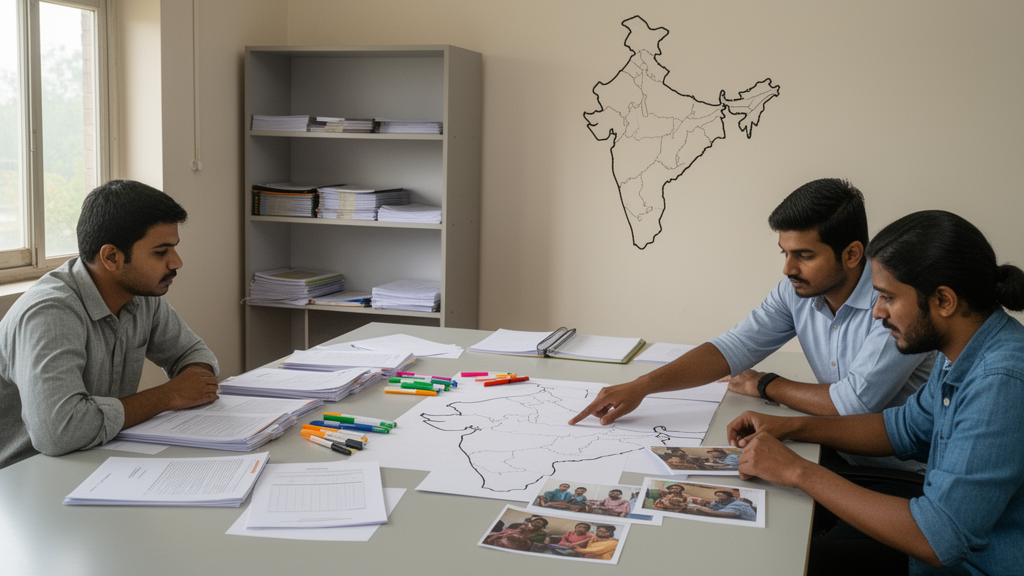
A mixed-methods, desk-based socio-legal study of 31 honour-crime cases reported across 10 Indian states and union territories between 2020 and 2025 found recurring breakdowns between formal legal protections and protection on the ground. Researchers analysed the case sample alongside judgments and official documents, tracing how threats against women were translated—or failed to be translated—into registration, investigation, protection, prosecution, bail and trial.
The study focuses on an implementation gap created where two systems meet: informal social regulation and state governance. Its analysis considers caste and kinship authority, patriarchal control over women’s sexuality, community sanctions, police discretion, prosecutorial framing, evidentiary practices and uneven accountability. Rather than treating honour killings and honour-based violence solely as products of tradition, the research places them within an integrated “governance chain” that examines how institutional decisions affect a case at each stage.
Across the sampled cases, several points of breakdown appeared repeatedly. The study identifies delayed or strategic non-registration, mediation that returned women to coercive families, and misclassification of deaths as suicide or accident. It also records weak witness protection and instances in which counter-cases criminalised survivors or their partners. Because the research is based on a purposive, stratified sample and supplementary official records, its case map documents patterns within the selected material rather than estimating national prevalence or proving that every failure occurred in the same way.
The results also distinguish social change from a simple linear shift in safety. The paper reports that education, increased mobility and digital intimacy can weaken the monopoly of community control over relationships, but the same changes can provoke backlash and “spectacular” violence. These observations concern associations and mechanisms proposed by the study; they do not establish that any one of education, mobility or digital intimacy causes violence. Likewise, the constitutional protections and judicial condemnations discussed by the authors are not presented as evidence that formal safeguards have produced consistent practical protection.
The authors conclude with three policy outputs: an honour-based-violence governance scorecard, a standardised case-tracking protocol, and an accountability framework for coordinating prevention, protection and prosecution. The study does not test the effectiveness of these proposed measures through a clinical trial or other outcome evaluation, so their likely impact remains unmeasured. Its principal contribution is instead a structured diagnosis of where the response system broke down in the 31 cases examined and a set of tools intended to make those stages more visible and accountable.
Subject of Research: Socio-legal analysis of honour-based violence and governance failures in India
Article Title: Rights on paper, control on the ground: honour killings, social change, and the implementation gap in India
Article References: Alam, M. M. (2026). Rights on paper, control on the ground: honour killings, social change, and the implementation gap in India. SN Social Sciences, 6(11), Article 566. https://doi.org/10.1007/s43545-026-01816-8
Image Credits: AI Generated
DOI: 10.1007/s43545-026-01816-8
Keywords: honour-based violence, India, honour killings, gender-based violence, police accountability, legal implementation, social change, socio-legal research, Rights, paper, control, ground
Cite Scienmag News
Courtney Benton. (October 21, 2026). Desk study maps failures in India’s honour-violence response. Scienmag. https://scienmag.com/desk-study-maps-failures-in-indias-honour-violence-response/
Courtney Benton. "Desk study maps failures in India’s honour-violence response." Scienmag, 21 October 2026, https://scienmag.com/desk-study-maps-failures-in-indias-honour-violence-response/. Accessed 21 October 2026.
Courtney Benton. "Desk study maps failures in India’s honour-violence response." Scienmag. October 21, 2026. https://scienmag.com/desk-study-maps-failures-in-indias-honour-violence-response/


