

Wednesday, October 21, 2026
Science
No Result
View All Result
  • Login
  • HOME
  • SCIENCE NEWS
  • CONTACT US
  • HOME
  • SCIENCE NEWS
  • CONTACT US
No Result
View All Result
Scienmag
No Result
View All Result
Home Science News Psychology & Psychiatry

Physical Attitudes Linked to Adolescent Life Satisfaction Beyond Activity

October 21, 2026
in Psychology & Psychiatry
Glenn Wilkins
By Glenn Wilkins Scienmag Editorial Profile - Clinical Psychology
Reading Time: 3 mins read
0
Physical Attitudes Linked to Adolescent Life Satisfaction Beyond Activity

Physical Attitudes Linked to Adolescent Life Satisfaction Beyond Activity

65
SHARES
587
VIEWS
Share on FacebookShare on Twitter
ADVERTISEMENT

A survey of 58,148 adolescents in England found that positive attitudes toward physical activity were associated with higher life satisfaction even after researchers accounted for how much activity participants reported. Each additional strongly endorsed attitude was linked to a 0.248-point increase on a 0-to-10 life-satisfaction scale in the fully adjusted model, with a 95% confidence interval of 0.231 to 0.265.

The finding comes from a cross-sectional, survey-weighted analysis of the Active Lives Children and Young People Survey 2023–2024. The participants were in school Years 7–11, corresponding to approximately ages 11 to 16. Because the study measured activity and wellbeing at the same time, its results show an association rather than establishing which came first or whether changing attitudes would improve life satisfaction.

Researchers examined five physical literacy-related attitudes: enjoyment of physical activity, confidence in participating, perceived ease of participation, understanding of its benefits, and knowledge of how to participate and improve. The primary measure counted how many of these five statements an adolescent strongly endorsed. The analysis therefore captured psychological appraisals of physical activity alongside its frequency, rather than treating activity volume as the sole indicator of an adolescent’s experience.

Physical activity itself was represented by an official survey-derived, four-category measure based on moderate-to-vigorous activity during the previous week. In the fully adjusted model, activity category had a small overall association with life satisfaction, with an F statistic of 6.42 and a p-value of 0.0003. However, the adjusted estimates were not monotonic, meaning that life-satisfaction scores did not rise consistently from lower to higher activity categories.

Relative to participants reporting less than 30 minutes of activity per day, those recording at least 60 minutes daily had an adjusted life-satisfaction coefficient of −0.111, with a 95% confidence interval of −0.200 to −0.022. The other two activity contrasts were not statistically significant. These findings do not show that greater activity is generally associated with lower wellbeing; they show that the cross-sectional relationship was small, varied across categories and did not follow a simple dose-response pattern.

The researchers also tested whether physical activity modified the relationship between physical literacy-related attitudes and life satisfaction. That interaction was not statistically significant, with an F statistic of 1.88 and a p-value of 0.132. In other words, the available evidence did not indicate that the association between attitudes and life satisfaction clearly differed according to adolescents’ activity category.

Models adjusted for gender, school year group, ethnicity, disability or a limiting condition, and family affluence measured with the standard 2023–2024 Family Affluence Scale. Life satisfaction was self-reported on a scale from 0 to 10. The large sample and use of survey weights allowed the analysis to account for features of the survey design, although the observational design still limits conclusions about causation.

Taken together, the results suggest that adolescents’ feelings about physical activity may deserve attention when researchers consider wellbeing, not simply the number of minutes they spend moving. The clearest result was the positive association between strongly endorsed physical literacy-related attitudes and life satisfaction. Establishing whether those attitudes influence wellbeing over time—and whether changing them produces benefits—would require longitudinal and intervention studies.

Subject of Research: Associations between physical activity, physical literacy attitudes and life satisfaction among English adolescents

Article Title: Physical activity, physical literacy-related attitudes, and life satisfaction among adolescents in England: a survey-weighted analysis

Article References: Zhao, Y., & Wang, Y. (2026). Physical activity, physical literacy-related attitudes, and life satisfaction among adolescents in England: a survey-weighted analysis. BMC Psychology. https://doi.org/10.1186/s40359-026-05819-1

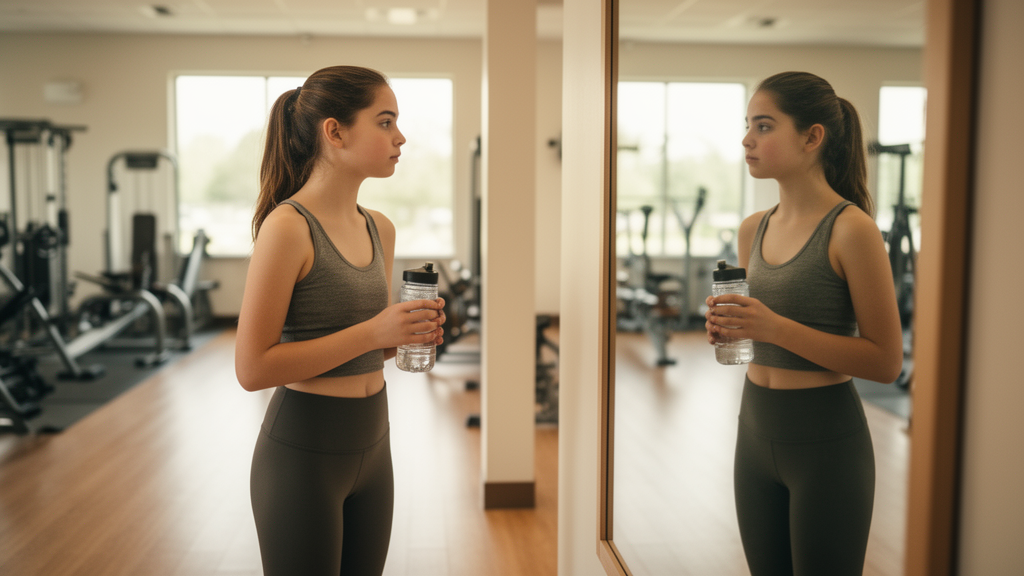
Image Credits: AI Generated

DOI: 10.1186/s40359-026-05819-1

Keywords: adolescent wellbeing, physical activity, life satisfaction, physical literacy, cross-sectional study, survey weighting, England, school adolescents, Physical, activity, literacy-related, attitudes

Cite Scienmag News

Glenn Wilkins. (October 21, 2026). Physical Attitudes Linked to Adolescent Life Satisfaction Beyond Activity. Scienmag. https://scienmag.com/physical-attitudes-linked-to-adolescent-life-satisfaction-beyond-activity/

Glenn Wilkins. "Physical Attitudes Linked to Adolescent Life Satisfaction Beyond Activity." Scienmag, 21 October 2026, https://scienmag.com/physical-attitudes-linked-to-adolescent-life-satisfaction-beyond-activity/. Accessed 21 October 2026.

Glenn Wilkins. "Physical Attitudes Linked to Adolescent Life Satisfaction Beyond Activity." Scienmag. October 21, 2026. https://scienmag.com/physical-attitudes-linked-to-adolescent-life-satisfaction-beyond-activity/


Tags: Activityadolescent life satisfactionadolescent wellbeingattitudescross-sectional studies on youth well-beingcross-sectional studyEnglandenjoyment of physical activityimpact of physical confidence on youthknowledge of physical activity participationlife satisfactionliteracy-relatedperceived ease of participation in youth sportsphysicalPhysical activityphysical activity attitudesphysical literacyphysical literacy and mental well-beingpsychological factors in adolescent healthrelationship between physical attitudes and life satisfactionschool adolescentssurvey weightingsurvey-based adolescent health researchunderstanding benefits of physical activity
Share26Tweet16
Previous Post

Trial protocol tests two acupuncture techniques for post-stroke leg recovery

Next Post

Desk study maps failures in India’s honour-violence response

Related Posts

Review Proposes Mental Pain Framework for Adolescence
Psychology & Psychiatry

Review Proposes Mental Pain Framework for Adolescence

October 21, 2026
Research report: A Study Evaluating the Feasibility of a Self-compassion Meditation on Body Image in Retired Athletes
Psychology & Psychiatry

Research report: A Study Evaluating the Feasibility of a Self-compassion Meditation on Body Image in Retired Athletes

October 21, 2026
Unheard narratives: A descriptive phenomenological study of the lived world of adolescents after experiencing a suicide attempt
Psychology & Psychiatry

Unheard narratives: A descriptive phenomenological study of the lived world of adolescents after experiencing a suicide attempt

October 21, 2026
Sleep Profiles Differentially Linked to Suicide-Related Symptoms
Psychology & Psychiatry

Sleep Profiles Differentially Linked to Suicide-Related Symptoms

October 21, 2026
Nationwide cross-sectional study maps clustered adversity among transgender and nonbinary adults
Psychology & Psychiatry

Nationwide cross-sectional study maps clustered adversity among transgender and nonbinary adults

October 21, 2026
Bipolar II depression with obsessive symptoms linked to lower vmPFC metabolite ratios
Psychology & Psychiatry

Bipolar II depression with obsessive symptoms linked to lower vmPFC metabolite ratios

October 21, 2026
Next Post
Desk study maps failures in India’s honour-violence response

Desk study maps failures in India’s honour-violence response

  • Mothers who receive childcare support from maternal grandparents show more optimized

    Mothers who receive childcare support from maternal grandparents show more parental warmth, finds NTU Singapore study

    27656 shares
    Share 11059 Tweet 6912
  • University of Seville Breaks 120-Year-Old Mystery, Revises a Key Einstein Concept

    1061 shares
    Share 424 Tweet 265
  • Bee body mass, pathogens and local climate influence heat tolerance

    682 shares
    Share 273 Tweet 171
  • Researchers record first-ever images and data of a shark experiencing a boat strike

    546 shares
    Share 218 Tweet 137
  • Groundbreaking Clinical Trial Reveals Lubiprostone Enhances Kidney Function

    531 shares
    Share 212 Tweet 133
Science

Embark on a thrilling journey of discovery with Scienmag.com—your ultimate source for cutting-edge breakthroughs. Immerse yourself in a world where curiosity knows no limits and tomorrow’s possibilities become today’s reality!

RECENT NEWS

  • Desk study maps failures in India’s honour-violence response
  • Physical Attitudes Linked to Adolescent Life Satisfaction Beyond Activity
  • Trial protocol tests two acupuncture techniques for post-stroke leg recovery
  • Review of 180 studies examines climate links to Candida auris threats

Categories

  • Agriculture
  • Anthropology
  • Archaeology
  • Athmospheric
  • Biology
  • Biotechnology
  • Blog
  • Bussines
  • Cancer
  • Chemistry
  • Climate
  • Earth Science
  • Editorial Policy
  • Marine
  • Mathematics
  • Medicine
  • Pediatry
  • Policy
  • Psychology & Psychiatry
  • Science Education
  • Science News
  • Social Science
  • Space
  • Technology and Engineering

Subscribe to Blog via Email

Enter your email address to subscribe to this blog and receive notifications of new posts by email.

Join 5,150 other subscribers

© 2025 Scienmag - Science Magazine

Welcome Back!

Login to your account below

Forgotten Password?

Retrieve your password

Please enter your username or email address to reset your password.

Log In
No Result
View All Result
  • HOME
  • SCIENCE NEWS
  • CONTACT US

© 2025 Scienmag - Science Magazine

Discover more from Science

Subscribe now to keep reading and get access to the full archive.

Continue reading