

Tuesday, July 14, 2026
Science
No Result
View All Result
  • Login
  • HOME
  • SCIENCE NEWS
  • CONTACT US
  • HOME
  • SCIENCE NEWS
  • CONTACT US
No Result
View All Result
Scienmag
No Result
View All Result
Home Science News Marine

Climate Change Forces Amphibians to Shift Diet, but Limits Adaptation

July 14, 2026
in Marine
Reading Time: 2 mins read
0
Climate Change Forces Amphibians to Shift Diet, but Limits Adaptation

Climate Change Forces Amphibians to Shift Diet, but Limits Adaptation

65
SHARES
587
VIEWS
Share on FacebookShare on Twitter
ADVERTISEMENT

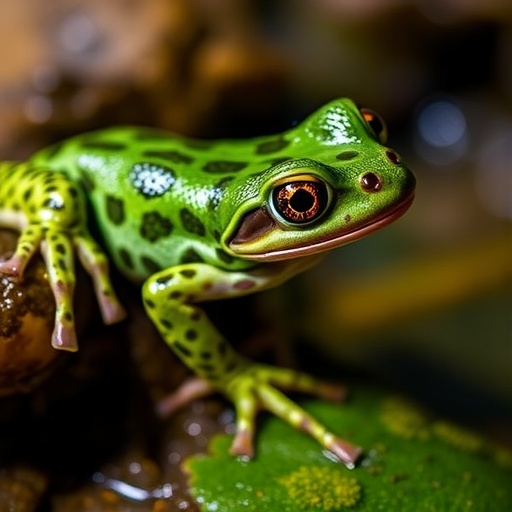
Warmer water is forcing amphibians to rethink dinner—but the dietary “workaround” may run out before temperatures peak. In a new international study published in Scientific Reports (lead author: Dr Sara Bento), tadpoles of the Iberian spined toad (Bufo spinosus) actively shift feeding strategies as rearing temperatures rise, consuming more plant-derived material and eating more overall.

Researchers framed the question around physiological constraints. Like other cold-blooded animals, amphibians depend on ambient conditions to regulate growth and development. When temperatures climb, metabolic and developmental schedules accelerate, potentially reducing the ability to compensate through behavior and diet.

To test how far compensation can go, the team collected tadpoles from the Sintra Mountains and reared them under controlled temperature regimes with different feeding conditions. They then tracked feeding behavior, development time, body size at emergence, and indicators of nutrient processing.

The results show a clear behavioral response to warming. At lower temperatures, tadpoles incorporated a higher proportion of animal-derived food. At higher temperatures, they increased the fraction of plant material in their diet and elevated overall feeding rates—an attempt to offset the consequences of faster metabolism.

However, the strategy weakened progressively as temperatures continued to rise. In other words, tadpoles could adjust their diet, but physiological limits constrained how effectively that adjustment could protect development.

Thermal effects on development were dramatic. Tadpoles raised at 20°C completed the larval stage in about 30 days, compared with roughly 177 days at 12°C. Yet faster growth carried a fitness cost: warm-reared animals emerged smaller and in poorer physical condition.

Beyond growth, warming altered the elemental composition of amphibian tissues. This suggests climate change may affect how organisms store and allocate nutrients, not just how quickly they grow.

The study’s ecological implications extend beyond amphibians. Changes in tissue composition can influence the energetic value of prey for predators and reshape food-web dynamics, potentially altering interactions among aquatic cold-blooded species.

Finally, the authors argue that conservation should consider “thermal refuges.” Preserving cooler microhabitats within wetlands and freshwater systems could help buffer vulnerable life stages and improve survival prospects as Mediterranean temperatures intensify.

Subject of Research: Climate change effects on tadpole diet and physiology (Iberian spined toad, Bufo spinosus)
Article Title: Climate change is forcing amphibians to change their diet – but they can only adapt so far
News Publication Date: 14-Jul-2026
Web References: http://dx.doi.org/10.1038/s41598-026-55894-y
References: Nature
Image Credits:
Keywords: amphibians, tadpoles, climate warming, diet shift, physiological limits, developmental speed, nutrient composition, food webs, conservation, Mediterranean wetlands

Tags: amphibian dietary flexibility and climate resilienceamphibian metabolic response to warmingclimate change impact on amphibian dietary adaptationdietary shifts in amphibians due to climate changeeffects of rising temperatures on amphibian developmenteffects of temperature on nutrient processing in amphibiansimpact of global warming on amphibian growth and nutritionlimits of behavioral adaptation in cold-blooded animalsphysiological constraints on amphibian adaptationtemperature effects on tadpole feeding behaviortemperature-induced changes in tadpole feeding strategies
Share26Tweet16
Previous Post

Plants respond instantly to sudden high light conditions

Next Post

Study Finds Honey Bees’ Smell Senses Shift from Larvae to Adults

Related Posts

W&M, NOAA Collaborate to Enhance Chesapeake Bay Shallow Water Mapping Data
Marine

W&M, NOAA Collaborate to Enhance Chesapeake Bay Shallow Water Mapping Data

July 14, 2026
Dolphins Spotted Returning to the Sea of Japan
Marine

Dolphins Spotted Returning to the Sea of Japan

July 14, 2026
Disturbance Impacts Giant Kelp Growth More Than Resource Levels
Marine

Disturbance Impacts Giant Kelp Growth More Than Resource Levels

July 13, 2026
Nanostructures Enhance Aquaculture Safety, New Review Finds
Marine

Nanostructures Enhance Aquaculture Safety, New Review Finds

July 13, 2026
RB5 Dye Breakdown May Increase Toxicity Despite Color Removal
Marine

RB5 Dye Breakdown May Increase Toxicity Despite Color Removal

July 13, 2026
Innovative motor drive cuts heat and wear in high-power systems
Marine

Innovative motor drive cuts heat and wear in high-power systems

July 10, 2026
Next Post
Study Finds Honey Bees’ Smell Senses Shift from Larvae to Adults

Study Finds Honey Bees’ Smell Senses Shift from Larvae to Adults

  • Mothers who receive childcare support from maternal grandparents show more

    Mothers who receive childcare support from maternal grandparents show more parental warmth, finds NTU Singapore study

    27656 shares
    Share 11059 Tweet 6912
  • University of Seville Breaks 120-Year-Old Mystery, Revises a Key Einstein Concept

    1061 shares
    Share 424 Tweet 265
  • Bee body mass, pathogens and local climate influence heat tolerance

    682 shares
    Share 273 Tweet 171
  • Researchers record first-ever images and data of a shark experiencing a boat strike

    546 shares
    Share 218 Tweet 137
  • Groundbreaking Clinical Trial Reveals Lubiprostone Enhances Kidney Function

    531 shares
    Share 212 Tweet 133
Science

Embark on a thrilling journey of discovery with Scienmag.com—your ultimate source for cutting-edge breakthroughs. Immerse yourself in a world where curiosity knows no limits and tomorrow’s possibilities become today’s reality!

RECENT NEWS

  • Special Supplemental Nutrition Program and Cerebral Palsy Risk
  • Reactivated DRP1 Enables Resistance to MEK Inhibitors in Pancreatic Cancer Cells
  • KTU Researchers Develop AI System to Forecast Solar Power From Cloud Data
  • Second Review Aims to Improve Targeting Accuracy

Categories

  • Agriculture
  • Anthropology
  • Archaeology
  • Athmospheric
  • Biology
  • Biotechnology
  • Blog
  • Bussines
  • Cancer
  • Chemistry
  • Climate
  • Earth Science
  • Editorial Policy
  • Marine
  • Mathematics
  • Medicine
  • Pediatry
  • Policy
  • Psychology & Psychiatry
  • Science Education
  • Social Science
  • Space
  • Technology and Engineering

Subscribe to Blog via Email

Enter your email address to subscribe to this blog and receive notifications of new posts by email.

Join 5,146 other subscribers

© 2025 Scienmag - Science Magazine

Welcome Back!

Login to your account below

Forgotten Password?

Retrieve your password

Please enter your username or email address to reset your password.

Log In
No Result
View All Result
  • HOME
  • SCIENCE NEWS
  • CONTACT US

© 2025 Scienmag - Science Magazine

Discover more from Science

Subscribe now to keep reading and get access to the full archive.

Continue reading
