


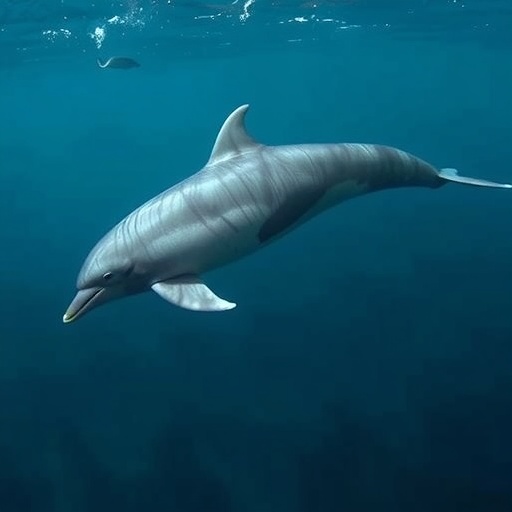
Risso’s dolphins living around the British Isles appear to form a genetically distinct population, according to a new study that could change how the animals are monitored and protected. DNA collected from dolphins stranded in England, Scotland and Wales between 1992 and 2016 indicates that these animals belong to a largely separate genetic group, with limited evidence of mixing with Risso’s dolphins from other parts of the Atlantic.
The finding is significant because Risso’s dolphins are often treated as broadly connected across their range. The species, Grampus griseus, occupies temperate and tropical oceans worldwide, but little is known about how frequently different groups interact or exchange genes. Genetic exchange occurs when animals from separate groups reproduce, allowing DNA to move between populations. When that exchange is limited for long periods, groups can become genetically differentiated—a pattern that may signal ecological separation, long-term isolation or strong site fidelity.
Researchers examined genetic material from stranded Risso’s dolphins found around the British Isles. Their analysis showed no significant genetic differences between dolphins from different parts of the region, suggesting that animals from England, Scotland and Wales may belong to one broad British Isles population. At the same time, this population was genetically distinct from the closest groups included in comparisons, including dolphins from the Azores and the Mediterranean, and possibly from the wider North Atlantic.
“The results support the notion of Risso’s dolphins in British waters having been isolated from other populations for some time,” said co-lead author Nicola Hodgins of MARA and the University of Exeter. “However, we did not sample every nearby part of the Atlantic, so it’s not yet clear where the boundaries of this unit lie.” That limitation is important: a genetic boundary cannot be mapped accurately without samples from all potentially connected regions.
The study also highlights the difference between genetic unity and ecological uniformity. Even if dolphins around the British Isles share a common genetic identity, they may still form smaller social or habitat-based groups. In other words, a single genetic population may contain local communities that repeatedly use particular coastal areas, follow distinct movement patterns or maintain long-term associations with one another.
Evidence from photo-identification supports that possibility. Recent analysis of Risso’s dolphins in Scottish waters found fewer than 3% matches between individuals photographed along the west coast and those seen along northern coasts. Photo-identification relies on distinctive marks, scars and fin shapes to recognize individual dolphins over time. Such a low matching rate suggests that dolphins may show a strong preference for particular areas, even when genetic data do not reveal clear divisions between them.
This distinction matters for conservation. A species can appear stable when assessed across a wide geographic range while experiencing serious declines in specific local areas. Risso’s dolphins may face different threats depending on where they feed, travel or breed, including disturbance, habitat degradation, pollution, changes in prey availability and human activity at sea. If local groups remain faithful to particular habitats, damage in one region may not be compensated for by dolphins arriving from elsewhere.
The researchers say that more genetic sampling is needed from nearby areas, including Norway, the Celtic Sea, the south-western English Channel and the Bay of Biscay. These comparisons could reveal whether the British Isles population extends into adjacent waters or whether additional genetic boundaries exist. More advanced DNA techniques could also provide finer resolution, potentially identifying recent movement between groups and distinguishing broad population structure from more recent social or ecological divisions.
The findings may eventually support recognition of the British Isles group as a formal sub-population by the International Union for Conservation of Nature. The Mediterranean Risso’s dolphin group is already recognized as a sub-population and classified as Endangered. Any similar designation for dolphins around the British Isles would require stronger evidence about population size, trends, connectivity and threats, but the new results provide a genetic foundation for that assessment.
The research team argues that the most effective protection will combine genetics with information about behavior, appearance, movements, vocalizations and habitat use. Risso’s dolphins are currently managed as a single UK population, yet conservation measures designed for the entire region may overlook threats concentrated in particular coastal areas. “Good conservation requires habitat-specific management,” Hodgins said. “Effective protection must therefore focus on safeguarding important habitats and addressing pressures at a local scale, where conservation measures can have the greatest impact.”
Web References: https://doi.org/10.1017/S0025315426101386; http://www.mara.scot
References: Journal of the Marine Biological Association of the United Kingdom. DOI: 10.1017/S0025315426101386. Article publication date: 2 August 2026.
Cite Scienmag News
Juliet Wilcox. (August 3, 2026). Genetic evidence shows British Risso’s dolphins form a single population. Scienmag. https://scienmag.com/genetic-evidence-shows-british-rissos-dolphins-form-a-single-population/
Juliet Wilcox. "Genetic evidence shows British Risso’s dolphins form a single population." Scienmag, 3 August 2026, https://scienmag.com/genetic-evidence-shows-british-rissos-dolphins-form-a-single-population/. Accessed 4 September 2026.
Juliet Wilcox. "Genetic evidence shows British Risso’s dolphins form a single population." Scienmag. August 3, 2026. https://scienmag.com/genetic-evidence-shows-british-rissos-dolphins-form-a-single-population/


