


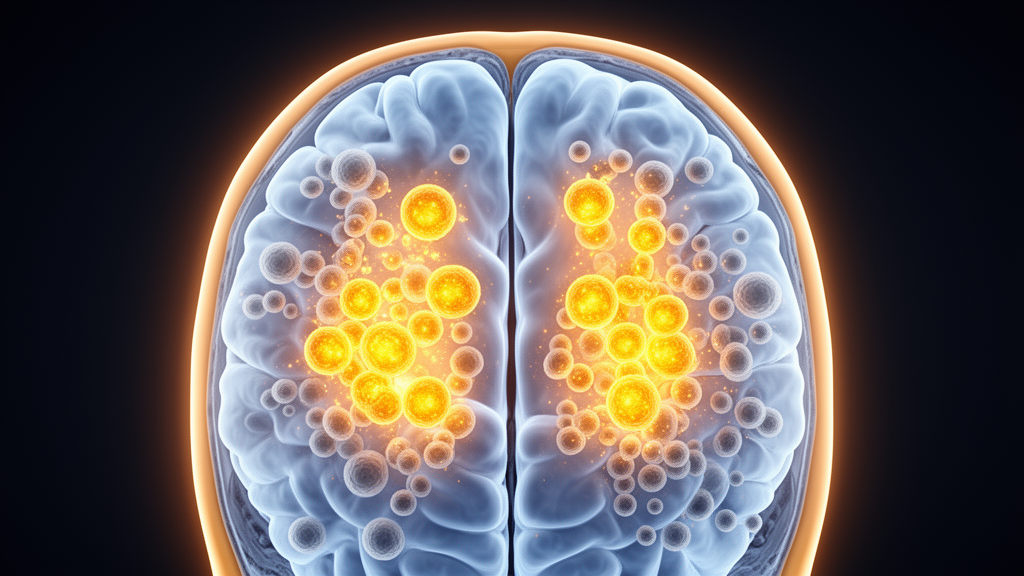
Chronic neuroinflammation has long been treated as a straightforward molecular story: a trigger fires, cytokines surge, neurons suffer, and disease follows. A new hypothesis-and-theory paper published in Frontiers in Systems Neuroscience argues that this linear picture is fundamentally incomplete. Samuel Ruesga Mundo, a researcher affiliated with the Instituto Mexicano del Seguro Social in Guadalajara, proposes that persistent brain inflammation is better understood as a breakdown in what he calls allostatic integrity—the capacity of an organism to keep adaptive information flowing in a circle across five interconnected biological levels. When that circular flow is disrupted, the brain becomes trapped in maladaptive stable states, and chronic inflammation becomes entrenched as a systems-level failure rather than a single runaway pathway.
The model, termed the Hierarchical-Circular Model of Biological Memory, is designed to confront three stubborn paradoxes that current frameworks struggle to explain. First, there is the pathology-expression dissociation: many people with elevated neuroinflammatory markers remain cognitively intact, while others with only modest inflammation show severe impairment. Second, adverse childhood experiences and prenatal stress are reliably associated with elevated inflammatory markers decades later, yet the mechanisms by which early-life events become biologically embedded remain incompletely mapped. Third, anti-inflammatory treatments—from NSAIDs to cytokine inhibitors—have produced strikingly inconsistent results across clinical trials, with some patients responding dramatically and others showing no benefit at all. To the author, this heterogeneity signals that neuroinflammation is not one pathological entity but an emergent property of a complex, multi-level system.
At the core of the framework lies a unifying principle the author summarizes as signal, plasticity, stable state. Biological systems continuously receive signals from internal and external environments, undergo plastic changes in response, and settle into stable states that encode the history of prior signals. Each stable state then becomes the basis for responding to the next signal, establishing circular causality. When this dynamic operates adaptively, the organism maintains allostatic integrity. When it is disrupted at any level, maladaptive states can lock in, and chronic neuroinflammation may emerge. The five levels of the model span genetic architecture and morphogenetic programming, epigenetic molecular memory, allostatic load and systemic physiological adaptation, the psychoneuroimmuneendocrine network, and interoceptive-neuronal integration.
The first level encompasses the genetic blueprint that sets baseline inflammatory reactivity. Polymorphisms in genes encoding pro-inflammatory cytokines such as IL-6, TNF-α, and IL-1β, along with stress-response proteins like FKBP5 and NR3C1, shape individual susceptibility to neuroinflammation. The apolipoprotein E ε4 allele, the strongest genetic risk factor for late-onset Alzheimer’s disease, illustrates how variation at this level establishes a pro-inflammatory baseline: APOE4 has been shown to enhance microglial inflammatory signaling, alter neuronal lipid metabolism, and increase neuronal network activity. The author also invokes morphogenetic programming, arguing that developmental processes such as the Spemann-Mangold organizer and the notochord establish the basic architecture of the hypothalamic-pituitary-adrenal axis, the autonomic nervous system, and immune cell precursors, potentially constraining the range of inflammatory responses available across the lifespan. He is careful to flag this developmental hypothesis as speculative and awaiting direct empirical testing.
The second level concerns epigenetic molecular memory. Independent meta-analyses have shown that early-life stress is associated with significant DNA methylation changes in stress-related genes including NR3C1, SLC6A4, and FKBP5. The author’s own systematic review, covering 58 studies with 30 in quantitative synthesis, found a pooled standardized mean difference of −0.72 (95% CI: −1.15 to −0.29; p = 0.001) across seven studies of stress-related gene expression or methylation changes, with moderate heterogeneity reflecting differences in tissue type and loci examined. These epigenetic marks can persist for years and predict inflammatory reactivity to later challenges. Crucially, they are not fixed: ongoing experiences, psychosocial interventions, metabolic changes, and pharmacological agents can modify them, opening a window for intervention long after the original embedding.
The third level captures allostatic load, the cumulative wear and tear that accrues as the body repeatedly adapts to environmental demands. Composite indices integrating cardiovascular, metabolic, and inflammatory markers have been shown in longitudinal studies to prospectively predict chronic inflammation, cognitive decline, and all-cause dementia. Notably, some evidence suggests these effects may operate independently of classical pathology such as amyloid burden, hinting that systemic physiology contributes to neuroinflammation through pathways distinct from traditional molecular cascades. Within the model, allostatic load and allostatic integrity are complementary constructs: one measures cumulative damage, the other the dynamic capacity to adapt, recover, and keep regulatory loops functioning.
The fourth level is the psychoneuroimmuneendocrine, or PINE, network—the dynamic interplay among psychological processes, neurological function, endocrine signaling, and immune activity. Psychological stress activates the HPA axis and sympathetic nervous system, releasing cortisol and catecholamines that modulate immune cell trafficking and cytokine production. Chronic stress promotes a pro-inflammatory phenotype marked by elevated IL-6, TNF-α, and CRP, which can compromise the blood-brain barrier and promote neuroinflammation. Conversely, peripheral inflammation signals the brain through vagal afferents, circulating cytokines, and endothelial activation, inducing sickness behaviors and cognitive deficits. This bidirectionality is central to the circular model: perturbations at any point in the network propagate in both directions, potentially amplifying maladaptive states into self-sustaining loops.
The fifth and highest level concerns interoception—the brain’s sensing and integration of the body’s internal state. Interoceptive processing underpins emotional experience, self-awareness, and adaptive regulation, and recent work in behavioral-variant frontotemporal dementia has demonstrated altered intrinsic neural timescales of interoceptive processing, with disruptions in the allostatic-interoceptive networks that support adaptive regulation. The model proposes a bidirectional loop here as well: poor interoceptive accuracy leads to misregulation of physiological states, which sustains inflammatory signaling, which in turn further impairs interoception. Signals can propagate upward, downward, and laterally across all five levels—a genetic variant may shape epigenetic susceptibility, which shapes allostatic load accumulation, which drives PINE dysregulation and interoceptive dysfunction, while chronic psychological stress can work downward through allostatic load to epigenetic modifications and altered gene expression.
What distinguishes the paper from a purely conceptual exercise is its set of falsifiable predictions. The author predicts that composite indices of allostatic integrity will outperform single biomarkers in predicting the transition to chronic neuroinflammation, with dyssynchrony profiles—such as high inflammation paired with low cortisol, indicating feedback loop failure—carrying the strongest predictive power. He predicts that multidomain interventions targeting multiple levels will produce multiplicative, synergistic effects rather than merely additive ones, a claim that can be tested in a well-powered factorial randomized trial. He predicts that patients with similar inflammatory profiles but contrasting allostatic integrity will follow markedly different clinical trajectories, with high integrity flattening the decline slope and low integrity steepening it. And he predicts that improvements in allostatic integrity—achieved through lifestyle modification, stress reduction, and interoceptive training—will reduce neuroinflammation independently of direct anti-inflammatory therapies.
The framework also sketches hypothetical clinical applications. A provisional Allostatic Integrity Index is proposed across five conceptual domains: adaptive reserve, indexed by heart rate variability and cortisol dynamics; inflammatory resilience, captured by ratios such as IL-10 to IL-6; multi-system synchrony, reflected in the correlation between epigenetic age and physiological stress markers; interoceptive accuracy, measured through heartbeat detection tasks and insula connectivity; and circular recovery, operationalized as the speed with which cortisol, heart rate, and cytokines return to baseline after an acute stress challenge. The author is explicit that this index is purely illustrative and must not be used for clinical decision-making pending validation in prospective cohorts. If the model survives empirical testing, it could reframe chronic neuroinflammation across Alzheimer’s disease, major depression, schizophrenia, and multiple sclerosis not as a linear cascade but as a systemic failure of biological memory—offering a conceptual foundation for composite biomarkers, multidomain prevention, and genuinely personalized treatment strategies.
Subject of Research: A hierarchical-circular model proposing that chronic neuroinflammation results from a failure of allostatic integrity across genetic, epigenetic, physiological, psychoneuroimmuneendocrine, and interoceptive levels
Article Title: Neuroinflammation as a failure of allostatic integrity: a hierarchical-circular model of biological memory for pathogenesis in neurodegenerative and neuropsychiatric diseases
Article References: Ruesga Mundo, S. (2026). Neuroinflammation as a failure of allostatic integrity: a hierarchical-circular model of biological memory for pathogenesis in neurodegenerative and neuropsychiatric diseases. Frontiers in Systems Neuroscience, 20, Article 1888548. https://doi.org/10.3389/fnsys.2026.1888548
Image Credits: AI Generated
DOI: 10.3389/fnsys.2026.1888548
Keywords: neuroinflammation, allostatic integrity, allostatic load, epigenetics, interoception, PINE network, Alzheimer's disease, major depression, schizophrenia, biological memory, psychoneuroimmunology, systems neuroscience
Cite Scienmag News
Cassandra Pierce. (October 16, 2026). Chronic Brain Inflammation May Be a Failure of the Body’s Adaptive Memory System. Scienmag. https://scienmag.com/chronic-brain-inflammation-may-be-a-failure-of-the-bodys-adaptive-memory-system/
Cassandra Pierce. "Chronic Brain Inflammation May Be a Failure of the Body’s Adaptive Memory System." Scienmag, 16 October 2026, https://scienmag.com/chronic-brain-inflammation-may-be-a-failure-of-the-bodys-adaptive-memory-system/. Accessed 16 October 2026.
Cassandra Pierce. "Chronic Brain Inflammation May Be a Failure of the Body’s Adaptive Memory System." Scienmag. October 16, 2026. https://scienmag.com/chronic-brain-inflammation-may-be-a-failure-of-the-bodys-adaptive-memory-system/


