


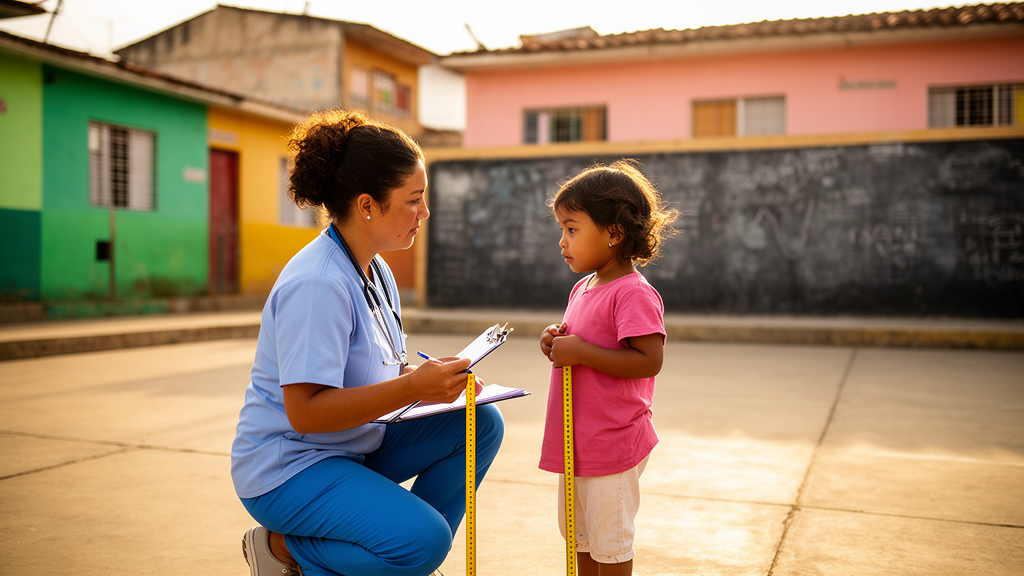
Childhood obesity has become one of the most pressing public health crises in Latin America and the Caribbean, where rates have climbed faster than in almost any other region of the world. Yet a new systematic review published in BMC Pediatrics reveals a sobering gap: of more than 4,200 research records screened, only five studies met the criteria for family-based pediatric weight management interventions connected to healthcare providers or systems in the region. The finding, published by a team led by Joshua S. Yudkin of Texas A&M University’s School of Public Health, suggests that the evidence base for tackling childhood obesity in Latin America and the Caribbean is not just thin—it is structurally incomplete, missing the very information that health systems need to turn promising pilot programs into population-wide solutions.
The review focused on children aged 6 to 12 years, a critical developmental window when dietary habits and physical activity patterns consolidate and when excess weight gain becomes increasingly difficult to reverse. The researchers searched five major databases—Ovid MEDLINE, Embase, the Virtual Health Library Regional Portal, Scopus, and the Cochrane Library—for studies published between January 2007 and January 2024. Following the Preferred Reporting Items for Systematic Reviews and Meta-Analyses (PRISMA) guidelines, the team screened 4,216 records, whittled them down to 62 for full-text review, and ultimately included just five studies in the final analysis. That attrition rate, from thousands of records to a handful of eligible studies, is itself a striking indicator of how little implementation-focused research exists for this population and region.
What makes this review methodologically distinctive is its use of the RE-AIM framework, a widely adopted tool in implementation science designed to evaluate how well health interventions perform beyond the controlled conditions of a clinical trial. RE-AIM stands for Reach, Efficacy or Effectiveness, Adoption, Implementation, and Maintenance—five dimensions that together capture whether an intervention actually reaches the intended population, whether it works, whether settings and providers adopt it, whether it is delivered as intended, and whether its benefits persist over time. The framework was developed precisely to counteract a well-documented bias in health research: an overwhelming emphasis on internal validity, meaning the rigor of causal inference within a study, at the expense of external validity, meaning whether results generalize to real-world settings, diverse populations, and routine care.
The results of the RE-AIM assessment were revealing. Efficacy or Effectiveness was the most frequently reported dimension, appearing in 57 percent of the five included studies, followed closely by Reach at 56 percent and Implementation at 43 percent. But the two dimensions most closely tied to real-world scalability fared far worse. Adoption, which measures whether clinics, schools, or health systems actually take up an intervention, was reported in only 40 percent of studies. Maintenance, which captures whether effects and program operations endure after the initial funding or study period ends, appeared in a mere 7 percent of studies. In practical terms, researchers in the region can say something about whether their interventions work and who they reach, but they can say almost nothing about whether those interventions survive contact with the messy realities of health systems and budgets.
This imbalance matters because childhood obesity in Latin America and the Caribbean is not a marginal problem. The region has among the highest prevalence rates of pediatric overweight and obesity in the world, a trend driven by rapid nutrition transitions, the proliferation of ultra-processed foods, urbanization, and declining physical activity. The World Health Organization’s Ending Childhood Obesity initiative and the Pan American Health Organization have both flagged the region as a priority, yet most of the research on pediatric weight management originates from high-income countries in the Global North. Interventions validated in the United States or Europe cannot simply be transplanted into low- and middle-income countries with different healthcare infrastructures, food environments, cultural norms, and resource constraints. Without locally generated evidence on adoption and maintenance, policymakers in the region are essentially flying blind.
The review also underscores a reporting problem that extends beyond Latin America. When studies fail to report external validity indicators—such as the demographic characteristics of participants relative to the target population, the proportion of eligible settings that adopted a program, the fidelity of delivery, or costs and sustainability metrics—other researchers and health officials cannot judge whether the findings apply to their own contexts. This is particularly consequential for family-based interventions, which the review specifically targeted because engaging parents and caregivers is considered essential for sustained behavior change in children. Family-based approaches linked to healthcare providers or systems represent one of the most promising models for pediatric weight management, but their success depends on details that are routinely left out of published papers.
Methodologically, the search strategy itself reflected the challenges of studying a multilingual region. The investigators searched not only the standard international databases but also regional repositories including the Latin American and Caribbean Health Sciences Literature database (LILACS), the Spanish Bibliographic Index of Health Sciences (IBECS), the Cuban Medical Sciences Database, and the Pan American Health Organization’s Institutional Repository for Information Sharing. This broad net was designed to capture studies published in Spanish and Portuguese that might be invisible to researchers relying solely on English-language databases. Even so, the yield was minimal, and the authors note that the review was limited by the small number of eligible studies, which constrains any generalizable conclusions about what works in the region.
The implications of the findings reach into research funding, study design, and health policy. For funders, the message is that grants supporting pediatric obesity research in Latin America and the Caribbean should explicitly require RE-AIM-style reporting, ensuring that studies capture reach, adoption, and maintenance alongside efficacy. For researchers, it means designing interventions from the outset with scalability in mind—embedding cost data, documenting implementation barriers, and planning follow-up assessments that extend beyond the grant period. For health ministries and regional bodies, it means demanding better evidence before scaling programs, while simultaneously investing in the local research infrastructure needed to generate that evidence. The review was supported by the Fogarty International Center of the National Institutes of Health, a funding stream specifically oriented toward building global health research capacity, which signals growing institutional recognition of the problem.
There is also a broader lesson here for implementation science as a field. The RE-AIM framework has been around for more than two decades, and its adoption has steadily increased in the Global North, yet this review demonstrates how unevenly its principles have penetrated research in low- and middle-income settings. The authors conclude that greater attention to external validity is essential to enhance the scalability, sustainability, and dissemination of pediatric obesity interventions in Latin America and the Caribbean. In other words, the region does not just need more interventions—it needs interventions designed and evaluated in ways that make them spreadable, affordable, and durable. As childhood obesity rates continue to rise across the hemisphere, the five-study evidence base documented in this review is a warning: without a fundamental shift in how research is designed, reported, and funded, the region’s children will keep paying the price for evidence that was never built to travel beyond the clinic door.
Subject of Research: Implementation science evaluation of pediatric overweight and obesity interventions in Latin America and the Caribbean using the RE-AIM framework
Article Title: Assessing implementation science outcomes for pediatric overweight and obesity interventions in Latin America and the Caribbean for children ages 6–12 years old using the RE-AIM framework: a systematic review
Article References: Yudkin, J. S., Malthaner, L., Dollar, E., Gilbreath, J., Smith, M. L., & Jungbauer, R. M. (2026). Assessing implementation science outcomes for pediatric overweight and obesity interventions in Latin America and the Caribbean for children ages 6–12 years old using the RE-AIM framework: a systematic review. BMC Pediatrics. https://doi.org/10.1186/s12887-026-07794-3
Image Credits: AI Generated
DOI: 10.1186/s12887-026-07794-3
Keywords: childhood obesity, RE-AIM framework, implementation science, Latin America, pediatric weight management, systematic review, external validity, family-based interventions, public health, health systems, BMC Pediatrics, global health
Cite Scienmag News
Daisy Hatcher. (October 16, 2026). Why Most Childhood Obesity Programs in Latin America May Never Scale Up. Scienmag. https://scienmag.com/why-most-childhood-obesity-programs-in-latin-america-may-never-scale-up/
Daisy Hatcher. "Why Most Childhood Obesity Programs in Latin America May Never Scale Up." Scienmag, 16 October 2026, https://scienmag.com/why-most-childhood-obesity-programs-in-latin-america-may-never-scale-up/. Accessed 16 October 2026.
Daisy Hatcher. "Why Most Childhood Obesity Programs in Latin America May Never Scale Up." Scienmag. October 16, 2026. https://scienmag.com/why-most-childhood-obesity-programs-in-latin-america-may-never-scale-up/


