


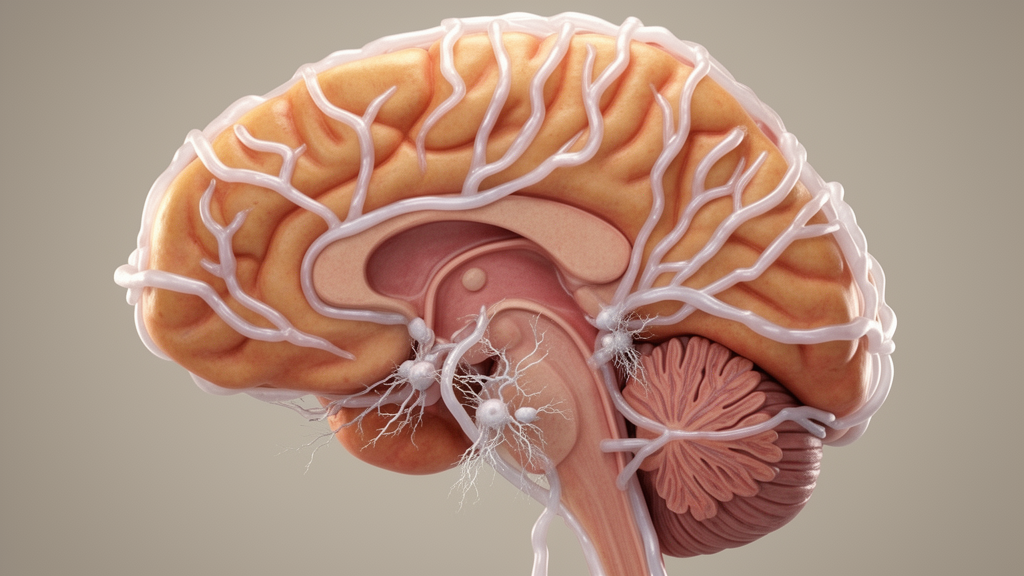
Chronic heavy drinking has long been known to shrink the brain, but the cellular machinery behind that damage has remained frustratingly opaque. Now a team of researchers at Brown University Health and Rhode Island Hospital, working with postmortem human brain tissue, has mapped in unprecedented molecular detail how alcohol use disorder dismantles the white matter of the cerebellum, the hindbrain region that governs balance, coordination, and a surprising range of cognitive and emotional functions. The study, published in Advances in Drug and Alcohol Research, points an accusing finger at oligodendrocytes, the glial cells responsible for wrapping nerve fibers in insulating myelin, and identifies two signaling networks whose collapse may drive the degeneration.
The research team, led by Suzanne M. de la Monte of the Departments of Pathology and Laboratory Medicine, Neurology, Neurosurgery, and Medicine at Rhode Island Hospital, together with Ming Tong, obtained six-millimeter cores of the anterior cerebellar vermis from the New South Wales Brain Tissue Research Centre in Sydney, Australia. The samples came from six male donors with alcohol use disorder and six matched male controls, all between fifty and seventy years of age. The groups were closely matched for age, years of drinking, postmortem interval, and brain pH, but differed dramatically in lifetime alcohol exposure: the AUD donors had consumed an average of roughly 2,784 kilograms of alcohol over their lifetimes, compared with about 42 kilograms in the controls. Consistent with the toxic burden, the AUD brains weighed significantly less, averaging 1,335 grams against 1,505 grams in controls.
What makes this study technically distinctive is its methodological breadth. Rather than relying on a single assay, the investigators processed the fresh frozen tissue through parallel pipelines: duplex enzyme-linked immunosorbent assays to quantify oligodendrocyte and astrocyte proteins, magnetic bead-based multiplex panels to measure twenty-one cytokines, chemokines, and trophic factors, seven-plex assays for total and phosphorylated Akt pathway signaling proteins, and custom QuantiGene 2.0 multiplex RNA hybridization panels to quantify messenger RNA transcripts for glial genes, the insulin and insulin-like growth factor system, and the Notch pathway. Every assay was run in triplicate under code, normalized to internal reference standards, and analyzed with two-way analysis of variance and post hoc multiple comparison tests.
The oligodendrocyte findings were striking. Protein analysis revealed significantly elevated levels of CNPase, an enzyme associated with immature myelin, and myelin oligodendrocyte glycoprotein, or MOG, a marker of mature oligodendrocytes, in the AUD cerebellar white matter. The RNA analysis was even more revealing, detecting broad upregulation of immature and mature myelin genes alike: KLK6, a serine protease linked to myelin degradation, along with CNPase, myelin basic protein, proteolipid protein, and MOG were all significantly increased. At first glance, elevated myelin gene expression might seem like good news, but the authors interpret it as a sign of dysfunction rather than health. In experimental models of alcohol-related brain damage, similar upregulation appears in subacute stages of injury, before the later collapse of myelin gene expression. The pattern suggests oligodendrocytes struggling to compensate for damaged myelin, much like a factory running overtime to replace a product that keeps failing.
The elevation of KLK6 is particularly telling. Previous work has shown that inhibiting this protease in oligodendrocytes is associated with cellular maturation and increased myelin thickness and volume. Its upregulation in the AUD samples, the authors argue, corresponds with a failure of oligodendrocytes to fully mature, which would compromise the synthesis and maintenance of the myelin sheaths that give white matter its integrity. This interpretation dovetails with earlier lipidomic mass spectrometry studies showing altered myelin lipid composition in alcohol-related brain damage, and with diffusion tensor imaging studies demonstrating disruption of white matter microstructural integrity in living patients with alcohol use disorder.
Beneath these cellular changes, the study uncovered disruptions in two master signaling systems. The first is the insulin and insulin-like growth factor pathway, which supports cell growth, survival, and energy metabolism throughout the brain. While mRNA levels of insulin pathway genes showed only modest, statistically insignificant shifts, the protein-level analysis told a sharper story: total Akt, a central kinase in the pathway, was significantly reduced, as was GSK-3β and its serine-9 phosphorylated form. These reductions suggest impaired signaling through the PI3K-Akt axis, which experimental models of chronic ethanol exposure have repeatedly implicated in neurodegeneration. The second system is the Notch pathway, a developmental signaling network that also regulates oligodendrocyte myelin synthesis and maintenance in the adult brain. Here the RNA assays revealed significant reductions in ASPH, aspartyl-asparaginyl-beta-hydroxylase, and HES1, a downstream Notch transcriptional target. ASPH is the enzyme that hydroxylates Notch receptors’ EGF-like domains, enabling the cleavage and nuclear translocation that activates the pathway. Its suppression, the authors propose, would throttle Notch signaling and thereby cripple the oligodendrocyte functions needed to sustain central nervous system myelin.
Perhaps the most surprising result concerns neuroinflammation, long considered a primary driver of alcohol-related brain damage. The comprehensive cytokine and chemokine survey found that among twenty-one inflammatory mediators measured, only one, the pro-inflammatory cytokine IL-16, differed significantly between groups, and it was reduced, not elevated, in the AUD tissue. IL-16, a chemoattractant for CD4-positive T cells that has been implicated in inflammatory demyelinating diseases, was also the most abundantly expressed inflammatory factor in the cerebellar samples. The authors note that these findings contrast with studies linking increased neuroinflammation to short-term, binge, or developmental alcohol exposures, but align with other experimental data showing that chronic ethanol consumption can suppress immune and cytokine-mediated responses. On balance, the results do not support persistent chronic neuroinflammation as the prime mediator of white matter degeneration in this cohort.
One trophic factor did stand out: hepatocyte growth factor, or HGF, was significantly reduced in the AUD cerebellum. HGF plays a key role in preventing neuronal death and promoting cell survival, and its loss corresponds with the neuronal loss observed in the cerebellar cortex in alcohol-related brain damage. Given HGF’s pro-angiogenic and anti-inflammatory effects, its reduction may also bear on the blood-brain barrier disruption documented in this condition. The other growth factors measured, including nerve growth factor, vascular endothelial growth factor, stem cell factor, fibroblast growth factor, and stromal cell-derived factor, showed no significant AUD-related changes.
The study has clear limitations that the authors acknowledge candidly. Six brains per group is a modest sample, constrained by the scarcity of donors with uncomplicated alcohol-related brain damage free of other substance use disorders. All donors were male, reflecting the male predominance of heavy drinking in Australia, and the analysis captured only the endpoint of disease rather than its progression. The authors call for future work examining earlier timepoints and including donors with periods of abstinence, which would help assess whether the cerebellar white matter pathology is reversible. Encouragingly, prior neuroimaging studies have shown that cerebellar atrophy can be partially reversed with abstinence, making the identification of actionable disease stages clinically meaningful.
The translational horizon is perhaps the most exciting aspect of the work. Because oligodendrocytes and other brain cells release cell-type-specific membrane vesicles called exosomes into the bloodstream, the authors propose that the molecular signatures identified here could eventually be detected and monitored non-invasively through liquid biopsy approaches, analyzing exosomes isolated from peripheral blood. Such a test could allow clinicians to track alcohol-related oligodendrocyte pathology in living patients, stage the disease, and evaluate whether interventions, from abstinence to potential therapies targeting insulin/IGF-Akt signaling or Notch networks, are working. For a disorder that is among the most common and preventable causes of cerebellar degeneration worldwide, moving diagnosis from the autopsy table to the blood draw would represent a genuine leap forward in the fight against alcohol-related brain damage.
Subject of Research: Molecular mechanisms of alcohol-related cerebellar white matter degeneration in humans
Article Title: Molecular and biochemical pathologies in human alcohol-related cerebellar white matter degeneration
Article References: Molecular and biochemical pathologies in human alcohol-related cerebellar white matter degeneration. (n.d.). https://doi.org/10.3389/adar.2025.15342
Image Credits: AI Generated
Keywords: alcohol use disorder, cerebellum, white matter, oligodendrocytes, myelin, insulin/IGF signaling, Akt, GSK-3β, Notch pathway, ASPH, neuroinflammation, postmortem brain tissue
Cite Scienmag News
Cassandra Pierce. (October 16, 2026). Chronic Alcohol Disrupts Myelin-Making Brain Cells in Human Cerebellum, Study Finds. Scienmag. https://scienmag.com/chronic-alcohol-disrupts-myelin-making-brain-cells-in-human-cerebellum-study-finds/
Cassandra Pierce. "Chronic Alcohol Disrupts Myelin-Making Brain Cells in Human Cerebellum, Study Finds." Scienmag, 16 October 2026, https://scienmag.com/chronic-alcohol-disrupts-myelin-making-brain-cells-in-human-cerebellum-study-finds/. Accessed 16 October 2026.
Cassandra Pierce. "Chronic Alcohol Disrupts Myelin-Making Brain Cells in Human Cerebellum, Study Finds." Scienmag. October 16, 2026. https://scienmag.com/chronic-alcohol-disrupts-myelin-making-brain-cells-in-human-cerebellum-study-finds/


