


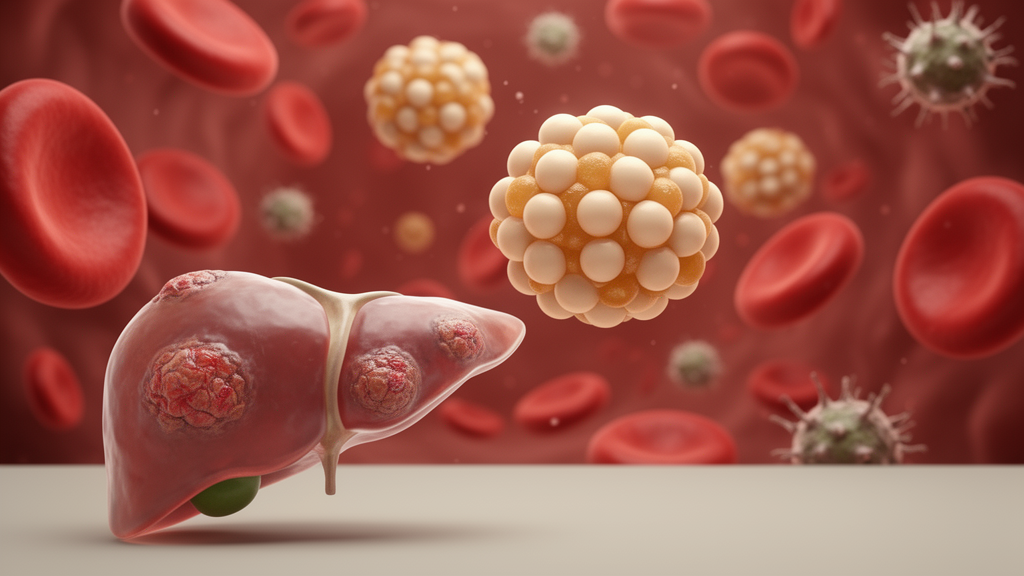
Two ordinary components of a routine blood panel—high-density lipoprotein cholesterol and its principal protein cargo, apolipoprotein A-I—are emerging as unexpected sentinels of infection risk in patients with liver cirrhosis. A cohort study from the Medical University of Graz, published in Scientific Reports, followed 311 people with cirrhosis and found that those with lower circulating levels of these lipid-related markers were significantly more likely to require antibiotic therapy for an infection within the following year. The finding reframes HDL, long celebrated and vilified in cardiology, as a molecule whose relevance extends well beyond arterial walls and into the immunology of the failing liver.
Infections are among the most feared complications of advanced liver disease. When cirrhosis decompensates—through ascites, variceal bleeding, or hepatic encephalopathy—an infection is frequently the trigger or the accelerant. Bacterial translocation from the gut, impaired clearance of microbes by the reticuloendothelial system, and systemic inflammation converge to make cirrhotic patients exquisitely susceptible. Once an infection takes hold, the clinical trajectory often steepens sharply: in the Graz cohort, patients who developed an infection faced a mortality rate of 41 percent during follow-up. Identifying who is most vulnerable before the first fever appears is therefore a central clinical challenge, and the standard prognostic instruments—the Model for End-stage Liver Disease (MELD) score and the Child-Pugh classification—capture liver dysfunction but say little about immune competence.
HDL and apolipoprotein A-I bring exactly that missing dimension. Far from being a passive cholesterol shuttle, HDL is an active participant in innate immunity. It binds and neutralizes lipopolysaccharide, the toxic lipid component of Gram-negative bacterial cell walls, sequestering it away from the lipopolysaccharide-binding protein pathway that would otherwise amplify inflammatory signaling. Apolipoprotein A-I, which constitutes roughly 70 percent of HDL protein mass, contributes to this endotoxin-binding capacity and also modulates leukocyte behavior, supporting anti-inflammatory polarization of monocytes and macrophages. In chronic liver disease, both the quantity and the quality of HDL deteriorate: hepatic lipase and lecithin-cholesterol acyltransferase activity decline, apolipoprotein composition shifts, and the particle becomes pro-inflammatory rather than protective. Low HDL-C in cirrhosis is thus not merely a metabolic footnote but a potential readout of a compromised endotoxin-buffering system.
The Graz team, led by Florian Rainer, Markus Trieb, Angela Horvath, Gunther Marsche, Vanessa Stadlbauer, and Rudolf E. Stauber, designed the study as a single-centre cohort with a built-in temporal validation. A total of 311 patients with cirrhosis were enrolled, divided into a training cohort of 225 and a separate validation cohort of 86 recruited later. At baseline, researchers measured HDL cholesterol and apolipoprotein A-I alongside standard clinical chemistry. The primary endpoint was strictly defined: an infection requiring antibiotic therapy within 12 months. Infections occurred in 24 percent of the training cohort and 31 percent of the validation cohort, consistent with the substantial infectious burden known to accompany decompensated cirrhosis.
The statistical machinery applied was appropriately rigorous for a prognostic biomarker study. Cox regression models estimated the association between baseline biomarker levels and time to first infection, producing both crude and adjusted hazard ratios. Discriminative performance was quantified with Harrell’s C-index and with censoring-adjusted, time-dependent receiver operating characteristic analyses at the 12-month horizon. When HDL-C or apoA-I were added to the MELD score in the training cohort, both biomarkers significantly improved discrimination, and the combined biomarker models achieved higher C-indices and numerically higher 12-month area-under-the-curve values than MELD or Child-Pugh alone. In other words, the lipid markers carried prognostic information that the established liver scores did not.
From the training data, the team derived exploratory cut-offs: HDL-C below 40.4 milligrams per deciliter and apoA-I below 98.5 milligrams per deciliter identified groups with higher infection risk. These thresholds sit close to conventional clinical boundaries for low HDL, suggesting that the biomarker signal is not confined to extreme values but operates across the range routinely seen in cirrhotic patients. Lower levels of both markers were significantly associated with infection risk in both the training and validation cohorts, lending the core association a degree of robustness that single-cohort findings often lack.
The validation results, however, temper the enthusiasm. In the 86-patient temporal validation cohort, the discriminative performance of the biomarker-based models attenuated: they performed comparably to, rather than better than, the established MELD and Child-Pugh scores. This pattern is familiar in biomarker research. Models fitted to one dataset routinely shrink when applied to another, as overfitting, cohort composition, disease stage, and chance all conspire to erode apparent performance. The Graz investigators are explicit about this limitation: the findings support HDL-C and apoA-I as candidate prognostic biomarkers of infection susceptibility, but external validation in independent centres and prospective assessment of clinical utility are required before any recommendation for routine use can be made.
The mechanistic interpretation is where the story becomes scientifically rich. Cirrhosis dismantles the liver’s role as the body’s endotoxin filter. Portal hypertension widens the gut mucosal barrier, allowing bacterial products to translocate into portal blood, while the diseased hepatic reticuloendothelial system clears them less efficiently. HDL, by binding lipopolysaccharide and promoting its delivery to the liver for detoxification, acts as a circulating countermeasure. When HDL-C and apoA-I fall—whether through impaired hepatic synthesis, malnutrition, inflammation-driven catabolism, or qualitative particle dysfunction—the endotoxin-buffering reserve thins. The result is a patient whose plasma can no longer adequately sequester bacterial toxins, priming the innate immune system for the exaggerated inflammatory responses that characterize spontaneous bacterial peritonitis and sepsis in cirrhosis. Low HDL in this context may be a biomarker of both a depleted defense and a liver too sick to rebuild it.
There are also therapeutic implications, though the authors are careful to label them as requiring dedicated investigation. HDL-raising interventions exist—niacin, statins, CETP inhibitors, lifestyle measures—but their history in cardiology is cautionary: raising HDL-C pharmacologically has repeatedly failed to translate into clinical benefit, and the qualitative functionality of the particle matters as much as its concentration. In cirrhosis, the relevant question is not whether HDL-C can be numerically elevated but whether the endotoxin-binding and immune-modulatory functions of apoA-I can be restored. Apolipoprotein A-I infusions and HDL-like synthetic particles have shown endotoxin-neutralizing capacity in experimental sepsis models, offering a speculative route from biomarker to therapy. Whether such approaches could reduce infection risk in cirrhotic patients remains an open question that no current evidence answers.
What the Graz study delivers now is a candidate risk stratification tool built from two inexpensive, widely available laboratory measurements. A clinician seeing a decompensated cirrhotic patient with HDL-C under 40 milligrams per deciliter and apoA-I under 100 milligrams per deciliter gains a signal—beyond MELD and Child-Pugh—that this individual sits in a higher infection-risk stratum and may warrant heightened surveillance, earlier diagnostic workup for subtle infection, and closer follow-up. The association between infection and a 41 percent mortality rate during follow-up underscores the stakes. Until external validation confirms the cut-offs and prospective trials demonstrate that acting on them improves outcomes, HDL-C and apoA-I remain promising candidates rather than established instruments. But the study adds a compelling chapter to the growing recognition that lipoproteins are not just cardiovascular currency—they are immunological actors whose decline in cirrhosis may announce, months in advance, the infections that decompensate and kill.
Subject of Research: Lipoprotein-related biomarkers HDL-C and apoA-I predict infection risk in patients with liver cirrhosis
Article Title: Lipoprotein-related biomarkers HDL-C and apoA-I predict infection risk in patients with liver cirrhosis
Article References: Rainer, F., Trieb, M., Horvath, A., Douschan, P., Scharnagl, H., Heinemann, Á., Marsche, G., Stadlbauer, V., & Stauber, R. E. (2026). Lipoprotein-related biomarkers HDL-C and apoA-I predict infection risk in patients with liver cirrhosis. Scientific Reports. https://doi.org/10.1038/s41598-026-74841-5
Image Credits: AI Generated
DOI: 10.1038/s41598-026-74841-5
Keywords: liver cirrhosis, HDL cholesterol, apolipoprotein A-I, biomarkers, infection risk, immunology, Scientific Reports, Lipoprotein-related, HDL-C, apoA-I, predict, infection
Cite Scienmag News
Kristina Jarvis. (October 17, 2026). Cholesterol Carriers in the Blood Reveal Which Cirrhosis Patients Will Develop Infections. Scienmag. https://scienmag.com/cholesterol-carriers-in-the-blood-reveal-which-cirrhosis-patients-will-develop-infections/
Kristina Jarvis. "Cholesterol Carriers in the Blood Reveal Which Cirrhosis Patients Will Develop Infections." Scienmag, 17 October 2026, https://scienmag.com/cholesterol-carriers-in-the-blood-reveal-which-cirrhosis-patients-will-develop-infections/. Accessed 17 October 2026.
Kristina Jarvis. "Cholesterol Carriers in the Blood Reveal Which Cirrhosis Patients Will Develop Infections." Scienmag. October 17, 2026. https://scienmag.com/cholesterol-carriers-in-the-blood-reveal-which-cirrhosis-patients-will-develop-infections/


