

Monday, October 26, 2026
Science
No Result
View All Result
  • Login
  • HOME
  • SCIENCE NEWS
  • CONTACT US
  • HOME
  • SCIENCE NEWS
  • CONTACT US
No Result
View All Result
Scienmag
No Result
View All Result
Home Science News Agriculture

Chickpea sulfate transporters vary in response to sulfur starvation

October 26, 2026
in Agriculture
Juliet Wilcox
By Juliet Wilcox Scienmag Editorial Profile - Human Genetics
Reading Time: 3 mins read
0
Chickpea sulfate transporters vary in response to sulfur starvation

Chickpea sulfate transporters vary in response to sulfur starvation

65
SHARES
587
VIEWS
Share on FacebookShare on Twitter
ADVERTISEMENT

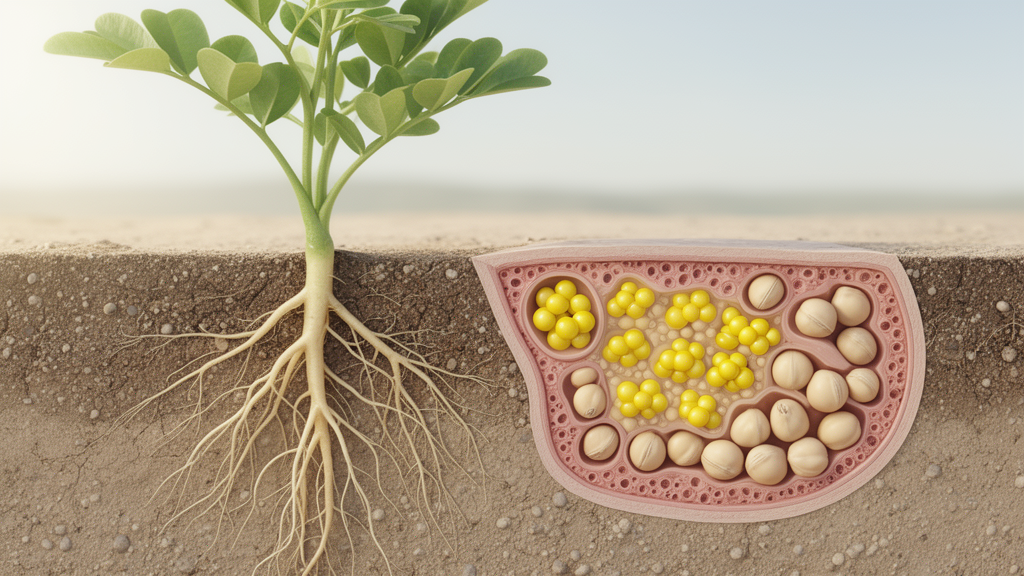
A comparative study of chickpea seedlings found that cultivars PUSA256 and PUSA1003 maintained better growth, more favorable root architecture, greater sulfur-assimilation enzyme activity and stronger SULTR gene expression under sulfur starvation than cultivar PUSA3022. The research also identified 15 members of the chickpea sulfate-transporter gene family, providing a genome-wide framework for examining how different cultivars respond when sulfate is unavailable in the growth medium.

The investigation focused on Cicer arietinum L., a major pulse crop whose protein quality is limited in part by low levels of sulfur-containing amino acids. Sulfur deficiency in agricultural soils makes improvements in sulfate uptake and assimilation relevant to efforts to increase the nutritional quality of chickpea. The study addressed the limited understanding of the molecular complexity and cultivar-specific roles of plant sulfate transporters in legumes through a combination of genome-wide analyses, computational expression predictions and comparative physiological measurements.

Genome-wide, phylogenetic, duplication and synteny analyses identified 15 CaSULTR genes, named CaSULTR1 through CaSULTR15. The encoded proteins contained the conserved Sulfate_transp and STAS domains. The genes were divided into four groups based on the combined analyses, and their expansion was attributed primarily to dispersed and whole-genome duplication. The researchers also detected purifying selection among retained genes, indicating that functional constraints have acted on the expanded family. These findings characterize the organization and evolutionary history of the CaSULTR gene set but do not independently establish the transport activity of individual genes.

Promoter analysis identified cis-regulatory elements associated with stress, hormone, growth-and-development, and light-related responses, suggesting that CaSULTR expression may be influenced by multiple regulatory signals. Computational expression analysis also predicted tissue-specific patterns. CaSULTR2 was highly induced in roots, while CaSULTR8 displayed a shoot-specific expression profile. Because these patterns were inferred in silico, they identify candidate genes and regulatory features for further investigation rather than directly measuring transporter activity, protein abundance or cellular localization.

For the physiological comparison, the researchers grew seedlings under sulfur-sufficient conditions, providing 2 mM sulfate, and sulfur-starvation conditions, providing 0 mM sulfate. Under starvation, PUSA256 and PUSA1003 exhibited improved biomass and root architecture, increased activities of the sulfur-assimilation enzymes SERAT and OASTL, and elevated SULTR gene expression. PUSA3022 showed poor growth and a comparatively weak transcriptional response. These observations associate a stronger sulfate-transport and sulfur-assimilation response with better performance under sulfate deprivation, but the reported comparison does not demonstrate that any individual CaSULTR gene caused the observed cultivar differences. Overall, the results identify the CaSULTR family, SERAT and OASTL activity, and root-related physiological traits as potential leads for breeding programs seeking improved sulfate-use efficiency in chickpea.

Subject of Research: Genome-wide characterization of chickpea sulfate transporters and cultivar responses to sulfur starvation

Article Title: Genome-wide characterization and expression analysis of the SULTR gene family in Cicer arietinum: regulates the sulfate transport/assimilation under sulfur starvation

Article References: Nagesh, C. R., Dutta, M., Gadpayale, D. P., Sushmitha, J., Dineshkumar, R., Bansal, N., Mallikarjuna, M. G., Goswami, S., Kumar, R. R., Sathee, L., Pandey, R., Bharadwaj, C., Dahuja, A., Prashat, G. R., & Vinutha, T. (2026). Genome-wide characterization and expression analysis of the SULTR gene family in Cicer arietinum: regulates the sulfate transport/assimilation under sulfur starvation. BMC Plant Biology. https://doi.org/10.1186/s12870-026-09145-x

Image Credits: AI Generated

DOI: 10.1186/s12870-026-09145-x

Keywords: chickpea, sulfate transporters, SULTR genes, sulfur starvation, sulfur-use efficiency, plant genomics, root architecture, sulfur assimilation, pulse crops, gene family evolution, Genome-wide, characterization

Cite Scienmag News

Juliet Wilcox. (October 26, 2026). Chickpea sulfate transporters vary in response to sulfur starvation. Scienmag. https://scienmag.com/chickpea-sulfate-transporters-vary-in-response-to-sulfur-starvation/

Juliet Wilcox. "Chickpea sulfate transporters vary in response to sulfur starvation." Scienmag, 26 October 2026, https://scienmag.com/chickpea-sulfate-transporters-vary-in-response-to-sulfur-starvation/. Accessed 26 October 2026.

Juliet Wilcox. "Chickpea sulfate transporters vary in response to sulfur starvation." Scienmag. October 26, 2026. https://scienmag.com/chickpea-sulfate-transporters-vary-in-response-to-sulfur-starvation/


Tags: characterizationchickpeacultivar-specific sulfur uptake mechanismsgene family evolutiongenetic diversity of chickpea cultivars under nutrient stressgenome duplication and gene expansion in chickpeagenome-widegenome-wide analysis of CaSULTR gene familyimproving chickpea nutritional quality through sulfur managementmolecular regulation of sulfate transport in plantsphylogenetic analysis of plant sulfate transportersplant genomicsplant sulfur transporters and genepulse cropsroot architectureSulfate transporter genes in chickpeassulfate transporterssulfur assimilationsulfur assimilation enzyme activity in legumessulfur deficiency impact on chickpea growthsulfur starvationsulfur starvation response in legumessulfur-use efficiencySULTR genes
Share26Tweet16
Previous Post

Research report: Beyond the clinic: a feasibility trial of the super skills for life program for childhood anxiety in Pakistan

Next Post

Dual malnutrition affected 5.5% of Mozambique mother-child dyads

Related Posts

Cotton SGR genes show conserved evolution and salt-drought responses
Agriculture

Cotton SGR genes show conserved evolution and salt-drought responses

October 26, 2026
Dual-strain bacteria and nano-NPK boost sugar beet yields
Agriculture

Dual-strain bacteria and nano-NPK boost sugar beet yields

October 26, 2026
Methyl jasmonate triggers broad molecular and metabolic responses in alfalfa
Agriculture

Methyl jasmonate triggers broad molecular and metabolic responses in alfalfa

October 26, 2026
Hybrid model improves maize yield estimates in controlled phosphorus experiments
Agriculture

Hybrid model improves maize yield estimates in controlled phosphorus experiments

October 26, 2026
Iron oxide nanoparticles ease salinity damage in a medicinal plant
Agriculture

Iron oxide nanoparticles ease salinity damage in a medicinal plant

October 26, 2026
Wheat study links carbohydrate metabolism genes to yield under low nitrogen
Agriculture

Wheat study links carbohydrate metabolism genes to yield under low nitrogen

October 26, 2026
Next Post
Dual malnutrition affected 5.5% of Mozambique mother-child dyads

Dual malnutrition affected 5.5% of Mozambique mother-child dyads

  • Mothers who receive childcare support from maternal grandparents show more optimized

    Mothers who receive childcare support from maternal grandparents show more parental warmth, finds NTU Singapore study

    27656 shares
    Share 11059 Tweet 6912
  • University of Seville Breaks 120-Year-Old Mystery, Revises a Key Einstein Concept

    1061 shares
    Share 424 Tweet 265
  • Bee body mass, pathogens and local climate influence heat tolerance

    682 shares
    Share 273 Tweet 171
  • Researchers record first-ever images and data of a shark experiencing a boat strike

    546 shares
    Share 218 Tweet 137
  • Groundbreaking Clinical Trial Reveals Lubiprostone Enhances Kidney Function

    531 shares
    Share 212 Tweet 133
Science

Embark on a thrilling journey of discovery with Scienmag.com—your ultimate source for cutting-edge breakthroughs. Immerse yourself in a world where curiosity knows no limits and tomorrow’s possibilities become today’s reality!

RECENT NEWS

  • Cell biologist Chouchani named 2026 Blavatnik National Award finalist
  • Dual malnutrition affected 5.5% of Mozambique mother-child dyads
  • Chickpea sulfate transporters vary in response to sulfur starvation
  • Research report: Beyond the clinic: a feasibility trial of the super skills for life program for childhood anxiety in Pakistan

Categories

  • Agriculture
  • Anthropology
  • Archaeology
  • Athmospheric
  • Biology
  • Biotechnology
  • Blog
  • Bussines
  • Cancer
  • Chemistry
  • Climate
  • Earth Science
  • Editorial Policy
  • Marine
  • Mathematics
  • Medicine
  • Pediatry
  • Policy
  • Psychology & Psychiatry
  • Science Education
  • Science News
  • Social Science
  • Space
  • Technology and Engineering

Subscribe to Blog via Email

Enter your email address to subscribe to this blog and receive notifications of new posts by email.

Join 5,151 other subscribers

© 2025 Scienmag - Science Magazine

Welcome Back!

Login to your account below

Forgotten Password?

Retrieve your password

Please enter your username or email address to reset your password.

Log In
No Result
View All Result
  • HOME
  • SCIENCE NEWS
  • CONTACT US

© 2025 Scienmag - Science Magazine

Discover more from Science

Subscribe now to keep reading and get access to the full archive.

Continue reading