


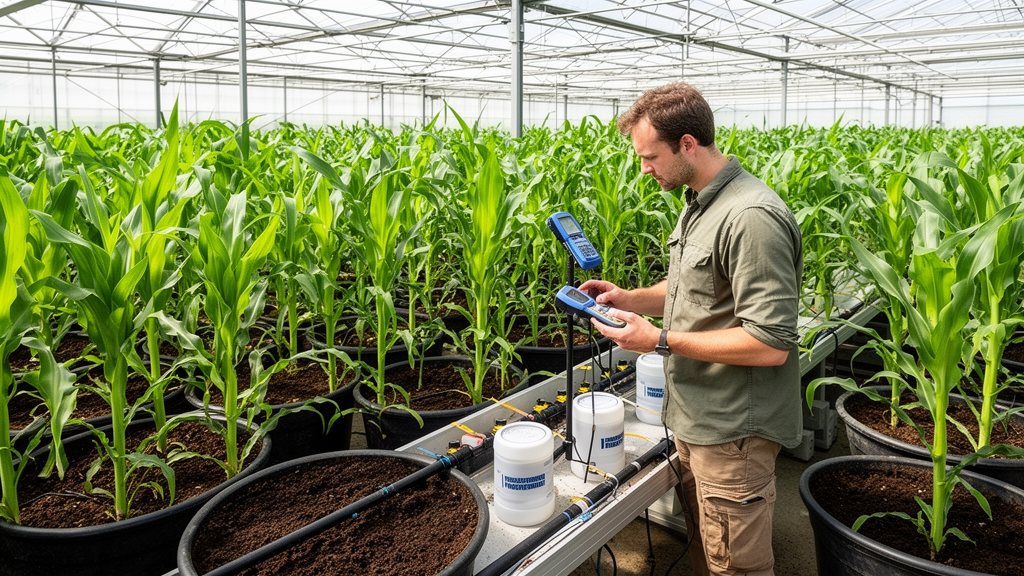
A machine-learning model combining support vector regression with grey wolf optimization produced the most accurate estimates of maize grain yield under both normal growing conditions and phosphorus deficiency, according to a controlled-experiment study. The hybrid approach, called SVR-GWO, also achieved high accuracy when given only three harvest-stage traits: 100-grain weight, total plant weight and harvest index. The findings point to a potentially useful way to estimate grain production while reducing the number of measurements required for yield analysis.
Researchers analyzed a data set containing maize growth parameters and seed yield from controlled experiments conducted at different soil phosphorus levels. Instead, it evaluated whether machine-learning approaches could predict grain yield from experimental observations under both normal and phosphorus-deficient conditions. The study compared several types of models: support vector machines, multilayer perceptron, radial basis function, conventional support vector regression and the SVR-GWO hybrid.
Variables entered into a multiple regression model were used to select inputs for these approaches. Their performance was assessed with four statistical criteria—mean absolute percentage error, root mean square error, mean absolute error and coefficient of determination. The supplied research summary reports that SVR-GWO outperformed the other models in predicting maize grain yield, but it does not provide the individual error values or the size of the experimental data set.
Phosphorus affects maize metabolism and performance, making the nutrient condition relevant to the study’s yield-prediction problem. The results indicate that SVR-GWO can accommodate maize data from conditions with normal phosphorus supply as well as from phosphorus-deficient conditions. A central feature of the hybrid model is its use of a reduced set of inputs collected at harvest.
Rather than requiring every measured growth parameter, the model can use 100-grain weight, total plant weight and harvest index as common predictors. Sensitivity analysis identified harvest index as the most important variable affecting seed yield in the data set. The study’s application is specific: post-harvest estimation and yield-component analysis.
The reported results do not establish the model as an early-season forecasting tool because its selected inputs are traits available at harvest.
Subject of Research: Machine-learning estimation of maize grain yield under phosphorus deficiency using harvest-stage traits
Article Title: Prediction of maize grain yield under phosphorus deficiency stress conditions with machine learning models
Article References: Jannatdoust, M., Darvishzadeh, R., & Alipour, H. (2026). Prediction of maize grain yield under phosphorus deficiency stress conditions with machine learning models. BMC Plant Biology. https://doi.org/10.1186/s12870-026-09832-9
Image Credits: AI Generated
DOI: 10.1186/s12870-026-09832-9
Keywords: maize, grain yield, phosphorus deficiency, machine learning, support vector regression, grey wolf optimization, harvest index, crop modeling, controlled experiments, plant traits, Prediction, grain
Cite Scienmag News
Alan Morgan. (October 26, 2026). Hybrid model improves maize yield estimates in controlled phosphorus experiments. Scienmag. https://scienmag.com/hybrid-model-improves-maize-yield-estimates-in-controlled-phosphorus-experiments/
Alan Morgan. "Hybrid model improves maize yield estimates in controlled phosphorus experiments." Scienmag, 26 October 2026, https://scienmag.com/hybrid-model-improves-maize-yield-estimates-in-controlled-phosphorus-experiments/. Accessed 26 October 2026.
Alan Morgan. "Hybrid model improves maize yield estimates in controlled phosphorus experiments." Scienmag. October 26, 2026. https://scienmag.com/hybrid-model-improves-maize-yield-estimates-in-controlled-phosphorus-experiments/


