


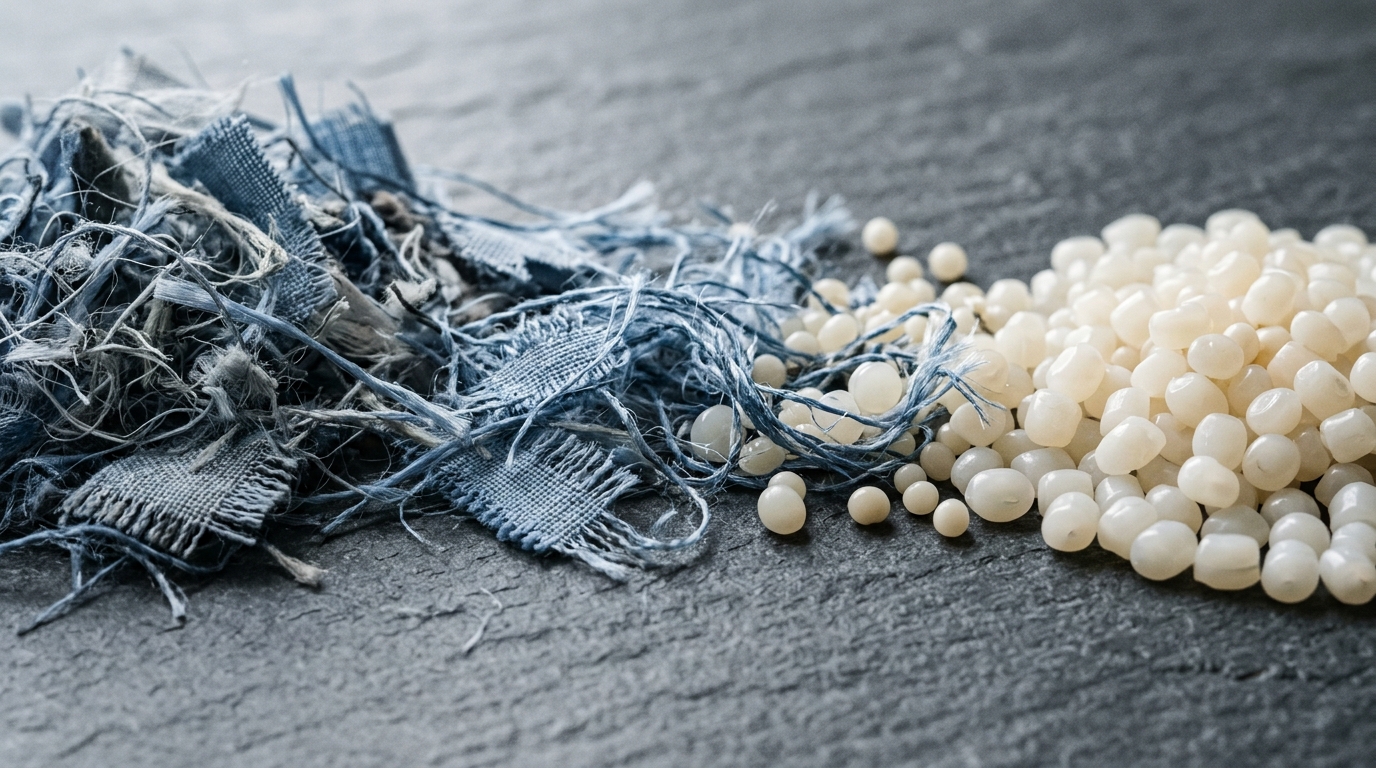
Researchers have demonstrated an integrated chemo-biotechnological strategy that converts biodegradable polyesters into new polyhydroxybutyrate (PHB), a biopolymer with potential applications in sustainable materials. The study, published in Biotechnology for the Environment, evaluates a two-step upcycling approach involving chemical depolymerization followed by microbial biosynthesis. The primary objective was to assess the feasibility of recovering core building blocks from post-consumer or surplus plastics and reintroducing them into a biosynthetic pipeline to generate high-quality biopolymers. This process aims to address the environmental persistence of synthetic polymers by creating a circular material flow that reduces reliance on fossil-based feedstocks.
The chemical phase of the process utilized alkaline hydrolysis in methanolic potassium hydroxide (KOH) at 50 °C to break down the polymer chains. The team tested three KOH concentrations: deficient, stoichiometric, and excess. This method generated potassium salts of monomers and oligomers, which served as carbon sources for microbial fermentation. The choice of methanolic KOH was based on its ability to cleave ester bonds effectively, even in crystalline polymer regions, offering a scalable alternative to enzymatic or thermal degradation methods that often suffer from limited efficiency or high energy consumption.
Four types of biodegradable polyesters were subjected to depolymerization: polylactic acid (PLA), polycaprolactone (PCL), commercial PHB (PHB-com), and in-house produced PHB. The structural identity of the starting materials was confirmed using attenuated total reflectance Fourier-transform infrared (ATR FT-IR) spectroscopy. Following the reaction, the methanol was evaporated, and the resulting solid potassium salts were dissolved in deionized water. These depolymerized substrates were used directly in fermentation without further purification, acidification, or neutralization, highlighting the robustness of the microbial system in handling crude salt-based feedstocks.
To identify the most efficient bacterial strain for PHB biosynthesis, a screening experiment was conducted using six bacterial strains cultivated with commercially available organic acids representing typical polyester degradation products. The tested carbon sources included crotonic acid and 3-hydroxybutyric acid from PHB, lactic acid from PLA, and 6-hydroxycaprylic acid from PCL. Among the tested strains, only Cupriavidus necator B4383 demonstrated the capacity for significant PHB production. Other strains, including Pseudomonas putida KT2440 and Zobellella denitrificans, achieved biomass growth but did not produce detectable levels of polyhydroxyalkanoates (PHA) under the tested conditions.
The depolymerization efficiency varied by polymer type and KOH concentration. Under stoichiometric conditions, the efficiency reached 100% for PCL and 97% for in-house produced PHB. FTIR analysis confirmed the cleavage of ester bonds and the formation of carboxylate salts in all cases, evidenced by the disappearance of the ester carbonyl stretching band and the appearance of new absorption bands characteristic of carboxylate formation. PLA exhibited the fastest pH drop during the reaction, stabilizing around pH 9 after approximately six hours, suggesting a higher rate of ester bond cleavage compared to the more crystalline PHB and PCL structures.
Fermentations using the depolymerized feedstocks revealed distinct performance metrics for biomass yield and polymer content. The highest biomass yields were observed with depolymerized commercial PHB under KOH-deficient conditions, reaching 1.43 g/L of cell dry weight (CDW). In contrast, the highest PHB content was achieved with depolymerized in-house PHB under KOH-excess conditions, where the polymer constituted 86% of the cell dry weight. This trade-off indicates that while KOH deficiency favors overall bacterial growth, KOH excess may induce a metabolic shift that prioritizes storage polymer accumulation over biomass expansion, potentially as a stress response to ionic imbalance.
The maximum PHB titer reached 0.93 g/L in the flask cultures. Feedstocks derived from PLA and PCL were less efficient in supporting both biomass growth and PHB accumulation compared to PHB-derived substrates. However, they remained viable carbon sources, with PHB content not exceeding approximately 63% in the best case for these materials. The ability of C. necator B4383 to grow efficiently on crude potassium salts without prior purification suggests a level of physiological robustness that could simplify process integration and reduce costs in decentralized or early-stage upcycling applications.
Structural characterization of the upcycled PHB confirmed that the biopolymers retained the core structural motifs of native PHB. FTIR-ATR spectra showed prominent ester carbonyl stretching bands and C–H stretching regions consistent with PHB. The spectra of upcycled PHB synthesized from PHB-derived feedstocks were nearly identical to those of reference commercial PHB, indicating that the combined chemical and microbial processes preserved molecular integrity. Slight spectral differences were observed in samples derived from PLA and PCL, possibly due to residual impurities or trace co-monomers, but these did not alter the overall identity of the material.
Thermal analysis using thermogravimetric analysis (TGA) and differential scanning calorimetry (DSC) revealed that the upcycled PHB exhibited thermal stability consistent with known PHB polymers. Major decomposition events occurred in the 250–330 °C range, with degradation peaks between 291 and 296 °C across all feedstocks. Upcycled PHB from PCL showed the highest thermal resistance, with a degradation peak at 296 °C and a minimal final residue of 1.02%. These findings suggest that the origin of the feedstock can influence the thermal robustness and structural regularity of the final biopolymer, with PCL-derived intermediates potentially enhancing thermal stability.
The study highlights the potential of this integrated approach for circular bioprocesses, offering a viable strategy for polyester valorization. By converting diverse biodegradable polyesters into a uniform high-value biopolymer, the process addresses the challenge of managing mixed plastic waste streams. The use of methanolic KOH, while effective, requires careful management of flammability and salt accumulation at scale. Future work should focus on optimizing ionic balance, exploring alternative green solvents, and adapting the process to continuous fermentation modes to enhance productivity and sustainability.
The depolymerization protocol relied on a high solid polymer loading of 333.3 grams per liter, exceeding substrate concentrations in earlier polyester recycling studies. Under stoichiometric potassium hydroxide dosing at 50 °C, base-catalyzed hydrolysis achieved complete 100 percent depolymerization for polycaprolactone, 97 percent for in-house polyhydroxybutyrate, 92 percent for polylactic acid, and 88 percent for commercial polyhydroxybutyrate. The physical forms of starting materials influenced processing dynamics, utilizing fibrous precipitates for in-house polyhydroxybutyrate, approximately five-millimeter granules for commercial polyhydroxybutyrate and polycaprolactone, and two-centimeter rod sections cut from filaments for polylactic acid. Structural tracking through infrared spectroscopy verified ester backbone cleavage by the disappearance of the carbonyl band near 1750 inverse centimeters and the appearance of carboxylate bands around 1600 and 1400 inverse centimeters, alongside broad hydroxyl stretching between 3500 and 3000 inverse centimeters. Spectral variations in depolymerized polycaprolactone between 2800 and 3000 inverse centimeters suggested minor aliphatic chain fragmentation at elevated alkali concentrations.
Initial screening in mineral salt medium with limited nitrogen and carbon concentrations of 1.95 grams per liter revealed stark differences in substrate utilization. Pseudomonas putida KT2440 produced the highest biomass on crotonic acid at 0.54 grams per liter, while Cupriavidus necator B4383 achieved 0.52 grams per liter on 3-hydroxybutyric acid, 0.50 grams per liter on 6-hydroxycaprylic acid, and 0.45 grams per liter on crotonic acid. Biomass accumulation reached 0.45 grams per liter for Pseudomonas putida GL01 on 6-hydroxycaprylic acid, 0.28 grams per liter for Pseudomonas putida CA3 on crotonic acid, and 0.23 grams per liter for Cupriavidus necator B14690, whereas Zobellella denitrificans produced the lowest biomass across all conditions. Despite supporting growth, none of the Pseudomonas strains or C. necator B14690 accumulated detectable polymer. In contrast, C. necator B4383 directly metabolized crotonic acid without supplementary glucose, accumulating 41 percent cellular polymer, while reaching 58 percent on 3-hydroxybutyric acid, 36 percent on 6-hydroxycaprylic acid, and 21 percent on lactic acid.
Subsequent flask fermentations evaluated bacterial performance on crude carboxylate salts extracted after downstream drying, where biomass from lyophilized cultures was purified through chloroform extraction and ice-cold methanol precipitation before gas chromatographic quantification. Under potassium hydroxide deficiency, commercial polyhydroxybutyrate hydrolysates supported 1.43 grams per liter of cell dry weight and a final polymer titer of approximately 0.82 grams per liter, while in-house substrates yielded 1.38 grams per liter of biomass and a titer of 0.92 grams per liter. Depolymerized polylactic acid supported inferior growth, plateauing at a maximum biomass density of 0.85 grams per liter.
Thermal characterization underscored how feedstock origins shaped decomposition kinetics and polymer properties. Thermogravimetric measurements indicated that polymer synthesized from depolymerized polylactic acid followed a multi-step decomposition profile peaking at 292.5 °C, losing 83.72 percent of its mass between 250 °C and 306 °C while leaving 4.24 percent residue at 600 °C. Material derived from in-house polyhydroxybutyrate decomposed with a peak at 291.5 °C, shedding 90.30 percent mass between 250 °C and 320 °C and yielding 3.30 percent residue. Substrates prepared from commercial polyhydroxybutyrate degraded sharply between 260 °C and 330 °C with a maximum decomposition rate at 293.7 °C and negligible residue. Differential scanning calorimetry further confirmed typical polyhydroxybutyrate endothermic melting peaks around 170 °C across all samples, accompanied by subtle shifts reflecting variations in crystalline domain organization.
These findings illustrate a mechanistic trade-off between cellular growth and intracellular polymer accumulation, where surplus potassium hydroxide restricts biomass generation while triggering stress-induced metabolic diversion into protective energy reservoirs. Translating this process into high-density fed-batch bioreactors presents distinct physiological challenges, as extracellular potassium concentrations reaching or exceeding 1.0 molar disrupt membrane potential through uncontrolled passive ion influx. Maintaining stoichiometric or slightly deficient base concentrations during chemical breakdown mitigates ionic stress and stabilizes upstream conversion. For industrial translation, the researchers recommend medium supplementation with sodium or calcium cations, alongside purification strategies such as controlled neutralization, selective acidification, or distillation to safeguard microbial viability.
Subject of Research: Integrated chemo-biotechnological upcycling of biodegradable polyesters into polyhydroxybutyrate
Article Title: Integrated chemo-biotechnological process for upcycling polyesters into new PHB
Article References: Faruga, A., Cichoń, E., Karcz, R., Kryściak-Czerwenka, J., Szumera, M., Prajsnar, J., & Guzik, M. (2025). Integrated chemo-biotechnological process for upcycling polyesters into new PHB. Biotechnology for the Environment, 2(1), Article 11. https://doi.org/10.1186/s44314-025-00028-3
Image Credits: AI Generated
DOI: 10.1186/s44314-025-00028-3
Keywords: polyhydroxybutyrate, polyester upcycling, Cupriavidus necator, alkaline hydrolysis, biodegradable plastics, circular economy, microbial fermentation, polylactic acid, polycaprolactone, biopolymer synthesis, Integrated, chemo-biotechnological
Cite Scienmag News
Morgan Morrow. (November 7, 2026). Chemical and Microbial Process Upcycles Polyesters into PHB. Scienmag. https://scienmag.com/chemical-and-microbial-process-upcycles-polyesters-into-phb/
Morgan Morrow. "Chemical and Microbial Process Upcycles Polyesters into PHB." Scienmag, 7 November 2026, https://scienmag.com/chemical-and-microbial-process-upcycles-polyesters-into-phb/. Accessed 10 November 2026.
Morgan Morrow. "Chemical and Microbial Process Upcycles Polyesters into PHB." Scienmag. November 7, 2026. https://scienmag.com/chemical-and-microbial-process-upcycles-polyesters-into-phb/




