

Tuesday, October 20, 2026
Science
No Result
View All Result
  • Login
  • HOME
  • SCIENCE NEWS
  • CONTACT US
  • HOME
  • SCIENCE NEWS
  • CONTACT US
No Result
View All Result
Scienmag
No Result
View All Result
Home Science News Biology

Cave fungi study identifies 23 Cladosporium species and six new taxa in Brazil’s Cerrado

October 20, 2026
in Biology, Science News
Roger Howard
By Roger Howard Scienmag Editorial Profile - Mycology
Reading Time: 2 mins read
0
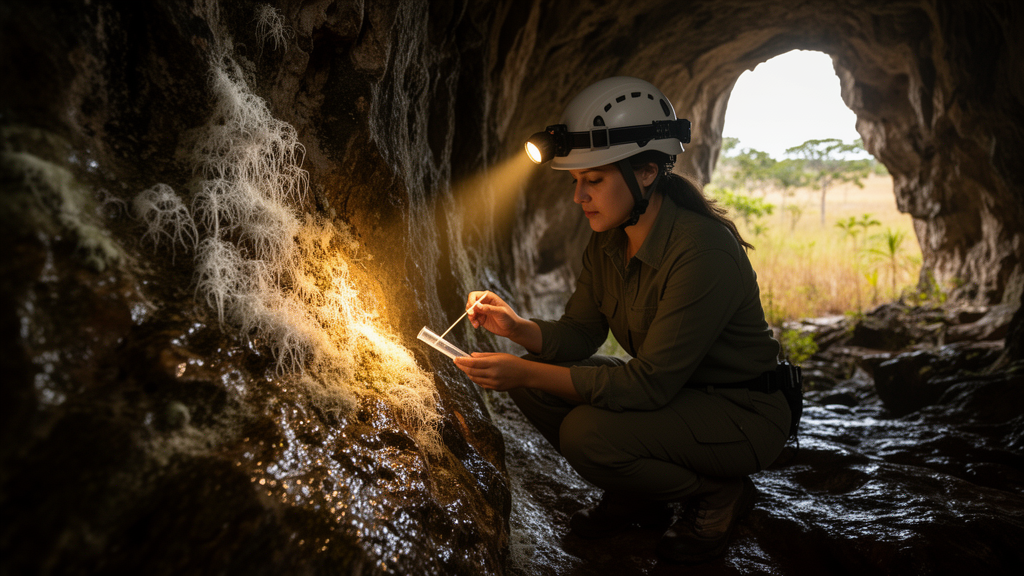
Six New Fungal Species Emerge from Caves of Brazil’s Cerrado Savannah

Six New Fungal Species Emerge from Caves of Brazil's Cerrado Savannah

65
SHARES
587
VIEWS
Share on FacebookShare on Twitter
ADVERTISEMENT

An abstract-reported study of Cladosporium fungi from six caves in Brazil’s Cerrado identified 23 species among 94 isolates and described six species new to science. The researchers combined morphological observations with multi-locus phylogenetic analyses to characterize the isolates and assess species boundaries.

Five of the newly described species were placed in the C. cladosporioides complex: C. carsi, C. lacerdae, C. mambaiense, C. nogueirae and C. propiciense. The sixth, C. mesquitapaivae, was assigned to the C. sphaerospermum complex. Selected ex-type strains were also examined through sequencing of the RPB2 and TUB barcodes.

Species delimitation used morphology, phylogenetic inferences and the pairwise homoplasy index test, supplemented by genealogical concordance phylogenetic species recognition. These analyses supported four taxonomic synonymizations: C. ribis and C. speluncae under C. bambusicola, C. brigadeirense under C. puris, and C. marinisedimentum under C. sphaerospermum. Eleven previously known species were reported for the first time in cave environments, while C. bambusicola was described as the most frequent; the abstract reports 29.17% for it but does not specify the denominator underlying that percentage.

The study covered 94 isolates from six Cerrado caves, and the available abstract does not provide sampling dates or further site-level details. Based on the reported analyses, ACT, RPB2, TEF1-α and TUB were proposed as the primary phylogenetic barcodes for distinguishing closely related Cladosporium species, particularly within the C. cladosporioides complex.

Subject of Research: Taxonomic diversity of Cladosporium fungi isolated from six caves in Brazil’s Cerrado

Article Title: Cladosporium from caves of the Brazilian savannah (Cerrado) and the description of six new species

Article References: Félix-Oliveira, P. H., Prazeres, J. F. S. A., Ferro, L. O., Antunes, A. C. A., Lima, C. F., Neves, D. S. S., Fonseca, E. O., Miranda, L. S., Momoli, R. S., Souza-Motta, C. M., Bensch, K., Crous, P. W., & Bezerra, J. D. P. (2026). Cladosporium from caves of the Brazilian savannah (Cerrado) and the description of six new species. IMA Fungus, 17, Article e191673. https://doi.org/10.3897/imafungus.17.191673

Image Credits: AI Generated

DOI: 10.3897/imafungus.17.191673

Keywords: Cladosporium, fungal diversity, caves, Brazilian Cerrado, taxonomy, phylogenetics, species delimitation, new species, mycology, Brazilian, savannah, Cerrado

Cite Scienmag News

Roger Howard. (October 20, 2026). Cave fungi study identifies 23 Cladosporium species and six new taxa in Brazil’s Cerrado. Scienmag. https://scienmag.com/cave-fungi-study-identifies-23-cladosporium-species-and-six-new-taxa-in-brazils-cerrado/


Roger Howard. "Cave fungi study identifies 23 Cladosporium species and six new taxa in Brazil’s Cerrado." Scienmag, 20 October 2026, https://scienmag.com/cave-fungi-study-identifies-23-cladosporium-species-and-six-new-taxa-in-brazils-cerrado/. Accessed 20 October 2026.

Roger Howard. "Cave fungi study identifies 23 Cladosporium species and six new taxa in Brazil’s Cerrado." Scienmag. October 20, 2026. https://scienmag.com/cave-fungi-study-identifies-23-cladosporium-species-and-six-new-taxa-in-brazils-cerrado/

Tags: BrazilianBrazilian CerradoCave fungi biodiversity in Brazil’s Cerradocave microbiology and mycologycavesCerradoCladosporiumCladosporium species identificationendemic fungi in cave environmentsfungal diversityfungal ecology in tropical cavesfungal species delimitation methodsfungal taxonomy and synonymizationimpact of cave habitats on fungal diversitymolecular barcoding of fungimorphological and phylogenetic analysis of fungimulti-locus phylogenetic studiesmycologynew fungal taxa discoverynew speciesphylogeneticsSavannahspecies delimitationtaxonomy
Share26Tweet16
Previous Post

Morphological study describes three new Psen species from China

Next Post

Nomenclatural review validates Pino sibiricae-Laricion sibiricae for Siberian larch forests

Related Posts

Siberia’s frozen-soil forests finally get a valid scientific name after four decades
Science News

Nomenclatural review validates Pino sibiricae-Laricion sibiricae for Siberian larch forests

October 20, 2026
Three New Wasp Species Unveiled from China in Major Taxonomic Update
Science News

Morphological study describes three new Psen species from China

October 20, 2026
New Hibiscus-feeding moth species discovered on remote Ogasawara Islands
Science News

Morphology and DNA barcoding identify a new Hibiscus-feeding Bucculatrix species in Japan’s Ogasawara Islands

October 20, 2026
Chaperone Overproduction May Help Cells Repair Oxidative DNA Damage
Science News

Mini-review links chaperone overproduction with oxidative-stress resistance and DNA-repair regulation

October 20, 2026
Complete Chloroplast Genome of Rhododendron ambiguum Reveals Hidden Diversity and Evolutionary Complexity
Biology

Comparative chloroplast genomes place Rhododendron ambiguum near R. concinnum but leave genus relationships unresolved

October 20, 2026
Invasive leafhopper in Switzerland found carrying elm dieback phytoplasma for the first time
Biology

Molecular surveillance finds first Swiss record of ‘Candidatus Phytoplasma ulmi’ in a leafhopper

October 20, 2026
Next Post
Siberia’s frozen-soil forests finally get a valid scientific name after four decades

Nomenclatural review validates Pino sibiricae-Laricion sibiricae for Siberian larch forests

  • Mothers who receive childcare support from maternal grandparents show more optimized

    Mothers who receive childcare support from maternal grandparents show more parental warmth, finds NTU Singapore study

    27656 shares
    Share 11059 Tweet 6912
  • University of Seville Breaks 120-Year-Old Mystery, Revises a Key Einstein Concept

    1061 shares
    Share 424 Tweet 265
  • Bee body mass, pathogens and local climate influence heat tolerance

    682 shares
    Share 273 Tweet 171
  • Researchers record first-ever images and data of a shark experiencing a boat strike

    546 shares
    Share 218 Tweet 137
  • Groundbreaking Clinical Trial Reveals Lubiprostone Enhances Kidney Function

    531 shares
    Share 212 Tweet 133
Science

Embark on a thrilling journey of discovery with Scienmag.com—your ultimate source for cutting-edge breakthroughs. Immerse yourself in a world where curiosity knows no limits and tomorrow’s possibilities become today’s reality!

RECENT NEWS

  • Georgia study models historic American chestnut distribution from 1804–1832 land surveys
  • Nomenclatural review validates Pino sibiricae-Laricion sibiricae for Siberian larch forests
  • Cave fungi study identifies 23 Cladosporium species and six new taxa in Brazil’s Cerrado
  • Morphological study describes three new Psen species from China

Categories

  • Agriculture
  • Anthropology
  • Archaeology
  • Athmospheric
  • Biology
  • Biotechnology
  • Blog
  • Bussines
  • Cancer
  • Chemistry
  • Climate
  • Earth Science
  • Editorial Policy
  • Marine
  • Mathematics
  • Medicine
  • Pediatry
  • Policy
  • Psychology & Psychiatry
  • Science Education
  • Science News
  • Social Science
  • Space
  • Technology and Engineering

Subscribe to Blog via Email

Enter your email address to subscribe to this blog and receive notifications of new posts by email.

Join 5,150 other subscribers

© 2025 Scienmag - Science Magazine

Welcome Back!

Login to your account below

Forgotten Password?

Retrieve your password

Please enter your username or email address to reset your password.

Log In
No Result
View All Result
  • HOME
  • SCIENCE NEWS
  • CONTACT US

© 2025 Scienmag - Science Magazine

Discover more from Science

Subscribe now to keep reading and get access to the full archive.

Continue reading