


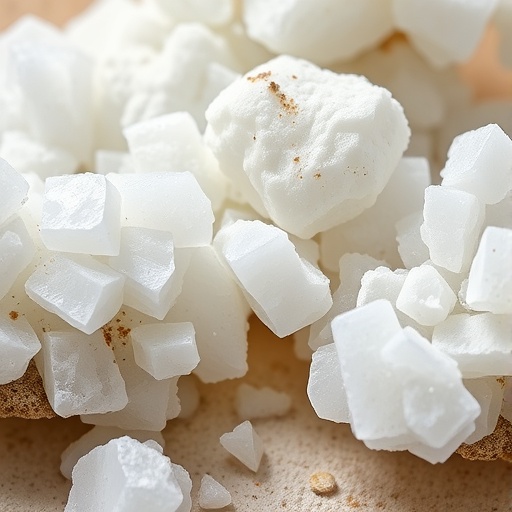
In the intricate world of geochemistry and environmental science, the impact of mineral composition in soil and clay-rich materials has captured the attention of many researchers. A recent study, spearheaded by a team of scientists led by Maillet, Lynde, and Savoye, sheds new light on the contributions of carbonate minerals to the reactivity of strontium and caesium. This research, published in Environmental Science and Pollution Research, offers profound insights into the behavior of these elements within natural geological formations, and it poses significant implications for environmental management and remediation strategies.
At the core of this research lies the understanding of how carbonate minerals—such as calcite and dolomite—interact with strontium (Sr) and caesium (Cs) ions in clay-rich environments. These minerals are prevalent in many geological settings and can influence the mobility and bioavailability of heavy metals and radioactive isotopes through processes like ion exchange and surface complexation. The findings suggest that carbonate minerals can profoundly alter the retention and release dynamics of Sr and Cs, thereby affecting their environmental fate and transport.
Strontium, an alkaline earth metal, has numerous industrial applications ranging from electronics to pyrotechnics. In contrast, caesium, though less prevalent, is noted for its radioactivity and its applications in atomic clocks, oil drilling, and medical therapies. The presence of these elements in the environment, especially from anthropogenic sources, raises concerns regarding human health and ecological balance. Thus, understanding their geochemical interactions is critical for assessing pollution risks and devising effective remediation methods.
The study’s methodology was robust, employing a series of laboratory experiments that simulated natural conditions. The researchers conducted batch adsorption experiments to evaluate the extent of strontium and caesium retention on various clay-rich materials, with a particular focus on sediments rich in carbonates. Their results revealed that the presence of carbonate minerals significantly increased the sorption capacity of the sediments for both Sr and Cs, highlighting a potential avenue for enhanced natural attenuation strategies in contaminated sites.
One of the key findings was that the carbonate minerals facilitated the formation of stable complexes with Sr and Cs ions, rendering them less mobile. This has far-reaching implications for the remediation of contaminated sites, particularly those impacted by nuclear waste or industrial discharges. By leveraging the natural properties of carbonate-rich soils, environmental scientists may be able to devise strategies that harness these natural processes to mitigate pollution risks effectively.
Additionally, the research highlighted the importance of considering environmental factors such as pH and ionic strength when assessing the sorption of Sr and Cs onto carbonate-rich clays. These factors can influence the availability of carbonate ions, thus affecting the complexation behavior. As such, the findings call for a more nuanced approach when evaluating remediation strategies, taking into account the specific environmental conditions surrounding clay-rich materials.
The implications of this research extend beyond the laboratory, as they touch upon pressing environmental issues, including soil degradation and contamination. With the growing body of evidence pointing to the interplay between mineral composition and pollutant behavior, land managers, and environmental engineers are urged to consider these findings in their planning and restoration efforts. By integrating mineral reactivity into remediation frameworks, stakeholders may improve the effectiveness of clean-up operations while also safeguarding water resources and ecosystem health.
While the study primarily addressed Sr and Cs, the underlying principles of mineral interactions could have broader applications in the field of environmental science. For instance, similar mechanisms may be at play with other heavy metals such as lead, cadmium, and mercury, which are of considerable concern worldwide. Future research should take these findings a step further, exploring how different minerals interact with a broader spectrum of contaminants to enhance our understanding of soil chemistry and its implications for public health and safety.
Moreover, as urbanization and industrial activities continue to proliferate, the potential for soil contamination remains a pressing issue globally. Insights from this research could provide a valuable framework for developing new methodologies for assessing the risk posed by heavy metals and radioactive elements in various geographical contexts. Consequently, this study is not merely an academic exercise; indeed, it could pave the way for innovative solutions to some of the most challenging environmental problems we face today.
Public interest in environmental issues is rising, and studies like this one tend to resonate well with eco-conscious audiences. Articles that marry scientific discovery with relatable implications for everyday life stand a large chance of gaining traction amongst readers committed to sustainability. Thus, researchers are encouraged to communicate their findings effectively, making the science accessible and engaging to a broader audience.
As the world grapples with climate change and environmental degradation, the need for effective pollution management strategies is more urgent than ever. The integration of geological and chemical insights into remediation practices holds promise for addressing emerging environmental challenges. The work of Maillet et al. serves as a significant contribution to this area, providing a solid foundation for future research that aims to harness the properties of natural materials in tackling pollution.
In conclusion, the ongoing exploration of carbonate minerals and their role in modifying the reactivity of essential environmental ions like strontium and caesium is an exciting frontier in the field of environmental science. As researchers collectively advance our understanding of these complex interactions, they pave the way for more effective and eco-friendly solutions addressing contamination issues in our soils. Increasing public awareness about these findings will also enhance community engagement in sustainability initiatives, leading to a more informed populace ready to tackle the challenges of the future.
Understanding the dynamics of pollutant behavior in soil is crucial for guiding policies focused on environmental protection. By harnessing the insights gathered through research like this, we can make informed decisions that seek to rectify human-induced impacts on our planet. Ultimately, it will be the combined efforts of scientists, policymakers, and citizens that will determine the longevity of both our ecosystems and our societies.
In light of the importance of this topic, readers are encouraged to delve deeper into the ramifications of these findings and consider how they might apply them in their own local contexts. By remaining engaged with scientific advancements, we all play a part in fostering a healthier planet for future generations.
Cite Scienmag News
Violet Maxwell. (October 11, 2025). Carbonate Minerals’ Role in Strontium and Caesium Reactivity. Scienmag. https://scienmag.com/carbonate-minerals-role-in-strontium-and-caesium-reactivity/
Violet Maxwell. "Carbonate Minerals’ Role in Strontium and Caesium Reactivity." Scienmag, 11 October 2025, https://scienmag.com/carbonate-minerals-role-in-strontium-and-caesium-reactivity/. Accessed 4 September 2026.
Violet Maxwell. "Carbonate Minerals’ Role in Strontium and Caesium Reactivity." Scienmag. October 11, 2025. https://scienmag.com/carbonate-minerals-role-in-strontium-and-caesium-reactivity/


