


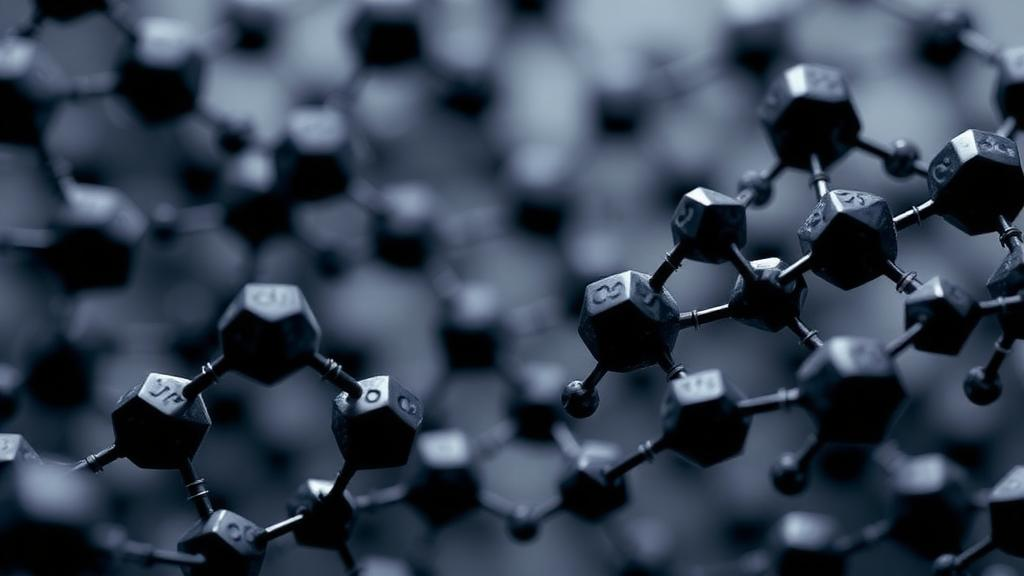
A newly published edited volume is drawing attention to one of the most quietly transformative material families in modern chemistry: graphitic carbon nitride, often written as g-C₃N₄, and the growing zoo of doped, composite and metal-decorated derivatives that chemists have built around it. The book, titled Catalytic Applications of Carbon Nitride-Based Nanomaterials and edited by Vijai Kumar Rai, Manorama Singh and Ankita Rai, brings together recent developments in the synthesis, properties and catalytic deployment of these polymeric semiconductors. Its central message is that a material once regarded mainly as a modest photocatalyst has matured into a platform technology spanning organic synthesis, energy conversion and environmental monitoring, and that the coming decade of catalysis research will be shaped in large part by how cleverly scientists can engineer its structure.
What makes carbon nitride so attractive begins with its chemistry. Graphitic carbon nitride is a metal-free polymer built from carbon and nitrogen atoms arranged in heptazine or triazine units, stacked into layers that resemble the architecture of graphite. This arrangement gives the material a set of properties that catalyst designers prize: it is chemically stable in acids, bases and organic solvents, it tolerates high temperatures, and it possesses a band gap of roughly 2.7 electronvolts, wide enough to drive photochemical reactions yet narrow enough to absorb a meaningful slice of visible sunlight. Because it contains only abundant elements, it is inexpensive and scalable in ways that many metal-based catalysts are not. Its surface is also rich in nitrogen-containing sites, including pyridinic and amino functionalities, which can anchor metal atoms, activate small molecules and participate directly in bond-forming chemistry.
The volume devotes substantial attention to how synthesis choices ripple through to catalytic performance. Carbon nitride can be prepared by thermal condensation of inexpensive precursors such as melamine, urea, thiourea or dicyandiamide, and the choice of precursor, the heating profile and the atmosphere all leave fingerprints on the final material. Thermal polycondensation at moderate temperatures tends to yield highly polymerized, well-ordered frameworks, while routes from urea can produce defect-rich structures with enhanced surface area. Post-synthetic treatments, including exfoliation into two-dimensional nanosheets, protonation, and the introduction of vacancies or heteroatom dopants, further tune the electronic structure. Each of these levers changes how the material absorbs light, how charge carriers migrate through its framework and how substrates adsorb to its surface, which in turn governs activity and selectivity in the reactions it catalyzes.
In organic synthesis, carbon nitride-based catalysts have proven capable of mediating reactions that traditionally demand stoichiometric reagents or precious-metal complexes. The book surveys their roles in carbon–carbon and carbon–heteroatom bond formation, the two workhorse transformations of synthetic chemistry, as well as in oxidation reactions and the construction of heterocyclic scaffolds that underpin much of pharmaceutical and agrochemical chemistry. Because the catalyst is heterogeneous, it can be recovered by filtration and reused, addressing one of the persistent criticisms of homogeneous catalysis. The nitrogen-rich surface can act as a Lewis base, a hydrogen-bonding platform or an electron-transfer mediator, and when combined with light absorption it enables photocatalytic variants of classical reactions that proceed under mild conditions, often at ambient temperature and pressure with molecular oxygen or water as the terminal oxidant.
Photocatalysis is arguably where carbon nitride first made its name, and the volume gives this field careful treatment. When g-C₃N₄ absorbs a photon, an electron is promoted from the valence band to the conduction band, leaving behind a hole. These charge carriers can reduce or oxidize species adsorbed on the catalyst surface before they recombine, and the art of photocatalyst design lies largely in preventing that recombination. Strategies covered in the book include coupling carbon nitride with other semiconductors to form heterojunctions that separate charges across an interface, decorating the surface with co-catalysts such as metals that act as electron sinks, and doping the framework to shift band edges. Applications range from the degradation of organic pollutants in water to the photosynthesis of value-added organic compounds, and the editors emphasize that rational functionalization, rather than trial and error, is increasingly the route to high activity and selectivity.
Water splitting, the light-driven decomposition of water into hydrogen and oxygen, receives particular scrutiny as a flagship application for sustainable energy conversion. Carbon nitride’s conduction band sits at a potential sufficiently negative to reduce protons to hydrogen, making it a candidate photocatalyst for solar fuel production. The material’s limitations, including modest visible-light absorption beyond a certain wavelength and rapid charge recombination, are precisely the problems that doping, defect engineering and composite formation are designed to solve. Alongside water splitting, the book examines oxygen reduction, the cathodic half-reaction central to fuel cells and metal–air batteries, where carbon nitride-based materials can serve as metal-free electrocatalysts or as supports that stabilize single metal atoms in highly active configurations.
Electrocatalysis and electrochemical sensing form a second major pillar of the volume. The same conductive and adsorptive properties that make carbon nitride useful for driving reactions make it valuable for detecting them. The book highlights electrochemical sensors built on carbon nitride platforms for monitoring environmental pollutants, exploiting the material’s ability to accumulate analytes at nitrogen-rich sites and transduce their presence into measurable electrical signals. Such sensors target contaminants in water and air, offering routes to monitoring tools that are inexpensive, robust and potentially deployable outside specialized laboratories. The editors frame this sensing capability as a natural companion to the materials’ environmental remediation roles: the same chemistry that destroys pollutants can be harnessed to detect them.
Threaded through all of these applications is a unifying theme that the editors return to repeatedly: the relationship between catalyst design and catalytic outcome. Activity and selectivity in carbon nitride catalysis are not fixed properties of a formula but consequences of structure at multiple scales, from the polymerization degree of the framework to the density of surface defects to the geometry of metal sites deposited upon it. A metal-decorated derivative may behave entirely differently from its pristine parent, and a composite with a second semiconductor can open reaction pathways unavailable to either component alone. The volume’s chapters collectively argue that understanding these structure–performance relationships is the key to moving carbon nitride catalysts from laboratory demonstrations to technologies that compete with, and in some cases outperform, conventional metal-based systems.
The sustainability case for these materials is central to the book’s argument. Catalysis underpins the majority of industrial chemical production, and the environmental costs of precious-metal catalysts, stoichiometric oxidants and energy-intensive processes have pushed chemists toward alternatives grounded in earth-abundant elements and renewable energy inputs. Carbon nitride fits that brief unusually well: it is synthesized from cheap organic precursors, contains no metals, can harvest sunlight directly, and can drive oxidations with air or water. The editors position the material as relevant to sustainable chemistry, energy conversion and environmental monitoring simultaneously, a rare breadth that reflects the tunability of the underlying platform. For industries seeking greener routes to fine chemicals, fuels and clean water, the message is that a single material family may serve multiple points in the same sustainability pipeline.
By gathering contributions that span organic chemistry, materials science, photocatalysis and electrochemistry, the volume offers an interdisciplinary map of a field that has often advanced in disconnected pockets. The editors, Vijai Kumar Rai, Manorama Singh and Ankita Rai, have assembled a reference aimed at researchers and advanced readers in organic chemistry, materials science, catalysis, nanotechnology and chemical engineering, and its scope suggests that carbon nitride-based nanomaterials have moved decisively beyond a single-application curiosity. Whether the next breakthrough comes from a more selective organic transformation, a more efficient water-splitting device or a more sensitive pollutant sensor, the common denominator will be the same: a metal-free, nitrogen-rich framework whose properties chemists can now design with increasing precision. For a field racing toward efficient and environmentally responsible catalytic technologies, graphitic carbon nitride has earned its place at the center of the conversation.
Subject of Research: Catalytic applications of graphitic carbon nitride-based nanomaterials
Article Title: Catalytic applications of carbon nitride-based nanomaterials
Article References: Catalytic applications of carbon nitride-based nanomaterials. (n.d.). Original publication
Image Credits: AI Generated
DOI: Not provided
Keywords: carbon nitride, g-C3N4, catalysis, photocatalysis, electrocatalysis, water splitting, organic synthesis, nanomaterials, sustainable chemistry, environmental sensing, oxygen reduction, heterogeneous catalysis
Cite Scienmag News
Bethany Barker. (October 3, 2026). Carbon Nitride Nanomaterials Emerge as Versatile Catalysts for Green Chemistry. Scienmag. https://scienmag.com/carbon-nitride-nanomaterials-emerge-as-versatile-catalysts-for-green-chemistry/
Bethany Barker. "Carbon Nitride Nanomaterials Emerge as Versatile Catalysts for Green Chemistry." Scienmag, 3 October 2026, https://scienmag.com/carbon-nitride-nanomaterials-emerge-as-versatile-catalysts-for-green-chemistry/. Accessed 4 October 2026.
Bethany Barker. "Carbon Nitride Nanomaterials Emerge as Versatile Catalysts for Green Chemistry." Scienmag. October 3, 2026. https://scienmag.com/carbon-nitride-nanomaterials-emerge-as-versatile-catalysts-for-green-chemistry/


