

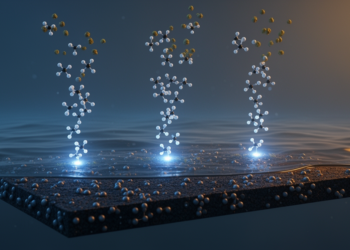
Zinc Single Atoms Turn Water Pollutants Into Hydrogen Peroxide Fuel
An asymmetrically coordinated zinc single-atom catalyst degrades antibiotics in water while converting the pollutants' own electrons into hydrogen peroxide.
An asymmetrically coordinated zinc single-atom catalyst degrades antibiotics in water while converting the pollutants' own electrons into hydrogen peroxide.
A new review in Catal charts how donor-acceptor conjugated polymers have lifted solar-driven hydrogen peroxide production in pure water by ...
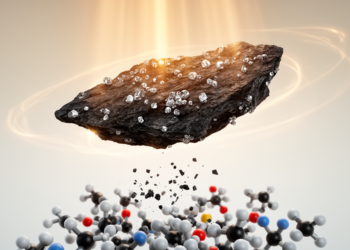
A co-precipitated Fe-AC/AgI photocatalyst degraded about 89.77% of tetracycline under visible light and retained activity over reuse cycles.
A comprehensive review in Discover Nano examines how perovskite materials could serve sustainable technologies while warning that lead content, leaching ...
A new Frontiers in Chemistry review surveys ruthenium-catalyzed C–H activation, annulation, and hydrogen-borrowing strategies for building bioactive heterocycles.
A review finds geopolymer-based photocatalysis achieved a median parent-compound removal of 93.44 percent for pharmaceuticals in water, compared with 86.0 ...
A Co₃O₄/ZnS heterojunction achieved sacrificial-agent-free photocatalytic ammonia synthesis from N₂ and water at 607.6 µg·h⁻¹·gcat⁻¹, retaining 98.4% of its activity ...
A ZnO-doped TiO2/carbon nanocomposite made from vegetable-tanned leather waste degraded up to 97 percent of two pharmaceutical pollutants under natural ...
Nankai University researchers built urea-linked covalent organic frameworks whose ordered hydrogen-bond networks act as proton highways, boosting solar-driven hydrogen peroxide ...

Tin doping during growth stabilizes the highly reactive (001) facet of anatase titanium dioxide, producing an optimal facet ratio that ...


Embark on a thrilling journey of discovery with Scienmag.com—your ultimate source for cutting-edge breakthroughs. Immerse yourself in a world where curiosity knows no limits and tomorrow’s possibilities become today’s reality!