


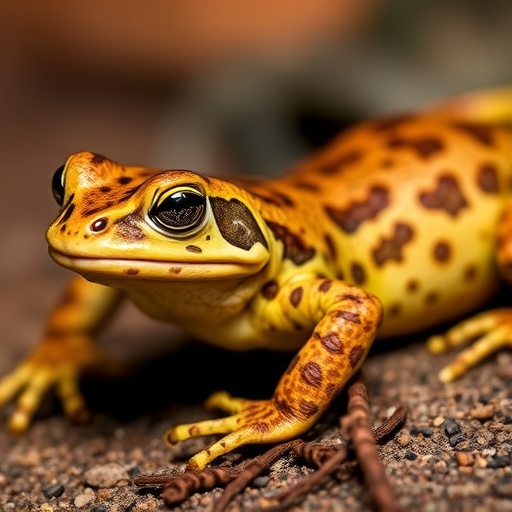
A groundbreaking study published in Royal Society Open Science has revealed that invasive populations of cane toads (Rhinella marina) on Japan’s Ishigaki Island have undergone striking and rapid morphological changes compared to their Australian counterparts. This remarkable divergence in body size and shape challenges the conventional understanding that evolutionary changes occur over prolonged timescales. Instead, the research highlights how species translocated into novel environments can rapidly adapt, with significant implications for evolutionary biology and invasive species management.
Researchers undertook meticulous fieldwork, capturing and measuring wild cane toads across several locations, including Ishigaki Island in southern Japan, Australia, Hawai’i, and South America—the species’ native range. The comparative analysis revealed a pronounced difference in the average body mass and length between toads from Ishigaki and those from Australia. Specifically, adult toads from Ishigaki averaged a robust 190 grams in weight, substantially heavier than the 135 grams recorded for Australian toads. Length measurements corroborated these findings, with Ishigaki individuals measuring an average of 122 millimeters, surpassing their Australian counterparts’ average of 111 millimeters.
Beyond size, the study detailed notable morphological adaptations. Ishigaki toads exhibited broader heads, shorter forelimbs, and comparatively longer hind legs, traits that potentially enhance their locomotor proficiency or environmental interactions in this specific insular habitat. Such anatomical shifts may reflect ecological pressures or niche-specific resource utilization, suggesting a rapid trajectory of evolutionary divergence. These variations arose despite the two populations sharing a common lineage originating from Hawai’i before their separate introductions to Japan and Australia.
The translocation history of cane toads is pivotal for contextualizing these findings. Indigenous to northeastern South America, cane toads were initially moved to Puerto Rico, subsequently reaching Hawai’i, and later introduced to Australia in the 1930s in an infamous attempt to control agricultural pests. The Ishigaki population traces its origins to an introduction from Hawai’i via Taiwan and the Daito Islands in 1978. Therefore, morphological divergences between Ishigaki and Australian toads have unfolded over fewer than 100 years, underscoring the rapidity of their phenotypic evolution.
This rapid divergence challenges entrenched evolutionary paradigms that posit morphological change requires millennia. According to Professor Rick Shine, an evolutionary biologist at Macquarie University and lead investigator of the study, “The idea that evolutionary change happens at a glacially slow pace is increasingly untenable. Species facing novel environmental pressures can exhibit striking changes in form and function within remarkably short time frames.” The cane toad populations on Ishigaki provide a compelling natural experiment demonstrating microevolutionary processes in action.
While the study firmly establishes rapid morphological divergence, the underlying selective forces remain elusive. The researchers refrained from positing definitive causal mechanisms due to insufficient data on ecological variables. However, they hypothesize that Ishigaki’s subtropical climate, characterized by consistent year-round rainfall, creates conditions conducive to larger body sizes—possibly via enhanced resource availability. Alternatively, the apparent absence of native predators on the island might have relaxed selective pressures related to predation avoidance, permitting increased body size and altered limb proportions.
Elucidating the precise environmental drivers will require integrative research combining ecological, genetic, and physiological perspectives. Understanding whether phenotypic plasticity, genetic adaptation, or a combination thereof underpins these morphological transformations is pivotal. Moreover, the role of sexual selection and its potential contribution to the observed sexual dimorphism merits further investigation, particularly since divergent morphologies might influence mating dynamics and reproductive success.
Another intriguing element is the implication for invasion biology and species management. Cane toads are infamous for their ecological disruption, especially in Australia, where their toxic secretions have devastated native predator populations. Comprehending how invasive populations morphologically adapt to new habitats is vital for predicting their spread, ecological impact, and potential for further inland colonization. Rapid morphological shifts may confer enhanced dispersal ability or altered behaviors, complicating control efforts.
Furthermore, the study exemplifies the utility of comparative morphology as a window into contemporary evolutionary processes. By analyzing populations with known introduction histories and timelines, researchers can reconstruct evolutionary trajectories with unprecedented resolution. Such empirical evidence also informs theoretical models, necessitating recalibrations to accommodate faster rates of change under certain ecological contexts.
The research team included scientists from Macquarie University, the University of Sydney, and Kyoto University, who collaborated to analyze the morphological data rigorously. Their work highlights the interdisciplinary nature of modern evolutionary biology, integrating field ecology, morphology, and evolutionary theory. The findings stimulate a reevaluation of invasive species’ capability not merely to survive but to adapt quickly to new environments, thereby intensifying their ecological footprint.
Methodologically, the study employed observational metrics such as body mass measurement and morphometric analyses using standardized protocols. These quantitative data allowed for precise inter-population comparisons, revealing statistically significant differences in specific traits. Employing non-invasive, field-based measurement techniques ensured the validity and ethical integrity of the research.
This discovery of rapid morphological divergence in cane toads underscores a broader biological principle: evolution is not solely a slow, incremental process but can proceed swiftly in response to novel environments and ecological pressures. Such insights are crucial in an era of accelerating global change, where species are increasingly displaced and subjected to unprecedented adaptive challenges. The Ishigaki cane toads stand as a vivid testament to evolution in motion.
News Publication Date: 22-Apr-2026
Web References: http://dx.doi.org/10.1098/rsos.260179
References: Royal Society Open Science, DOI: 10.1098/rsos.260179
Cite Scienmag News
Gavin Prescott. (April 22, 2026). Cane Toads Accelerate Evolution: Rapid Adaptation Uncovered. Scienmag. https://scienmag.com/cane-toads-accelerate-evolution-rapid-adaptation-uncovered/
Gavin Prescott. "Cane Toads Accelerate Evolution: Rapid Adaptation Uncovered." Scienmag, 22 April 2026, https://scienmag.com/cane-toads-accelerate-evolution-rapid-adaptation-uncovered/. Accessed 3 September 2026.
Gavin Prescott. "Cane Toads Accelerate Evolution: Rapid Adaptation Uncovered." Scienmag. April 22, 2026. https://scienmag.com/cane-toads-accelerate-evolution-rapid-adaptation-uncovered/


