


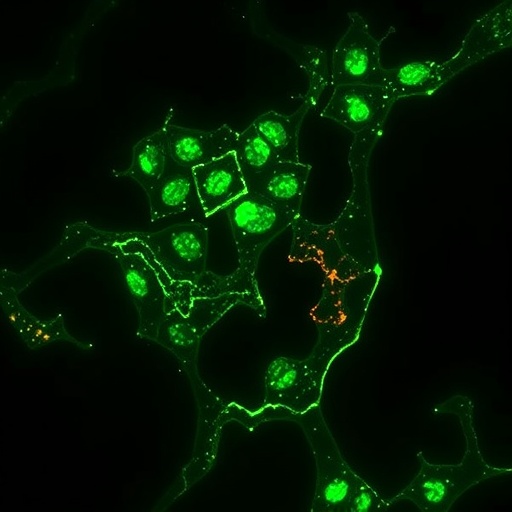
In the complex landscape of cancer research, pancreatic cancer remains one of the most challenging types of malignancies. Despite considerable advancements in treatment and detection strategies, the prognosis for patients diagnosed with pancreatic cancer remains bleak, with a high propensity for metastasis and a dismal overall survival rate. Recent research published by Bakırdöğen, Görgülü, Xin, and colleagues has shed light on the role of a specific protein, c-Rel, in facilitating the metastatic spread of pancreatic cancer. This discovery offers new insights into the biology of pancreatic cancer and raises intriguing questions about potential therapeutic interventions targeting this pathway.
C-Rel is a member of the NF-kB family of transcription factors, which are crucial in regulating immune responses, cell survival, and proliferation. It has garnered attention for its role in various malignancies. However, its specific function in pancreatic cancer metastasis was not well understood until now. The researchers embarked on an exhaustive study to delineate the mechanisms by which c-Rel promotes the aggressive nature of pancreatic cancer cells. They employed a variety of cell models, animal studies, and advanced molecular techniques to unveil the multifaceted role of c-Rel in pancreatic cancer progression.
A significant aspect of their findings relates to the interaction between c-Rel and fibronectin-integrin signaling pathways. Fibronectin is a glycoprotein that plays an integral role in cell adhesion, migration, and survival. Integrins, on the other hand, are transmembrane receptors that mediate these fibronectin interactions. The authors hypothesized that the c-Rel protein interacts with this signaling axis to enhance the survival of pancreatic cancer cells under stress, a phenomenon they termed “isolation stress resistance.” This discovery suggests that c-Rel not only drives aggressive growth but also equips cancer cells with the ability to evade the detrimental effects of nutrient deprivation and adverse microenvironments.
The researchers further explored the concept of epithelial-mesenchymal transition (EMT), a critical process in cancer progression that allows epithelial cells to acquire migratory and invasive capabilities. The study revealed that c-Rel facilitates EMT in pancreatic cancer cells, thereby promoting their metastatic potential. By regulating the expression of various downstream genes associated with the EMT process, c-Rel appears to drive the transformation of pancreatic cells into a more aggressive phenotype capable of dissemination throughout the body. This connection between c-Rel, fibronectin-integrin signaling, and EMT underscores the complexity of cancer biology and the interplay of multiple pathways in tumor progression.
One of the striking aspects of this research is the potential for targeting c-Rel in therapeutic strategies. As a critical player in the metastatic cascade, c-Rel presents an attractive target for drug development. The ability to inhibit its function may hinder the metastatic spread of pancreatic cancer and improve treatment outcomes for patients. The authors propose that small molecules or monoclonal antibodies designed to disrupt the c-Rel signaling axis could be explored as novel treatment options. Such therapies could aim to reduce both the tumor’s invasive capabilities and its ability to survive in adverse conditions.
The implications of this research extend beyond the confines of pancreatic cancer. Understanding the mechanisms of c-Rel-mediated metastasis could enhance our overall knowledge of cancer biology and provide insights that are applicable to other malignancies exhibiting similar aggressive behaviors. By elucidating shared pathways across various cancers, researchers may identify common therapeutic targets that could lead to broader treatment paradigms.
While the findings are promising, there remain considerable challenges in translating these discoveries into clinical practice. The intricate signaling networks involved in cancer metastasis are not only complex but also highly context-dependent. Further research is needed to delineate the specific interactions between c-Rel and other molecular players within the tumor microenvironment. Additionally, elucidating how these findings translate to human disease will require the development of sophisticated experimental models and early-phase clinical trials.
In conclusion, the work of Bakırdöğen and colleagues provides a significant step forward in understanding the molecular underpinnings of pancreatic cancer metastasis. Their investigation into the role of c-Rel in modulating fibronectin-integrin signaling and promoting isolation stress resistance and EMT opens new avenues for therapeutic intervention. As we continue to unravel the complexities of cancer biology, such insights are critical for developing more effective and targeted treatment modalities aimed at improving patient outcomes.
The journey from molecular discovery to clinical application is often fraught with challenges, but with ongoing research and innovation, the hope remains that we can unveil new strategies to combat pancreatic cancer and offer patients a glimmer of hope in the face of one of the deadliest diseases.
Cite Scienmag News
Nathaniel Bowman. (January 28, 2026). c-Rel Promotes Pancreatic Cancer Metastasis via EMT Pathway. Scienmag. https://scienmag.com/c-rel-promotes-pancreatic-cancer-metastasis-via-emt-pathway/
Nathaniel Bowman. "c-Rel Promotes Pancreatic Cancer Metastasis via EMT Pathway." Scienmag, 28 January 2026, https://scienmag.com/c-rel-promotes-pancreatic-cancer-metastasis-via-emt-pathway/. Accessed 4 September 2026.
Nathaniel Bowman. "c-Rel Promotes Pancreatic Cancer Metastasis via EMT Pathway." Scienmag. January 28, 2026. https://scienmag.com/c-rel-promotes-pancreatic-cancer-metastasis-via-emt-pathway/


