


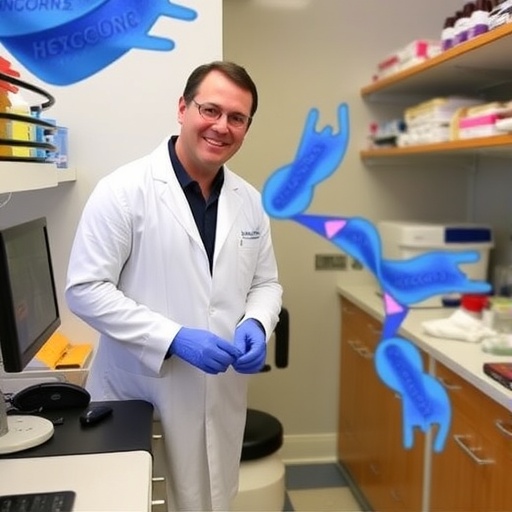
Despite remarkable progress in medical science, the prognosis for most patients diagnosed with advanced-stage cancers remains bleak. The challenge lies not only in the complexity of cancer biology but also in the adaptive resistance mechanisms tumors employ against existing therapies. As precision medicine evolves, the urgency to uncover new molecular pathways and cellular mechanisms that fuel cancer growth has never been greater. Such insights hold the promise of unveiling novel therapeutic targets and improving patient outcomes.
Central to the development and progression of numerous cancers are growth factor receptors—cell surface proteins that transmit extracellular signals to intracellular pathways, promoting proliferation and survival. Receptors such as the epidermal growth factor receptor (EGFR) and the human epidermal growth factor receptor 2 (HER2) have been implicated in lung, breast, and colorectal cancers, among others. Therapies targeting these molecules, including monoclonal antibodies and tyrosine kinase inhibitors, have transformed treatment paradigms. However, despite initial efficacy, the formidable adaptability of cancer cells frequently culminates in acquired drug resistance, limiting the long-term success of these interventions.
Addressing this critical barrier, a pioneering research team from the Harrington Discovery Institute at University Hospitals in Cleveland has made significant strides in decoding the cellular machinery that modulates growth factor receptor signaling. Their recently published study in Science Signaling elucidates the essential role of Golgi apparatus-associated proteins in orchestrating the trafficking and surface presentation of these receptors. This nuanced understanding offers a fresh vantage point on how cancer cells maintain and enhance oncogenic signaling networks.
The study spotlights the Golgi protein GOLPH3 and its interaction with the myosin motor protein MYO18A as integral components facilitating the movement of growth factor receptors from intracellular compartments to the cell membrane. This Golgi secretory machinery ensures proper receptor localization, a prerequisite for efficient activation by extracellular growth factors. Disruption of this circuitry impairs receptor signaling, thereby attenuating cancer cell proliferation and tumor growth. These findings illuminate previously unappreciated facets of cancer cell biology that extend beyond the receptor molecules themselves.
Moreover, the research delineates how aberrant expression and hyperactivation of GOLPH3 contribute to oncogenic receptor tyrosine kinase signaling across multiple human cancer types, including lung, breast, and colorectal carcinomas. By establishing a mechanistic link between Golgi-mediated trafficking and receptor-driven oncogenesis, the study provides compelling evidence for targeting this pathway therapeutically. Such strategies could potentially overcome or circumvent resistance to conventional receptor-targeted therapies.
The implications of this discovery are profound. Targeting the Golgi apparatus components involved in growth factor receptor trafficking could represent a novel class of anti-cancer agents, either as monotherapies or in combination with existing treatments. By interfering with receptor localization rather than receptor-ligand interactions, these strategies may evade common resistance mechanisms that cancer cells exploit. This approach exemplifies a shift towards targeting the cellular logistics underlying oncogenic signaling, an emerging frontier in cancer therapeutics.
From a technical perspective, the researchers employed sophisticated molecular biology techniques, including gene knockdown and protein interaction assays, to validate the functional roles of GOLPH3 and MYO18A. Complementing in vitro studies with analyses of human tumor samples, they confirmed the clinical relevance of their findings. This rigorous methodology underpins the translational potential of their work, bridging basic science and clinical application.
Dr. Seth J. Field, the study’s lead investigator and Chief Scientific Officer at the Harrington Discovery Institute, underscores the significance of the Golgi apparatus in cancer biology. Traditionally viewed as a cellular organelle dedicated to protein processing and sorting, the Golgi now emerges as a dynamic platform modulating oncogenic signals. This paradigm shift reinforces the importance of fundamental cell biology in unveiling innovative therapeutic targets.
Looking ahead, the research team aims to leverage these insights for drug development. The Harrington Discovery Institute, renowned for its mission to accelerate promising scientific discoveries into viable medicines, provides a fertile environment for this endeavor. The institute’s multidisciplinary approach, integrating drug discovery expertise and investment capital, accelerates the translation of novel targets like GOLPH3 and MYO18A into clinical candidates.
This breakthrough exemplifies how dissecting the intricacies of cellular trafficking can redefine cancer treatment landscapes. As resistance to targeted therapies remains a formidable obstacle, innovations that address the root causes of signaling persistence and adaptation are vital. The study’s findings pave the way for combination therapies that disrupt multiple nodes of oncogenic pathways, thereby enhancing therapeutic durability.
In summary, the research conducted by the Harrington Discovery Institute enriches our comprehension of cancer cell biology by identifying crucial Golgi-associated proteins that facilitate growth factor receptor signaling. This discovery not only elucidates mechanisms underpinning tumor progression and drug resistance but also unveils a promising reservoir of drug targets. Harnessing this knowledge stands to revolutionize cancer treatment, offering hope for more effective and sustained therapies against aggressive malignancies.
Cite Scienmag News
Nathaniel Bowman. (May 19, 2026). Harrington Discovery Institute Uncovers Novel Drug Targets for Challenging Cancer Types. Scienmag. https://scienmag.com/harrington-discovery-institute-uncovers-novel-drug-targets-for-challenging-cancer-types/
Nathaniel Bowman. "Harrington Discovery Institute Uncovers Novel Drug Targets for Challenging Cancer Types." Scienmag, 19 May 2026, https://scienmag.com/harrington-discovery-institute-uncovers-novel-drug-targets-for-challenging-cancer-types/. Accessed 5 September 2026.
Nathaniel Bowman. "Harrington Discovery Institute Uncovers Novel Drug Targets for Challenging Cancer Types." Scienmag. May 19, 2026. https://scienmag.com/harrington-discovery-institute-uncovers-novel-drug-targets-for-challenging-cancer-types/


