


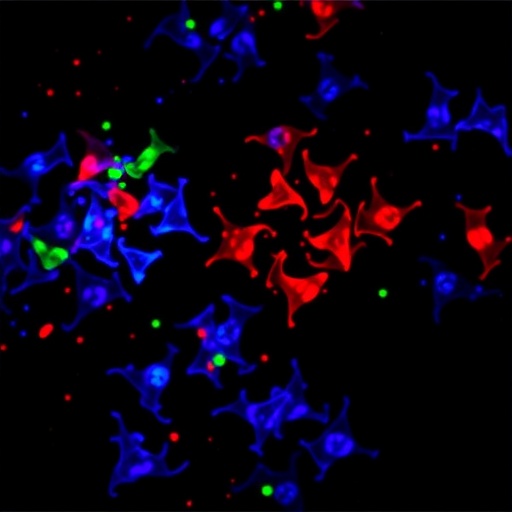
In a landmark study that could fundamentally change our understanding of lung adenocarcinoma progression and treatment resistance, researchers have uncovered the pivotal role of the transcription factor C/EBPγ in driving epithelial-mesenchymal transition (EMT) and enhancing DNA double-strand break repair mechanisms. This groundbreaking discovery, detailed in a recent publication in Cell Death Discovery, sheds new light on how cancer cells acquire invasive properties while simultaneously fortifying their genomic integrity against therapeutic assaults.
Lung adenocarcinoma, the most common subtype of non-small cell lung cancer, remains a formidable clinical challenge due to its high propensity for metastasis and acquired resistance to conventional DNA-damaging therapies such as radiation and chemotherapy. The biological processes that enable cancer cells to transition from a stationary epithelial state to a mobile mesenchymal form—thereby increasing their metastatic potential—have long been connected to poor prognosis. However, the molecular underpinnings orchestrating this epithelial-mesenchymal transition, especially in the context of DNA damage repair pathways, have been only partially understood until now.
The study rigorously investigated the role of CCAAT/enhancer-binding protein gamma (C/EBPγ), a member of the C/EBP family of transcription factors, widely implicated in cellular differentiation and inflammatory responses. What sets this research apart is its dual focus on how C/EBPγ not only governs phenotypic plasticity through EMT but also actively modulates the DNA repair machinery, particularly the critical repair of DNA double-strand breaks (DSBs). This dual functionality positions C/EBPγ as a potential master regulator in lung adenocarcinoma malignancy and therapy resistance.
Using a combination of molecular biology techniques, including chromatin immunoprecipitation followed by sequencing (ChIP-seq), the researchers mapped the genome-wide binding sites of C/EBPγ in lung adenocarcinoma cell lines. They found that C/EBPγ directly binds to and regulates the promoters of key genes involved in EMT, including those coding for mesenchymal markers such as N-cadherin and vimentin, while repressing epithelial markers like E-cadherin. This transcriptional regulation promotes the cells’ detachment from the primary tumor mass and facilitates their migration and invasion into surrounding tissues.
The discovery did not stop there. Intriguingly, the team observed that cells with elevated C/EBPγ expression exhibited upregulated components of the non-homologous end joining (NHEJ) pathway, the primary mechanism by which most mammalian cells repair DNA double-strand breaks. Enhanced expression of DNA repair proteins like DNA-PKcs and Ku70/80 suggested that C/EBPγ boosts the capacity of cancer cells to withstand genotoxic stress. This finding has significant clinical implications because it hints that C/EBPγ-positive tumors may be intrinsically more resistant to therapies designed to induce lethal DNA breaks.
Functional assays confirmed these observations: knocking down C/EBPγ in lung adenocarcinoma cells led to impaired EMT, reduced migratory abilities, and a marked decrease in the efficiency of DNA DSB repair after radiation treatment. Conversely, overexpression of C/EBPγ accelerated EMT and conferred resistance to DNA-damaging agents, underscoring its potential as a prognostic marker and therapeutic target.
At the molecular level, the interaction between C/EBPγ and other key transcription factors was also probed. The study highlighted how C/EBPγ cooperates with Snail and Twist, two well-known EMT-inducing factors, forming a transcriptional network that amplifies the mesenchymal gene expression program. This cooperation extends to the regulation of DNA repair genes, illustrating a complex crosstalk between the phenotypic plasticity of cancer cells and their genomic maintenance systems.
Another fascinating aspect uncovered by the research involves the epigenetic landscape. C/EBPγ was shown to recruit chromatin remodeling complexes to EMT and DNA repair gene loci, facilitating an open chromatin state conducive to active transcription. These epigenetic modifications further stabilize the mesenchymal state and reinforce the capacity for DNA repair, making cancer cells more adaptable and resilient.
The clinical relevance of these findings was bolstered by analyses of patient-derived lung adenocarcinoma samples. Higher levels of C/EBPγ correlated with advanced tumor stages, increased metastasis, and poorer overall survival, underscoring the translational potential of targeting this factor. Moreover, the research team suggested that pharmacological inhibition of C/EBPγ or its downstream effectors might sensitize tumors to DNA-damaging therapies, paving the way for novel combination treatments.
From a therapeutic standpoint, this study opens intriguing possibilities. Inhibitors designed to disrupt the function or expression of C/EBPγ could not only prevent EMT-mediated metastasis but also cripple the DNA repair defenses of cancer cells, rendering them vulnerable to radiation and chemotherapy. Such dual-action therapeutics would represent a paradigm shift, addressing both the invasive capacity and therapeutic resistance of lung cancer.
Furthermore, the insights gained about C/EBPγ’s interactions with chromatin remodeling complexes and transcriptional networks provide promising avenues for drug discovery. Epigenetic modulators that reverse the chromatin changes induced by C/EBPγ may complement direct inhibitors, creating multi-pronged strategies to thwart cancer progression.
This research also raises provocative questions for future exploration. For instance, understanding how C/EBPγ expression is regulated within the tumor microenvironment or by oncogenic signaling pathways could illuminate the signals that drive aggressive phenotypes. Additionally, it prompts investigation into whether similar mechanisms operate in other cancer types, potentially broadening the impact of these findings.
In summary, the identification of C/EBPγ as a critical driver of both epithelial-mesenchymal transition and enhanced DNA double-strand break repair pathways presents a significant advance in lung adenocarcinoma biology. It links cellular plasticity directly with genomic stability strategies, underscoring the adaptability of cancer cells and highlighting a crucial vulnerability.
As lung adenocarcinoma continues to challenge clinicians with its aggressive nature and resistance to conventional therapies, these findings illuminate new molecular targets and strategies. The prospect of therapies that can simultaneously inhibit metastasis and sensitize tumors to DNA damage could revolutionize patient outcomes, transforming lung cancer from a largely intractable disease into one that can be effectively managed or even cured.
Given the compelling data presented and the potential clinical applications, this study is poised to stimulate extensive research and drug development efforts aimed at exploiting C/EBPγ’s dual role. It heralds a future where the genetic and phenotypic malleability of lung adenocarcinoma cells can be manipulated for therapeutic benefit, greatly enhancing the arsenal against one of the most lethal human cancers.
Cite Scienmag News
Nathaniel Bowman. (June 3, 2026). C/EBPγ Drives EMT and DNA Repair in Lung Cancer. Scienmag. https://scienmag.com/c-ebp%ce%b3-drives-emt-and-dna-repair-in-lung-cancer/
Nathaniel Bowman. "C/EBPγ Drives EMT and DNA Repair in Lung Cancer." Scienmag, 3 June 2026, https://scienmag.com/c-ebp%ce%b3-drives-emt-and-dna-repair-in-lung-cancer/. Accessed 4 September 2026.
Nathaniel Bowman. "C/EBPγ Drives EMT and DNA Repair in Lung Cancer." Scienmag. June 3, 2026. https://scienmag.com/c-ebp%ce%b3-drives-emt-and-dna-repair-in-lung-cancer/


