


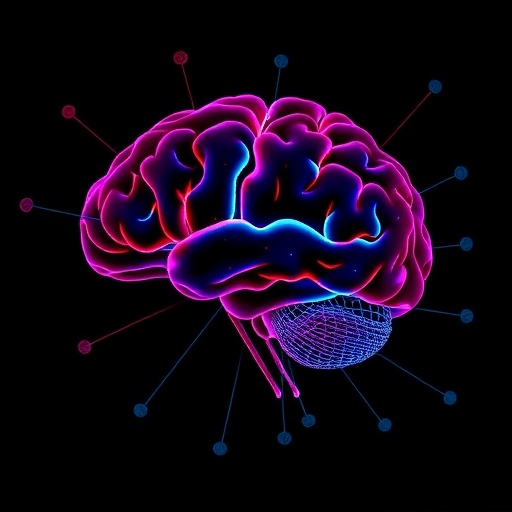
In a landmark longitudinal study, researchers have illuminated the profound impact that bullying victimization exerts on brain development from adolescence through early adulthood. By harnessing advanced structural magnetic resonance imaging (MRI) techniques, this groundbreaking investigation charts the neurobiological trajectory of individuals subjected to bullying, revealing intricate changes in brain morphology that unfold across critical developmental windows. This research not only deepens our understanding of how adverse social experiences sculpt the adolescent brain but also challenges prior assumptions regarding the resilience of neural architecture in the face of chronic psychosocial stress.
The study tracks participants over multiple years, allowing for the observation of dynamic brain alterations rather than static snapshots. By focusing on adolescence — a period marked by heightened neural plasticity — the research highlights how bullying victimization leaves enduring structural imprints. Key regions implicated in emotional regulation, executive functioning, and social cognition exhibit altered volumetric and cortical thickness patterns, underscoring the multifaceted impact bullying has on neurodevelopment. These findings provide a compelling neurobiological explanation for the emotional and cognitive difficulties often observed in victims of prolonged bullying.
Previous research has acknowledged the psychological consequences of bullying, including anxiety, depression, and social withdrawal, yet neural evidence was comparatively sparse and often limited to cross-sectional designs. This study’s longitudinal design surmounts these limitations by mapping brain trajectory changes over time, thus elucidating cause-effect relationships between bullying exposure and brain development. The use of structural MRI enables fine-grained analyses of grey matter volume, white matter integrity, and cortical thickness, contributing to a holistic picture of how repeated psychosocial stressors recalibrate brain architecture during formative years.
One of the most striking revelations of this research pertains to the amygdala and prefrontal cortex — two brain regions central to processing emotions and regulating behavior. Victims of bullying demonstrated atypical volumetric reductions in the prefrontal cortex, an area responsible for executive control, decision-making, and regulating responses to stress. Conversely, the amygdala, which mediates emotional reactivity to threat, exhibited increased volume, potentially reflecting a heightened sensitivity to social stimuli and fear responses. This biological pattern may represent an adaptive yet maladaptive neural coding of chronic social threat, catalyzing long-term mental health vulnerabilities.
Moreover, the investigation delineates subtle yet significant deviations in the development of the hippocampus, a region essential for memory consolidation and stress regulation. Structural changes in the hippocampus could help account for the cognitive and emotional disturbances frequently reported in bullying survivors, including difficulties in learning and heightened stress responses. These neuroanatomical findings converge with behavioral data depicting impaired resilience and maladaptive coping strategies induced by sustained victimization, underscoring the bidirectional interplay between environmental stressors and brain morphology.
Importantly, the study’s design incorporated rigorous control for confounding variables such as socioeconomic status, existing psychiatric conditions, and family environment, lending robustness to the associations observed between bullying and brain development. This methodological strength permits a more precise identification of bullying victimization as a unique contributor to altered neurodevelopmental pathways, rather than a byproduct of other co-occurring adversities. The researchers employed sophisticated statistical modeling to tease apart these influences, enhancing the study’s reliability and impact.
These longitudinal data also challenge the notion that adolescent brain maturation is strictly linear and unidirectional. Instead, the findings suggest that environmental insults like bullying introduce nonlinear trajectories marked by periods of delay, aberration, and recovery. Some brain regions displayed partial normalization over time, hinting at potential windows for therapeutic intervention and neural plasticity. This underscores the critical importance of early detection and support for bullied youth, aiming to minimize neurodevelopmental disruption before damage becomes entrenched.
The implications for mental health policy and practice stemming from this research are profound. By elucidating the neural basis of the sustained psychological harm inflicted by bullying, the study advocates for enhanced prevention programs that integrate neuroscientific insights. Educators, clinicians, and policymakers are urged to consider bullying not solely as a social issue but as a public health concern with tangible effects on brain biology and long-term cognitive-emotional outcomes. Interventions that mitigate bullying could thus have cascading benefits across mental health trajectories.
Technically, the use of structural MRI in this study exemplifies the evolution of neuroimaging methodologies that permit in vivo tracking of microstructural brain changes with unprecedented precision. Advanced segmentation algorithms were utilized to parse out cerebral subregions and measure subtle volumetric fluctuations, while longitudinal image registration techniques ensured alignment of scans over years. The integration of neuroimaging with behavioral assessments offers a multimodal approach to understanding how chronically adverse social environments become biologically embedded.
The study also paves the way for future research aimed at probing the neurochemical and functional connectivity correlates of bullying-related brain changes. While this investigation focused on macroscopic structural alterations, subsequent studies could combine diffusion tensor imaging and functional MRI to unravel how white matter pathways and network dynamics are disrupted in youth exposed to aggression. This comprehensive neurobiological mapping will illuminate the circuit-level mechanisms driving psychopathology onset following prolonged victimization.
Furthermore, the findings raise compelling questions regarding individual differences in neural susceptibility and resilience to bullying. Genetic, epigenetic, and environmental moderators likely modulate the degree to which brain development is impacted, suggesting directions for precision medicine approaches in mental health. Understanding these modifiers holds promise for designing tailored interventions that bolster neural plasticity and emotional regulation in vulnerable populations, ultimately reducing the long-term burden of trauma-related mental illness.
From a neuroscientific perspective, the study exemplifies the critical intersection between social experiences and brain maturation, emphasizing that adolescence is a sensitive period during which adverse psychosocial events can precipitate profound neurobiological changes. The intricacy of these interactions reaffirms the brain’s remarkable plasticity while simultaneously highlighting its vulnerability. This duality demands that society invest in environments promoting positive social interactions to safeguard healthy brain development for future generations.
In conclusion, this seminal research provides compelling evidence that bullying victimization is far more than a transient social challenge; it is a potent neurodevelopmental disruptor with enduring consequences for brain structure and mental health. By combining longitudinal neuroimaging with rigorous analysis, the study charts a vivid blueprint of how bullying imprints on the adolescent brain, laying groundwork for innovations in diagnosis, prevention, and intervention. The echo of these findings will resonate across disciplines, transforming how we understand and address bullying’s multifaceted impact.
Cite Scienmag News
Cassandra Pierce. (April 10, 2026). Bullying’s Impact on Brain Development Over Time. Scienmag. https://scienmag.com/bullyings-impact-on-brain-development-over-time/
Cassandra Pierce. "Bullying’s Impact on Brain Development Over Time." Scienmag, 10 April 2026, https://scienmag.com/bullyings-impact-on-brain-development-over-time/. Accessed 5 September 2026.
Cassandra Pierce. "Bullying’s Impact on Brain Development Over Time." Scienmag. April 10, 2026. https://scienmag.com/bullyings-impact-on-brain-development-over-time/


