


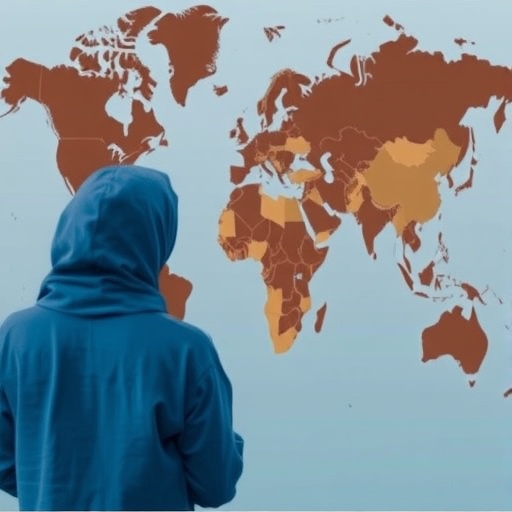
Migration is one of the defining phenomena of the modern world, radically altering the landscapes—material, social, and cultural—for both those who move and the communities they enter. This transformation brings with it a complex web of psychological challenges and opportunities for adaptation, experienced differently by migrants and local residents alike. Recent advances in psychological research have provided deeper insights into how these groups perceive and respond to the demands created by migration, revealing a dynamic interplay that shapes integration and social cohesion.
At the heart of these developments lies the recognition that migration does not merely impact migrants; it also significantly influences the host societies they enter. The expectations, fears, and attitudes of local residents towards newcomers form a crucial part of the acculturation process, the ongoing mutual adjustment between groups. Importantly, the psychological demands faced by migrants—such as coping with new environments and social norms—often intersect with the responses and emotions of local populations, creating a feedback loop that can either facilitate or hinder positive outcomes.
Prior to migration, the decision to leave one’s country is itself a psychologically laden process influenced by a multitude of factors, including economic pressures, social networks, political instability, and personal aspirations. Researchers have increasingly focused on understanding these decision-making processes, emphasizing how individual and collective considerations converge in the complex calculus of emigration. These foundational steps not only shape migrants’ initial outlook but also influence their resilience and adaptability upon arrival.
Once migrants enter a host country, they are immediately confronted with a series of psychological demands—challenges to identity, belonging, and security. These demands often translate into threats to fundamental human needs such as control, esteem, and meaningful existence. Notably, these threats are exacerbated when migration is perceived as forced, whether due to conflict, persecution, or other crises. This forced nature frequently intensifies feelings of marginalization and exacerbates the psychological burden faced by migrants.
Simultaneously, local residents face their own set of psychological demands in response to migration. The influx of newcomers can evoke uncertainty and perceived threats to community resources, social norms, and cultural identity. These reactions stem from deep-seated psychological mechanisms that govern intergroup relations and influence how societies absorb new members. Whether these perceptions manifest as anxiety, hostility, or openness significantly shapes the social climate and policies that surround migration.
A pivotal aspect of the psychological interplay involves local residents’ helping behaviors towards migrants. Altruism and support from host communities can buffer the strains imposed by migration-related challenges, fostering positive integration and mutual understanding. However, the willingness to offer help is contingent upon various psychological factors, including empathy, perceived similarity, and the social narratives prevalent in the host society. These dynamics underscore the importance of fostering empathetic social environments that encourage support rather than division.
The acculturation process—a multifaceted interaction between migrants’ adaptation strategies and local residents’ receptiveness—illustrates the extended intergroup dynamics underpinning migration’s psychological landscape. This bidirectional exchange goes beyond simple adjustment, involving negotiation, conflict, cooperation, and identity reformulation. Successful acculturation requires acknowledgment of the demands placed on both groups as they strive to build a shared social reality that respects diversity while maintaining cohesion.
The intricacies of acculturation reveal that psychological reactions are not static; they evolve as migrants and residents navigate the challenges and opportunities presented by their interactions. For migrants, strategies range from assimilation and integration to separation and marginalization, choices influenced by perceived acceptance or rejection by the host society. Local residents, meanwhile, may shift from distrust to acceptance as familiarity and positive intergroup contact increase, highlighting the fluid nature of psychological responses.
Crucially, the role of perceived voluntariness in migration cannot be overstated. Voluntary migrants often experience fewer threats to their psychological needs compared to forced migrants, who may endure trauma and ongoing uncertainty. Understanding how perceptions of agency shape psychological experiences enhances efforts to support these populations more effectively, tailoring interventions to address specific vulnerabilities and resilience factors.
This nuanced psychological framework challenges simplistic dichotomies that categorize migrants merely as victims or agents, locals as either xenophobes or accepting hosts. Instead, it illuminates a complex spectrum of emotional and cognitive processes that drive behavior and attitudes on both sides. The interplay of needs and threats, of challenge and opportunity, ultimately dictates the trajectory of social integration and well-being in migration contexts.
Emerging research also emphasizes the role of social identity and group membership in modulating psychological responses. For migrants, maintaining connections to cultural heritage while adapting to new social environments is a delicate balance critical for mental health. For locals, the salience of ethnic or national identity can either enhance openness or entrench resistance, depending on contextual and individual factors. These identity dynamics form a central axis around which acculturation processes revolve.
Technological advancements and globalization further complicate the psychological landscape of migration by facilitating transnational connections and reshaping social boundaries. Migrants today are able to maintain ties across borders in ways previously unimaginable, affecting identity formation and feelings of belonging. Meanwhile, local residents encounter global narratives around migration that influence their perceptions and reactions, often mediated through digital media and political discourse.
The implications of this research are profound for policymakers and practitioners seeking to foster inclusive societies. Psychological insights emphasize the need for holistic approaches that recognize the intertwined experiences of migrants and locals rather than treating these groups in isolation. Programs that address mutual understanding, empathy-building, and the reduction of perceived threats have the potential to enhance social cohesion and improve mental health outcomes for all parties involved.
Looking ahead, future research is called upon to deepen understanding of these processes across diverse contexts and populations. Longitudinal studies tracking psychological changes over time, mixed-methods approaches integrating qualitative and quantitative data, and interventions designed with psychological principles hold promise. Such endeavors will be crucial in shaping evidence-based strategies that harness the challenges of migration into opportunities for societal flourishing.
In sum, the psychological dimensions of migration reveal a landscape marked by interdependence and complexity. Far from being one-sided, the psychological demands and responses emanate from an ongoing dialogue between migrants and local residents. Recognizing and addressing this interplay is not only a matter of scientific interest but a pressing social imperative in an era defined by unprecedented human mobility.
Cite Scienmag News
Glenn Wilkins. (June 9, 2026). Psychological Impacts of Migration on Migrants, Locals. Scienmag. https://scienmag.com/psychological-impacts-of-migration-on-migrants-locals/
Glenn Wilkins. "Psychological Impacts of Migration on Migrants, Locals." Scienmag, 9 June 2026, https://scienmag.com/psychological-impacts-of-migration-on-migrants-locals/. Accessed 4 September 2026.
Glenn Wilkins. "Psychological Impacts of Migration on Migrants, Locals." Scienmag. June 9, 2026. https://scienmag.com/psychological-impacts-of-migration-on-migrants-locals/


