


FOR IMMEDIATE RELEASE
April 27, 2026
Contact: Gina DiGravio, 617-358-7838, ginad@bu.edu
Boston University Secures $2.5 Million NIH Grant to Propel Cardiovascular Epidemiology Training into New Era
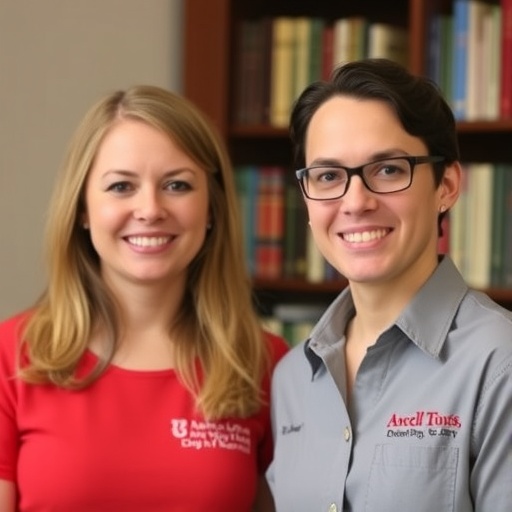
In a significant development for cardiovascular research and public health, Boston University’s Chobanian & Avedisian School of Medicine has been awarded a prestigious five-year T32 grant from the National Heart, Lung, and Blood Institute of the National Institutes of Health (NIH). This $2.5 million grant marks the second renewal of the Multidisciplinary Training Program in Cardiovascular Epidemiology (CVE), originally launched in 2016. The program is directed by two of BU’s leading researchers: Vanessa Xanthakis, PhD, FAHA, and Mathew Nayor, MD, MPH.
Cardiovascular epidemiology sits at the intersection of clinical medicine, public health, and translational science, focusing on understanding the distribution, determinants, and preventive strategies for heart and vascular diseases in various populations. Despite advances in medicine, cardiovascular diseases remain the leading cause of mortality worldwide, accounting for approximately one-third of all global deaths. The persistence of these figures highlights the urgent need for comprehensive research and training of experts capable of addressing this public health crisis via population-level interventions and precision medicine approaches.
The T32 grant awarded to BU supports a robust, multidisciplinary two-year postdoctoral training program that equips both MD and PhD candidates with advanced skills to become tomorrow’s academic leaders and innovators in cardiovascular epidemiology. The program uniquely combines diverse training tracks including translational epidemiology and biology, translational epidemiology and implementation science, statistical genetics and genomics, as well as bioinformatics and computational biology. By integrating these cutting-edge fields, trainees acquire the expertise to analyze complex data, interpret biological mechanisms, and expedite the translation of epidemiologic discoveries into clinical and public health practice.
Dr. Vanessa Xanthakis, a distinguished biostatistician with a rigorous background in applied mathematics and statistical methodologies, has been instrumental in advancing clinical epidemiologic research through her involvement with the landmark Framingham Heart Study. Her scholarly work over the past 15 years has shed critical light on cardiac remodeling and subclinical cardiovascular disease. By leveraging sophisticated statistical models, Dr. Xanthakis elucidates novel risk factors and evaluates the prognostic value of metrics such as the American Heart Association’s concept of ideal cardiovascular health. Her research extends into vascular imaging techniques, including echocardiography and vascular testing, to decipher biological, environmental, and genetic influences on cardiac structure and function. Moreover, her leadership in the Framingham Heart Study Pathway Program enriches the educational experience of internal medicine residents, fostering early career physician-scientists dedicated to epidemiologic inquiry.
Complementing this expertise is Dr. Mathew Nayor, a clinical-translational investigator and practicing heart failure cardiologist whose research bridges fundamental science and applied clinical studies. With eight years of collaboration on community-based projects rooted in the Framingham Heart Study, Dr. Nayor explores metabolic and physiological responses to controlled interventions such as exercise regimens and dietary modifications. His scholarly contributions span a wide range—from proteomic profiling to identify biomarkers predictive of heart failure risk, to mechanistic studies probing the intricate links between metabolic health, lifestyle factors, and cardiovascular disease susceptibility. This integrative approach not only enhances understanding of disease pathophysiology but also informs the development of tailored preventive and therapeutic strategies.
The financing provided by the NIH grant will support the recruitment, mentorship, and career development of five postdoctoral scholars every two years, bolstering the pipeline of investigators trained in state-of-the-art cardiovascular epidemiology. Trainees will benefit from rich interdisciplinary collaborations, access to expansive datasets such as those from the Framingham Heart Study, and engagement with innovative methodologies including genomic analyses and advanced computational biology. Through this intensive training, Boston University aims to produce leaders capable of transforming epidemiologic data into impactful health solutions that reduce the burden of cardiovascular diseases globally.
This renewed investment underscores the importance of sustained federal funding for training programs that blend diverse scientific disciplines to confront complex health challenges like cardiovascular disease. By fostering expertise in both traditional epidemiology and emerging biomedical technologies, Boston University is positioning its trainees to spearhead breakthroughs that integrate genetic, environmental, and behavioral determinants of cardiovascular risk. Such comprehensive perspectives are imperative in designing holistic interventions that are both effective and equitable.
Moreover, the program’s emphasis on translational epidemiology bridges the gap between laboratory discoveries and real-world implementation, ensuring that scientific insights inform health policies, clinical guidelines, and community-based prevention efforts. This is particularly crucial given the evolving epidemiological landscape shaped by aging populations, changing lifestyle patterns, and disparities in health outcomes across different demographic groups.
Dr. Xanthakis and Dr. Nayor’s leadership reflects a broader trend in academic medicine where multidisciplinary collaboration and data-driven approaches are redefining cardiovascular research. Their combined expertise exemplifies how integrating biostatistics, genomics, clinical investigation, and population science fosters a fertile environment for innovation. The program’s trainees emerge not only as skilled researchers but also as changemakers equipped to influence clinical practice and public health workflows in dynamic healthcare ecosystems.
As the Multidisciplinary Training Program in Cardiovascular Epidemiology enters its next phase, it promises to be a crucible for cultivating next-generation scientists who will shape the future trajectory of cardiovascular health research. By leveraging the synergy of rigorous training, mentorship, and cutting-edge science, Boston University is reaffirming its commitment to reducing the global toll of cardiovascular disease through knowledge, discovery, and action.
For media inquiries and further information about the program, please contact Gina DiGravio at ginad@bu.edu or call 617-358-7838.
Cite Scienmag News
Phoebe Ingram. (April 27, 2026). BU Researchers Secure $2.5M Grant to Advance Cardiovascular Epidemiology Training. Scienmag. https://scienmag.com/bu-researchers-secure-2-5m-grant-to-advance-cardiovascular-epidemiology-training/
Phoebe Ingram. "BU Researchers Secure $2.5M Grant to Advance Cardiovascular Epidemiology Training." Scienmag, 27 April 2026, https://scienmag.com/bu-researchers-secure-2-5m-grant-to-advance-cardiovascular-epidemiology-training/. Accessed 5 September 2026.
Phoebe Ingram. "BU Researchers Secure $2.5M Grant to Advance Cardiovascular Epidemiology Training." Scienmag. April 27, 2026. https://scienmag.com/bu-researchers-secure-2-5m-grant-to-advance-cardiovascular-epidemiology-training/


