


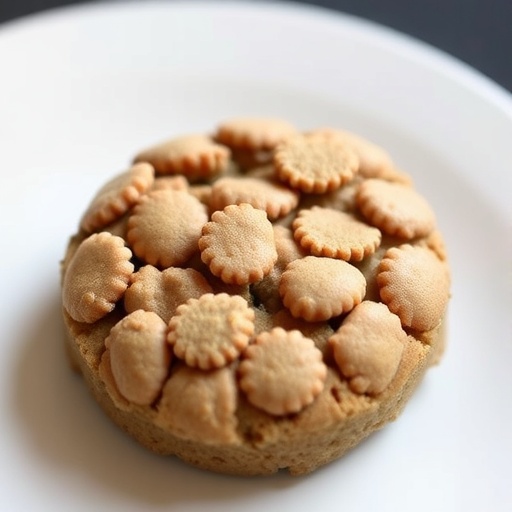
A groundbreaking study has unveiled the exceptional potential of brown seaweed, specifically Sargassum filipendula, in enhancing the nutritional profile and digestibility of gluten-free cookies. This innovative research highlights how even a minor incorporation of seaweed flour—merely 1%—can bring about substantial improvements in the functional properties of gluten-free baked goods. Conducted at the State University of Campinas (UNICAMP) in Brazil, the investigation addresses a pivotal challenge in gluten-free food development: achieving both health benefits and desirable technological properties.
The research team led by Bruna Lago Tagliapietra—currently a professor at the Federal University of Santa Maria—embarked on this comprehensive exploration by meticulously collecting Sargassum filipendula samples from the rocky coast of São Paulo, Brazil. The choice of this particular seaweed species was underpinned by its abundance along the São Paulo coastline and its high nutritional content. Brazil’s extensive 8,600-kilometer coastline provides an environmentally sustainable source of seaweed, leveraging maritime resources without competing for agricultural land or freshwater.
Upon harvesting, the seaweed specimens underwent rigorous processing to reduce moisture to below 6%, utilizing both oven drying and freeze-drying techniques. The dried material was pulverized into fine flour, which was then integrated into cookie formulations. Two cookie variants were developed: a control batch made exclusively with rice flour and a test batch containing 99% rice flour and 1% seaweed flour. This ratio was carefully chosen to assess the minimum effective dosage needed for nutritional and functional enhancement without compromising product integrity.
Subsequent analyses revealed that the inclusion of Sargassum filipendula flour significantly boosted the phenolic compound content in the gluten-free cookies. Phenolic compounds are renowned for their potent antioxidant capabilities, which contribute to the prevention of oxidative stress and chronic diseases. Importantly, antioxidant activity was enhanced in the seaweed-enriched cookies, underscoring the flour’s capacity to not only add nutritional value but also to fortify the product against spoilage and degradation.
The thermal stability of these bioactive compounds was another crucial discovery. Throughout the baking process, which typically involves high temperatures that can degrade nutrients, the phenolic compounds remained intact and functional. This characteristic is vital for food processing industries seeking to incorporate natural functional ingredients without sacrificing efficacy through heat exposure.
Delving deeper into nutritional improvements, the study evidenced notable increases in protein content and the essential amino acid profile of cookies fortified with seaweed flour. Enhanced dietary fiber content was also observed, which is particularly beneficial given that gluten-free products often suffer from reduced fiber levels. Fiber is indispensable in supporting gastrointestinal health and modulating blood sugar, making this finding critical for the formulation of healthier gluten-free snacks.
Food scientists also examined the technological impact of seaweed flour addition on cookie structure and texture. The seaweed flour improved moisture retention, thus yielding a softer and more palatable texture, a key sensory attribute for consumer acceptance. Maintaining structural integrity while enhancing softness presents a formidable advantage for gluten-free baked goods, which frequently encounter challenges relating to texture and brittleness.
Innovatively, the team conducted in vitro simulated gastrointestinal digestion to mimic human digestive conditions. This approach assessed both digestibility and bioavailability of nutrients and bioactive compounds from the cookies. The results indicated that seaweed flour contributed positively to these parameters, suggesting that the functional components are not only present in the food matrix but are also accessible for absorption in the human body.
While the promise of Sargassum filipendula flour in gluten-free food fortification is evident, the researchers emphasize the necessity for further work to translate laboratory findings into industrial scale applications. Standardization of raw seaweed material is essential to ensure consistency in quality and nutritional content, given the natural variability of marine biomass. Moreover, sensory evaluations with prospective consumers will be crucial to refine product formulations for optimal taste and texture preferences.
Regulatory considerations present another layer of complexity. Compliance with food safety and ingredient approval regulations, for example from Brazil’s ANVISA (National Health Surveillance Agency), must be rigorously met before seaweed flour can become a commercial staple. Comprehensive toxicological assessments and mineral profile studies are underway as part of the safety evaluation plan to rule out potential contaminants inherent in marine plants, such as heavy metals.
This investigation bridges a gap between environmental sustainability and nutritional innovation. Seaweed cultivation aligns with global efforts to diversify food sources in a sustainable manner, particularly under the pressure of climate change and resource scarcity. Using marine plants like Sargassum filipendula taps into underutilized ecosystems to enrich human diets while minimizing terrestrial land use and freshwater consumption.
In conclusion, the incorporation of brown seaweed flour from Sargassum filipendula emerges as a robust strategy to substantially improve the health profiles of gluten-free products. These findings not only address critical nutritional shortcomings faced by individuals with celiac disease or gluten sensitivity but also advance the frontier of functional food development. As this research evolves toward commercial adoption, it signals a transformative future where seaweed ingredients become a common, valued component in the modern food industry’s quest for healthier, more sustainable offerings.
News Publication Date: 26-Mar-2026
Web References:
https://sciencedirect.com/science/article/pii/S0963996926005831
http://dx.doi.org/10.1016/j.foodres.2026.118906
Cite Scienmag News
Daisy Hatcher. (June 23, 2026). Brown Seaweed Flour Boosts Nutritional Value and Digestibility of Gluten-Free Cookies. Scienmag. https://scienmag.com/brown-seaweed-flour-boosts-nutritional-value-and-digestibility-of-gluten-free-cookies/
Daisy Hatcher. "Brown Seaweed Flour Boosts Nutritional Value and Digestibility of Gluten-Free Cookies." Scienmag, 23 June 2026, https://scienmag.com/brown-seaweed-flour-boosts-nutritional-value-and-digestibility-of-gluten-free-cookies/. Accessed 4 September 2026.
Daisy Hatcher. "Brown Seaweed Flour Boosts Nutritional Value and Digestibility of Gluten-Free Cookies." Scienmag. June 23, 2026. https://scienmag.com/brown-seaweed-flour-boosts-nutritional-value-and-digestibility-of-gluten-free-cookies/


