


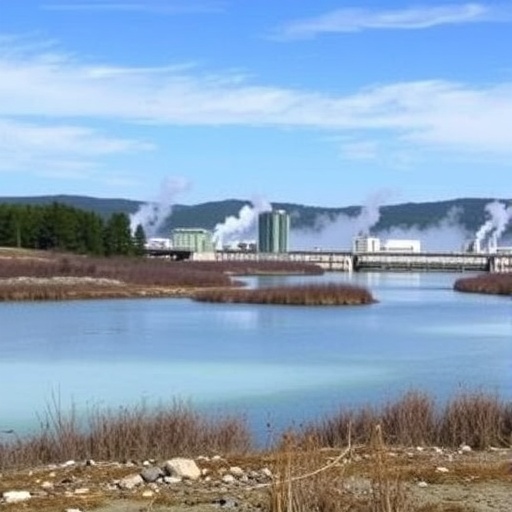
In recent years, atmospheric methane levels have experienced an unprecedented surge, sparking intense scientific inquiry into the underlying causes of this potent greenhouse gas accumulation. An international consortium of scientists has now shed light on the complex interplay of diminishing atmospheric removal processes and enhanced biogenic emissions from natural and managed ecosystems that drove this rapid increase in the early 2020s. Their findings, published in the prestigious journal Science, provide critical insights into the mechanisms behind the methane spike and outline the implications for future climate change mitigation efforts.
At the heart of the methane surge lies a significant reduction in hydroxyl radicals (OH) within the atmosphere during 2020 and 2021. Hydroxyl radicals act as the atmosphere’s primary methane sink by breaking down methane molecules, thus regulating their atmospheric lifetime. A marked decline in OH radicals weakened this natural cleaning process and accounted for approximately 80 to 85 percent of the year-to-year variability in methane growth during this period. This perturbation effectively slowed methane removal, causing it to accumulate more rapidly, a phenomenon previously underappreciated by climate models.
Several factors contributed to the decline in hydroxyl radical concentrations, but among the most influential was a dramatic shift in atmospheric chemistry linked to the COVID-19 pandemic. Pandemic-driven reductions in nitrogen oxides (NOₓ), key precursors in the formation of hydroxyl radicals, resulted from widespread lockdowns and concomitant decreases in combustion-related pollution. This unintended consequence created a feedback loop where decreased NOₓ led to lower OH levels, thereby impairing methane decay mechanisms and facilitating methane’s atmospheric persistence and growth.
Simultaneous to the chemical changes in the atmosphere, climatic anomalies, notably an extended La Niña episode spanning from 2020 through 2023, intensified hydrological conditions in tropical regions. The persistent wet phase resulted in widespread flooding and elevated water tables across wetlands, rivers, lakes, and agricultural lands. These inundated environments serve as prolific microbial hotspots where anaerobic conditions encourage methane production through methanogenesis. The result was a pronounced enhancement of biogenic methane emissions, particularly from tropical Africa and Southeast Asia, augmenting the methane burden in the atmosphere.
Intriguingly, this methane increase was not limited to natural wetlands but was also evident in human-managed landscapes such as paddy rice fields and inland water bodies, ecosystems traditionally underrepresented or oversimplified in global methane emission inventories. These findings underscore the necessity of integrating nuanced representations of both natural and anthropogenically influenced methane sources in Earth system models to accurately forecast future emission trajectories and climate feedbacks.
At a regional scale, the research revealed differential responses among wetlands worldwide. While tropical Africa and Southeast Asia exhibited substantial emission growth coincident with wetter conditions, Arctic wetlands and freshwater bodies also manifested significant increases attributable to the warming-induced enhancement of microbial activity. Conversely, methane fluxes from South American wetlands diminished in 2023, an effect attributed to extreme drought conditions linked to El Niño phenomena, highlighting methane emission sensitivity to climatic extremes and regional variability.
Contrary to prior assumptions, fossil fuel-related and wildfire methane emissions played a subordinate role in this early-decade surge. Isotopic analyses offer robust evidence that microbial methane sources overwhelmingly dominated the observed atmospheric increases. This distinction carries profound implications for strategies addressing methane mitigation, suggesting that focusing solely on anthropogenic fossil and fire emissions without accounting for natural and semi-natural emission dynamics may overlook major contributors to atmospheric methane variability.
Using advanced Earth system models that explicitly couple land surface processes, freshwater biogeochemistry, and atmospheric chemistry, the Boston College-led team was pivotal in quantifying these diverse methane sources. Their integrative approach allowed for the disaggregation of emission contributions from wetlands, inland waters, reservoirs, and global paddy rice agriculture. These models mark a significant advance in capturing the feedbacks between climate variability and methane emissions, essential for projecting near-term climate outcomes.
Despite these advancements, the researchers caution that prevalent bottom-up emission models often underestimate methane release from flooded ecosystems and fail to capture temporal variations observed during the surge. This gap in representation underscores the urgent need for expanded observational networks and detailed microbial process studies to refine emission estimates and reduce uncertainties in global methane budgets.
The implications of this research extend to international policy frameworks, such as the Global Methane Pledge, emphasizing that effective methane mitigation must consider not only direct anthropogenic emissions but also the amplifying effects of climate change on natural and managed biogenic sources. As rising global temperatures and altered precipitation patterns persist, these climate-driven methane emissions are poised to play an increasingly influential role in the trajectory of atmospheric greenhouse gases.
Furthermore, by illustrating the pivotal role of atmospheric chemistry dynamics, specifically hydroxyl radical variability driven by human activity perturbations, the study enriches our understanding of how interventions in one sector can ripple through atmospheric systems and impact greenhouse gas accumulation. This multidimensional perspective is vital for devising holistic climate strategies that acknowledge complex Earth system interactions.
Ultimately, this research charts a nuanced course for future methane management, one that integrates emission control with adaptive strategies addressing climate-induced feedbacks in natural and managed ecosystems. Recognizing these intertwined processes will be essential to curbing methane’s contribution to rapid climate warming and achieving international climate stabilization goals.
News Publication Date: 5-Feb-2026
Web References: DOI: 10.1126/science.adx8262
References: Science journal publication, early 2026
Cite Scienmag News
Russell Cooper. (February 6, 2026). Boston College Researchers Uncover Causes Behind Early 2020s Methane Surge. Scienmag. https://scienmag.com/boston-college-researchers-uncover-causes-behind-early-2020s-methane-surge/
Russell Cooper. "Boston College Researchers Uncover Causes Behind Early 2020s Methane Surge." Scienmag, 6 February 2026, https://scienmag.com/boston-college-researchers-uncover-causes-behind-early-2020s-methane-surge/. Accessed 3 September 2026.
Russell Cooper. "Boston College Researchers Uncover Causes Behind Early 2020s Methane Surge." Scienmag. February 6, 2026. https://scienmag.com/boston-college-researchers-uncover-causes-behind-early-2020s-methane-surge/


