


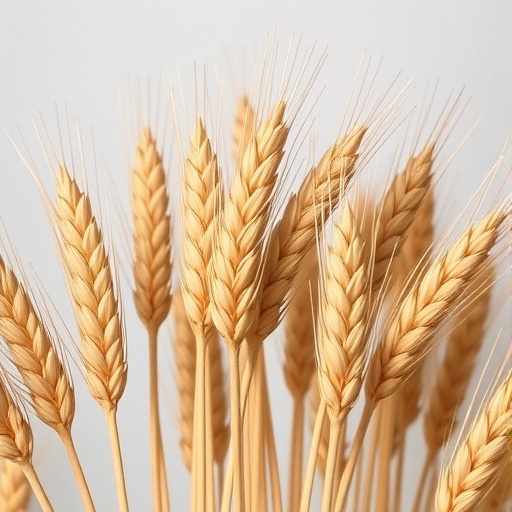
In a groundbreaking study published in Nature Communications, researchers from the RIKEN Center for Sustainable Resource Science in Japan have unveiled a critical biological mechanism underlying wheat’s vulnerability to extended heat stress—iron deficiency. This discovery not only illuminates the intricate relationship between climate-induced stress and nutrient homeostasis in crops but also opens pathways for innovative interventions to secure wheat productivity in a warming world.
The global agricultural community faces increasing challenges due to prolonged periods of elevated temperatures, a direct consequence of anthropogenic climate change. Wheat, a staple crop for billions, is particularly susceptible to moderate but sustained heat stress that increasingly characterizes modern growing seasons. Prior investigations predominantly examined acute heat episodes spanning a few days; however, the more pervasive threat emerges from multi-week exposure to sublethal elevated temperatures, which subtly erode wheat’s physiological capacity.
Focusing on bread wheat, the researchers subjected plants to two weeks of moderately increased temperatures, simulating realistic heat wave scenarios that threaten crop yields worldwide. They observed pronounced declines in biomass accumulation and photosynthetic efficiency, indicating compromised plant health. Most strikingly, biochemical analyses revealed that leaves from heat-stressed wheat harbored less than half the normal iron content, implicating iron deficiency as a potential driver of growth retardation.
In order to dissect the genetic and molecular intricacies obscured by wheat’s complex hexaploid genome, the study employed the model grass Brachypodium distachyon, which shares physiological and genetic characteristics with cereal crops yet possesses a simpler diploid genome. Importantly, B. distachyon biobanks offer genetically distinct accessions that facilitate comparative analyses. When subjected to identical heat stress conditions, the Brachypodium samples exhibited divergent phenotypes and corresponding iron concentrations, ranging from severe chlorosis and biomass loss accompanied by 91% iron depletion in accession Bd21, to milder symptoms with a more modest 61% iron reduction in accession Bd21-3.
Genomic investigations pinpointed a single gene, BdTOM1, as a pivotal determinant in the differential heat resilience observed between accessions. This gene encodes a transporter integral to the biosynthesis and secretion of deoxymugineic acid (DMA), an organic phytosiderophore essential for chelating unavailable ferric iron in the rhizosphere and facilitating its uptake by roots. Under prolonged heat stress, Bd21-3 demonstrated elevated levels of DMA compared to Bd21, aligning with its relative iron sufficiency and improved physiological outcomes.
This finding elucidates a critical adaptive mechanism: heat stress compromises plants’ ability to mobilize and absorb iron primarily through alterations in mugineic acid-mediated iron acquisition pathways. BdTOM1 variations modulate the production and secretion of these chelators, delineating genetic bases for differential susceptibility to iron deficiency under stress. This mechanistic insight offers a tangible target for both breeding and biotechnological strategies to enhance crop resilience.
Building on this mechanistic understanding, the researchers evaluated whether exogenous application of synthetic deoxymugineic acid analogs could mitigate iron deficiency and associated growth impairments during heat episodes. They administered PDMA, a laboratory-synthesized analog of natural DMA, to heat-stressed plants. The treatment markedly elevated iron uptake efficiency, improved photosynthetic parameters, and restored biomass accumulation metrics toward levels observed in unstressed controls, provided the PDMA concentrations were carefully optimized to avoid potential phytotoxicity.
The implications for agricultural practice are profound. With climate models forecasting increased heat wave frequency and duration, traditional heat-tolerance breeding approaches may not suffice given the complex genetic traits involved. Chemical supplementation with PDMA or related compounds could serve as an agronomic intervention, rapidly deployed to sustain crop yields while breeding programs develop long-term genetic solutions targeting nutrient homeostasis genes such as TOM1.
Keiichi Mochida, the lead investigator, articulates an optimistic vision: “Our research points to a new frontier in agricultural science where optimizing iron uptake under heat stress brings immediate benefits to crop productivity. This dual approach, integrating chemical and genetic solutions, holds immense potential to stabilize wheat yields in the face of exacerbating climate extremes.”
Moreover, this research underscores the interconnectedness of nutrient management, genetic diversity, and environmental stress adaptation. By harnessing model organisms and state-of-the-art genomic tools, scientists can unravel complex polygenic traits critical for addressing pressing global food security challenges. The multidisciplinary approach—incorporating plant physiology, molecular genetics, and synthetic chemistry—exemplifies how modern science can innovate responses to climate-driven agricultural adversity.
In the long term, selective breeding programs focusing on TOM1 alleles or other components regulating phytosiderophore production could yield wheat cultivars intrinsically capable of maintaining iron homeostasis under chronic heat stress. Such cultivars would not only sustain yield but potentially preserve grain nutritional quality, addressing concerns that climate change diminishes both quantity and nutrient density of vital cereals.
This study also highlights the importance of model plant biobanks, which provide necessary genetic variability to decipher complex traits. The contrasting phenotypes of Brachypodium accessions reveal naturally occurring allelic variations that might be introgressed or mimicked in major crops for improved stress resilience.
Finally, the promising results with synthetic DMA analogs invite further inquiries into their field application, including dosage optimization, delivery methods, economic viability, and ecological impact assessments. If successful, PDMA-based treatments could integrate seamlessly into existing agronomic frameworks, offering an immediate countermeasure against the detrimental effects of escalating heat stress on wheat and potentially other cereal grains.
This pioneering research marks a significant step toward safeguarding global food supplies against the looming threat of climate change, illustrating how an intimate understanding of plant nutrient physiology can translate into practical solutions for sustainable agriculture.
Web References: 10.1038/s41467-025-63005-0
Cite Scienmag News
Alan Morgan. (October 30, 2025). Boosting Iron Levels Fuels Robust Growth in Stressed Wheat, Study Finds. Scienmag. https://scienmag.com/boosting-iron-levels-fuels-robust-growth-in-stressed-wheat-study-finds/
Alan Morgan. "Boosting Iron Levels Fuels Robust Growth in Stressed Wheat, Study Finds." Scienmag, 30 October 2025, https://scienmag.com/boosting-iron-levels-fuels-robust-growth-in-stressed-wheat-study-finds/. Accessed 5 September 2026.
Alan Morgan. "Boosting Iron Levels Fuels Robust Growth in Stressed Wheat, Study Finds." Scienmag. October 30, 2025. https://scienmag.com/boosting-iron-levels-fuels-robust-growth-in-stressed-wheat-study-finds/


