


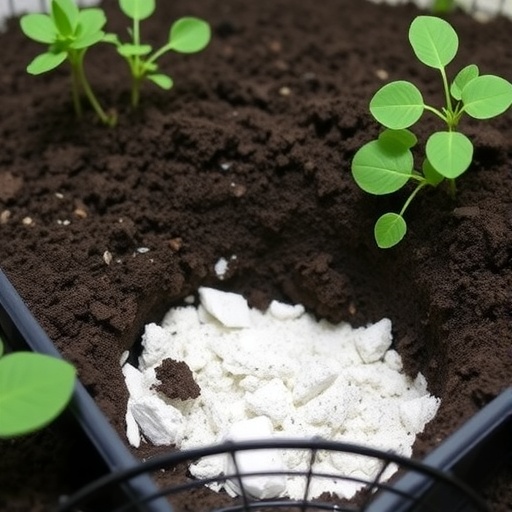
Recent research has unveiled the transformative potential of zeolite solids and suspended nanoparticles in enhancing microbial activity during the composting of agricultural and farm waste. This innovative approach, documented in a groundbreaking study led by Rios-Mercado et al., provides a compelling narrative on how integrating advanced materials into traditional composting processes can yield significant improvements in waste management practices.
Composting is an age-old process utilized to recycle organic materials, but the incorporation of zeolite and nanoparticles represents a paradigm shift in this venerable method. The study highlights how these materials can catalyze microbial growth and activity, thereby expediting the composting process and enhancing the quality of the end product. While the benefits of composting are widely acknowledged, the advent of these supplementary materials could revolutionize the efficiency and effectiveness of this essential agricultural practice.
Zeolites, which are microporous, aluminosilicate minerals, are known for their ion-exchange properties and high surface area. When introduced during composting, they not only improve the physical structure of the compost but also provide a habitat that fosters diverse microbial communities. This enhancement is crucial, as the diversity and vitality of these microorganisms directly correlate to the efficiency of the composting process. Furthermore, the porous nature of zeolite allows for better aeration, ensuring optimal conditions for aerobic decomposition.
Nanoparticles, on the other hand, have emerged as fascinating agents in various fields of science, including biochemistry and environmental science. Their small size allows for a larger surface area relative to their volume, which means they can pierce biological barriers more effectively than larger particles. In the composting context, suspended nanoparticles have shown promising results in positively influencing microbial activity. They can act as carriers for nutrients and stimulate metabolic processes within microbial cells, leading to accelerated breakdown of organic matter.
The research conducted by Rios-Mercado and colleagues involves a meticulous examination of different concentrations of zeolite and nanoparticles mixed with various agricultural waste types. By closely monitoring the microbial populations and composting parameters, the team was able to establish a clear correlation between the introduction of these materials and enhanced microbial activity. Their findings illustrate that optimal concentrations not only improved the rate of decomposition but also resulted in a nutrient-rich compost product that benefits soil health.
Another highlight of this research is the environmental sustainability aspect linked with the enhanced composting process. By optimizing waste composting, farmers can reduce their dependence on chemical fertilizers, thereby minimizing their ecological footprint. The enhanced microbial activity ensures a richer compost outcome, which can, in turn, improve soil fertility and structure. This reinforces the notion that employing zeolite and nanoparticles is not just beneficial from a productivity standpoint but also aligns with sustainable agricultural practices essential for the planet’s health.
The study also sheds light on the potential economic benefits associated with this innovative composting method. Faster composting translates to reduced processing time, enabling farmers and agricultural businesses to recycle waste more efficiently. The production of high-quality compost that can be developed at an accelerated rate will ultimately lead to cost savings in waste management and an increased market value for farm produce. Furthermore, the research contributes to creating a circular economy in agriculture, where organic wastes are effectively reused, contributing to a more sustainable food system.
As the world grapples with waste management issues and the pressing need for more sustainable agricultural practices, the findings of this study are timely and relevant. The research advocates for a shift toward integrating advanced materials such as zeolite and nanoparticles into composting, encouraging a broader adoption of these methods in various agricultural systems. Doing so could pave the way for innovations that not only boost productivity but also drastically reduce environmental impacts, especially when considering the agricultural sector’s contribution to greenhouse gas emissions.
Moreover, the authors highlight the necessity for further research to explore the long-term effects of these materials on soil health and crop yields. Understanding the lasting implications of enhanced composting practices and how they interact with various soil types, climates, and farming techniques will be crucial as the agricultural community seeks scalable solutions. This ongoing research could likely unlock new pathways for sustainable practices that align with growing global food demands amidst climate change challenges.
What remains compelling is the interdisciplinary nature of this study, showcasing the intersection of material science, microbiology, and environmental management. Each aspect underscores how collaborative research can unveil new solutions to some of our most pressing challenges. By incorporating insights from various fields into practical applications, such as composting, researchers and practitioners can jointly promote sustainable agricultural innovations.
Ultimately, the work of Rios-Mercado and their team serves as a call to action for the agricultural sector to embrace scientific advancements in waste management practices. It is a powerful reminder of how innovation can be harnessed to solve age-old problems, reinforcing our collective responsibility towards a healthier planet. As more institutions begin to explore the implications of this research, we stand on the brink of revolutionizing agricultural waste management, enhancing productivity while nurturing the earth.
In conclusion, the study spearheaded by Rios-Mercado et al. not only identifies a unique method to enhance microbial activity in composting through zeolite and nanoparticles but also advocates for broader changes in agricultural practices for sustainability. The research presents a hopeful perspective that through science and innovation, sustainable agriculture can flourish, effectively addressing both economic and environmental challenges on our path toward global food security.
Rios-Mercado, M.F., Oviedo-Ocaña, E.R., Parra-Orobio, B.A. et al. Enhancement of Microbial Activity during the Composting Process of Agricultural and Farm Waste Using Zeolite Solid and Suspended Nanoparticles.
Waste Biomass Valor (2025). https://doi.org/10.1007/s12649-025-03288-y
Cite Scienmag News
Morgan Morrow. (August 30, 2025). Boosting Compost Microbial Activity with Zeolite Nanoparticles. Scienmag. https://scienmag.com/boosting-compost-microbial-activity-with-zeolite-nanoparticles/
Morgan Morrow. "Boosting Compost Microbial Activity with Zeolite Nanoparticles." Scienmag, 30 August 2025, https://scienmag.com/boosting-compost-microbial-activity-with-zeolite-nanoparticles/. Accessed 4 September 2026.
Morgan Morrow. "Boosting Compost Microbial Activity with Zeolite Nanoparticles." Scienmag. August 30, 2025. https://scienmag.com/boosting-compost-microbial-activity-with-zeolite-nanoparticles/


