


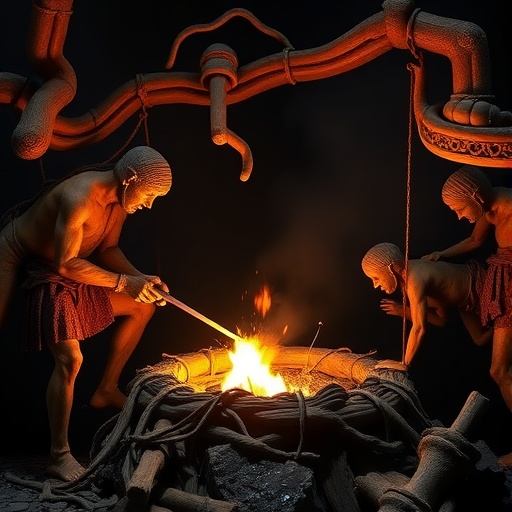
In the realm of archaeology and anthropology, a fascinating new study is shedding light on the intricate relationship between metallurgy and the socio-cultural dynamics of the Iron Age in Northwestern Iberia. Conducted by renowned researchers Nión-Álvarez and Veiga-Rilo, the study focuses on the metalworking process known as “bonecoal,” a unique technique utilized in the region, specifically in the archaeological site of Borneiro, located in Galicia, Spain. With its innovative methods and important implications, this research offers an unprecedented glimpse into the daily lives of Iron Age communities.
At the core of this study is the understanding of what “bonecoal” entails. Traditionally, charcoal has been the preferred fuel for metalworking due to its high carbon content and efficiency. However, this research unveils a lesser-known alternative: bonecoal, which is derived from the carbonization of animal bones. Through meticulous experimentation, the authors reveal how this alternative not only served as a viable fuel source but also contributed to the unique alloy compositions of the metals produced during this period. The implications of such findings extend far beyond mere technical insights; they challenge existing narratives about resource utilization in pre-industrial societies.
The Iron Age, a period marked by significant technological and social advancements, is characterized by the emergence and specialization of metalworking. In this context, the study of bonecoal in Borneiro provides a captivating case study. Through an extensive analysis of archaeological remains, including residues and artifacts related to metal production, the researchers meticulously reconstructed the bonecoal metalworking process. They aimed to understand not only the practical aspects of this technique but also its cultural significance, contributing to a wider discourse on the social landscape of prehistoric communities.
One of the standout aspects of this research is its interdisciplinary approach. By integrating methodologies from archaeology, materials science, and anthropology, Nión-Álvarez and Veiga-Rilo challenge traditional boundaries in research. The techniques employed ranged from isotopic analyses of metal samples to assessing the efficiency of bonecoal in producing high-quality iron. This thoroughness is what makes the research particularly compelling, paving the way for nuanced discussions about ancient technology and its connections to contemporary practices.
The findings of this study are set against a backdrop of environmental concerns regarding resource consumption. As modern societies grapple with sustainability issues, exploring ancient practices like bonecoal metalworking can provide valuable lessons. Understanding how past communities innovatively adapted to resource limitations can spark ideas for contemporary recycling and resource management methods. The research serves as a reminder that ingenuity is often rooted in necessity, and history holds solutions that could address present challenges.
The case of Borneiro further highlights the importance of regional studies in grasping the intricacies of Iron Age life. By focusing on a specific site, the authors underscore how localized practices can vary dramatically even within broader cultural movements. This specificity offers a richer context for understanding how different communities interacted with their environment and shaped their identities through technology and craft. Borneiro, with its unique cultural and technological characteristics, exemplifies this diversity, prompting a reevaluation of the significance of regional studies in the broader archaeological narrative.
In terms of practical implications, this research opens doors to experimental archaeology, wherein modern artisans might attempt to replicate the bonecoal metalworking process. This hands-on approach could confirm the efficacy of the technique and offer insights into the skills and knowledge possessed by ancient metalworkers. Such experiments also deepen our understanding of the sensory and tactile experiences of creating metal artifacts, bringing to life the otherwise dormant materials that have survived through millennia.
Furthermore, this study encourages the exploration of other alternative materials and technologies that ancient communities may have employed. Just as bonecoal has emerged as a focal point in this research, there may exist numerous other underappreciated resources in archaeological records waiting to be investigated. This research acts as a catalyst for future inquiries into the intersections of environment, technology, and sociocultural development, paving the way for a renaissance of interest in sustainable practices.
The study of bonecoal also intersects with discussions on the symbolism of materials in ancient societies. Metals, particularly iron, were imbued with social significance in Iron Age communities, often associated with power, prestige, and identity. By examining how the use of bonecoal influenced metal properties and production techniques, this research can illuminate how resource choices may have shaped social hierarchies and cultural expressions. Such an exploration may reveal how the transformation of raw materials into finished artifacts can reflect broader societal values and beliefs.
Moreover, the research highlights the significance of collaboration between archaeologists and historians. By bridging both disciplines, Nión-Álvarez and Veiga-Rilo enhance the narrative constructed around the Iron Age, creating a multi-dimensional perspective that encapsulates both technological prowess and cultural context. Such cooperation is essential for a holistic understanding of the past, as it fosters an appreciation of how technologies were not just tools but integral components of human experience.
The implications of this research extend beyond academia; it has the potential to inspire and inform public discussions about heritage and sustainability. Engaging with ancient techniques that prioritize local resources can resonate in modern contexts, encouraging a reconnection with traditional craftsmanship and environmental stewardship. Recognizing the value of indigenous knowledge systems and practices can reinforce cultural identity and promote conservation efforts in various settings.
Ultimately, the study conducted by Nión-Álvarez and Veiga-Rilo emphasizes the richness of Iron Age technology through the lens of innovation and adaptability. The findings surrounding bonecoal metalworking intricately intertwine with narratives of cultural resilience, sustainability, and human ingenuity. As this research continues to circulate within academic circles and the public sphere, it is likely to inspire further investigations into the myriad ways that ancient societies navigated the challenges of their time.
In a world increasingly defined by technological advancement and resource scarcity, exploring alternative methods of production rooted in historical practices can offer innovative insights for contemporary challenges. By delving into the past, we may illuminate pathways for cultural continuity and ecological balance, encouraging societies to look back while moving forward into an uncertain future.
Nión-Álvarez, S., Veiga-Rilo, C. Forged by bones: bonecoal metalworking process in NW Iberia iron age. The case of Borneiro (Galicia, Spain).
Archaeol Anthropol Sci 17, 196 (2025). https://doi.org/10.1007/s12520-025-02307-2
Cite Scienmag News
Courtney Benton. (November 15, 2025). Bonecoal Metalworking in Iron Age NW Iberia. Scienmag. https://scienmag.com/bonecoal-metalworking-in-iron-age-nw-iberia/
Courtney Benton. "Bonecoal Metalworking in Iron Age NW Iberia." Scienmag, 15 November 2025, https://scienmag.com/bonecoal-metalworking-in-iron-age-nw-iberia/. Accessed 5 September 2026.
Courtney Benton. "Bonecoal Metalworking in Iron Age NW Iberia." Scienmag. November 15, 2025. https://scienmag.com/bonecoal-metalworking-in-iron-age-nw-iberia/


