


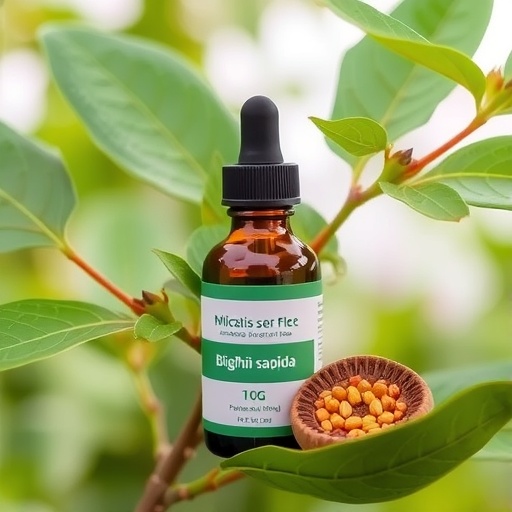
In a groundbreaking study that could pave the way for novel antimalarial therapies, researchers have unveiled the multifaceted medicinal properties of the ethanol extract derived from Blighia sapida K.D. Koenig, a plant belonging to the Sapindaceae family. Malaria, caused by Plasmodium parasites, remains a staggering global health challenge, particularly in tropical and subtropical regions. This fresh investigation, focusing on Plasmodium berghei-infected mice as a robust experimental model, illuminates the promising antimalarial, antioxidant, and hepatoprotective activities inherent in this botanical extract, potentially revolutionizing the therapeutic landscape against malaria.
The study’s emphasis on Blighia sapida stems from its ethnopharmacological reputation and traditional medicinal use across African communities. Prior anecdotal evidence suggested various health benefits, but this research systematically evaluates its biochemical and pharmacological potential using modern laboratory techniques, asserting its relevance in combating oxidative stress and hepatic damage commonly associated with malarial infections. The ethanol extraction method employed optimizes the isolation of active phytochemical compounds, ensuring targeted efficacy and consistency in the results.
Plasmodium berghei, serving as the experimental parasitic agent, offers valuable insights due to its genetic and pathological parallels to human malarial infections caused by Plasmodium falciparum. By infecting murine models, the researchers could precisely quantify the parasitemia levels, monitor clinical symptoms, and assess therapeutic outcomes post-treatment with Blighia sapida ethanol extract. This controlled setup not only validates the extract’s anti-Plasmodium activity but also allows for detailed examination of its immunomodulatory and cytoprotective effects.
One of the study’s pivotal discoveries is the marked reduction in parasitemia levels observed in the treated mice, denoting potent antimalarial efficacy. The extract’s phytochemical composition, rich in flavonoids, saponins, tannins, and phenolics, likely contributes to this effect by inhibiting crucial metabolic pathways essential for parasite survival and replication. Additionally, these bioactive molecules may impair the parasite’s ability to detoxify free radicals, thereby enhancing susceptibility to oxidative damage and promoting clearance from the bloodstream.
Oxidative stress is a known consequence of malaria infection, where the overproduction of reactive oxygen species (ROS) exacerbates tissue injury, inflammation, and organ dysfunction. The antioxidant activity demonstrated by Blighia sapida ethanol extract is a vital therapeutic asset. In vitro assays confirm its capability to scavenge free radicals efficiently, while in vivo analyses indicate augmented endogenous antioxidant enzyme activities such as superoxide dismutase (SOD) and catalase, which collectively mitigate the deleterious effects of ROS in infected hosts.
Moreover, the study brings to light the hepatoprotective property of the ethanol extract, a crucial discovery given that the liver serves as a primary site for Plasmodium development and a major target for oxidative injury. Elevated liver enzyme biomarkers in malaria signify hepatic stress and damage. Treatment with Blighia sapida extract was shown to normalize these enzyme levels and restore liver histology, indicating preservation of liver function and cellular integrity. This protective effect is likely mediated by the anti-inflammatory and antioxidant components within the extract.
Delving deeper into the mechanistic pathways, the research highlights the extract’s modulation of inflammatory cytokines and apoptotic mediators during malarial infection. By downregulating pro-inflammatory markers such as TNF-α and IL-6, the ethanol extract curbs excessive immune responses that often contribute to tissue pathology. Concomitantly, it appears to stabilize mitochondrial function and prevent cell death cascades, thereby safeguarding hepatic cells from the cytotoxic insults of both parasitic invasion and host immune activity.
Pharmacokinetic considerations also underscore the clinical relevance of the extract. Its bioavailability and metabolic stability in vivo, demonstrated by sustained therapeutic concentrations in tissue samples, advocate for its practical use in treatment regimens. Unlike some conventional antimalarial drugs plagued by resistance and toxicity issues, this botanical extract offers a multifactorial therapeutic profile with a favorable safety margin, an attribute that is critically needed in the ongoing battle against drug-resistant malaria strains.
This study not only enriches the current pharmacognostic literature but also opens promising avenues for the integration of traditional herbal remedies into contemporary antimalarial strategies. Its findings resonate with global health priorities aimed at harnessing plant-based compounds for affordable, effective, and accessible therapies in resource-limited settings where malaria prevalence is highest. Furthermore, the dual antioxidant and hepatoprotective actions potentially improve patient outcomes by addressing secondary complications often neglected in standard treatments.
Future research directions based on these findings may encompass detailed isolation and characterization of individual bioactive constituents from Blighia sapida responsible for the observed pharmacological effects. Advanced molecular docking and in silico studies could elucidate precise interaction targets within the Plasmodium metabolic network. Moreover, clinical trials evaluating safety, efficacy, dosing strategies, and potential synergistic effects when used alongside conventional antimalarials would solidify its translational potential.
The implications of this research extend beyond malaria, as the diverse pharmacodynamic profile of Blighia sapida’s ethanol extract suggests broader applications in the treatment of oxidative stress-related diseases and liver disorders. Given the centrality of oxidative damage and inflammation in numerous pathological conditions, this natural extract may inspire the development of multi-targeted, plant-derived therapeutic agents, heralding a new era of integrative medicine.
In essence, this meticulous exploration into Blighia sapida ethanol extract offers a beacon of hope in the enduring fight against malaria, characterized by its tripartite mode of action—antiparasitic, antioxidant, and hepatoprotective. The convergence of traditional knowledge with rigorous scientific validation underpins the significance of biodiversity and ethnobotany in discovering next-generation drugs. As malaria continues to exert a heavy toll globally, innovative approaches like those unveiled in this study are indispensable for advancing global health.
This revelation underscores the immense value locked within underexplored botanical species, advocating for sustained investment in ethnopharmacological research and biodiversity conservation. By embracing the wealth of nature’s pharmacopeia, humanity can harness potent, multi-dimensional therapeutics that may outpace evolving pathogens and alleviate the burden of complex diseases.
To conclude, the scientific affirmation of Blighia sapida’s pharmacological efficacy marks a compelling chapter in antimalarial drug discovery. It underlines the necessity of interdisciplinary approaches encompassing botany, parasitology, pharmacology, and molecular biology to combat persistent infectious diseases. The future of malaria therapy may well rely on such integrative strategies, combining traditional wisdom with cutting-edge science to realize sustainable, effective healthcare solutions worldwide.
Cite Scienmag News
Drew Townsend. (November 15, 2025). Blighia sapida Extract Fights Malaria, Protects Liver. Scienmag. https://scienmag.com/blighia-sapida-extract-fights-malaria-protects-liver/
Drew Townsend. "Blighia sapida Extract Fights Malaria, Protects Liver." Scienmag, 15 November 2025, https://scienmag.com/blighia-sapida-extract-fights-malaria-protects-liver/. Accessed 8 September 2026.
Drew Townsend. "Blighia sapida Extract Fights Malaria, Protects Liver." Scienmag. November 15, 2025. https://scienmag.com/blighia-sapida-extract-fights-malaria-protects-liver/


