


A new artificial intelligence framework that can predict what an enzyme does—without ever being told where its active sites are—has been unveiled by researchers in China, promising to accelerate everything from drug discovery to the design of novel industrial catalysts. The system, called GTT-EC, is described in a study published in the open-access journal Genome Biology, and it tackles one of the most stubborn bottlenecks in computational biology: assigning the correct Enzyme Commission (EC) number to a protein based solely on its amino acid sequence and predicted structure.
Enzymes are the molecular machines of life, catalyzing the chemical reactions that sustain every living cell. Each known enzyme activity is catalogued under a hierarchical EC number, a four-level code that describes, with increasing precision, the class of reaction, the substrate, the acceptor, and the specific chemical transformation involved. Accurately assigning these numbers is far more than an exercise in bookkeeping. When researchers discover a new protein whose function is unknown—whether from a gut microbiome sample, a deep-sea vent metagenome, or a pathogen genome—the EC number is often the first, most informative functional label they can attach to it. A wrong or missing assignment can send experimentalists down costly dead ends.
For years, the field has leaned on computational tools that depend heavily on explicitly annotated functional residues—catalogued catalytic sites and binding pockets drawn from curated databases. The trouble, the authors of the new study argue, is that these annotations are sparse, uneven, and often absent for the very proteins that most need functional classification. Worse, models trained on such labeled residues tend to be brittle: their accuracy crumbles when the protein being queried bears little sequence similarity to anything in the training data. “Current enzyme commission number prediction methods often rely on functional residue annotations and lack robustness,” the authors write, framing the central problem their framework sets out to solve.
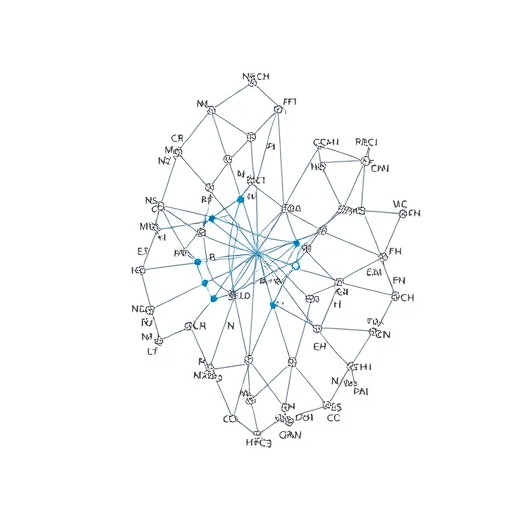
GTT-EC, developed by Zihan Luo and Yuhang Liu—co-first authors from Xiamen University and Macao Polytechnic University—along with Xiangrong Liu and corresponding author Leyi Wei, takes a fundamentally different route. Instead of demanding that users feed in a list of known functional residues, the model learns to find them on its own. It does so by representing each protein as a graph: residues become nodes, and the edges between them encode both the order of amino acids along the chain and their spatial contacts in the folded three-dimensional structure. This dual encoding is critical. A protein’s function is determined not just by which residues sit next to each other in the linear sequence, but by which residues are brought together in space when the chain folds—sometimes residues separated by hundreds of positions in the sequence end up kissing each other in the catalytic core.
Once the protein is expressed as a graph, GTT-EC deploys what the researchers call a hierarchical graph transformer. Transformers, the architecture behind today’s large language models, owe their power to attention mechanisms: mathematical operations that let a model weigh how much every element in a sequence matters to every other element. Applied to protein graphs, attention allows GTT-EC to capture long-range interactions—correlations between distant parts of the structure that would be invisible to methods that only scan local sequence windows. The hierarchy adds a second layer of sophistication: the model aggregates information at multiple scales, from individual residues up through local neighborhoods to the global architecture of the fold, gradually building a “discriminative representation” of the protein that can be matched against the EC classification scheme.
Perhaps the most striking claim in the study concerns what the attention mechanism actually learns. Rather than spreading its attention uniformly across the protein, the model dynamically concentrates on key functional regions—the catalytic pockets and binding interfaces that ultimately determine what chemistry the enzyme can perform. And it does this without any prior site inputs. In other words, the model appears to have learned, from raw sequence and structure alone, where enzymes do their work. The authors report that GTT-EC “effectively identifies functional regions without prior site inputs,” a capability they say “demonstrat[es] broad potential for downstream applications.” That is a significant claim, because it suggests the trained model could double as an annotation tool in its own right, flagging candidate active sites in proteins that experimentalists have never characterized.
The performance numbers back up the design. In benchmark experiments, GTT-EC outperformed state-of-the-art EC prediction methods in both accuracy and robustness, with the advantage becoming most pronounced as sequence similarity between test proteins and training data declined. This robustness across varying sequence similarities matters enormously in practice. The protein universe is vast, and a large fraction of newly sequenced proteins are what computational biologists call “dark matter”—distantly related to anything previously studied. Tools that only work well when the answer is essentially already in the database offer limited value for frontier biology. A model whose predictions hold up for remote homologs and novel folds is far more useful for annotating metagenomes and newly sequenced genomes.
The technical achievement rests on a subtle balancing act. Sequence alone often suffices when a close homolog with a known function exists; structure becomes essential when sequence similarity fades. By fusing both signals into a single graph representation and letting the transformer learn which to trust, GTT-EC avoids the classic failure mode of structure-blind sequence models while also sidestepping the computational burden and noise of purely structure-based approaches. The hierarchical design mirrors the hierarchical nature of the EC system itself, which moves from broad reaction classes down to fine-grained specificities, allowing the model to organize its learned features at corresponding levels of abstraction.
The implications ripple outward across biotechnology and medicine. Rapid, annotation-free EC prediction could streamline the annotation of the enormous protein catalogs now pouring out of environmental sequencing projects, many of which harbor enzymes with potential industrial applications—heat-stable polymerases, plastic-degrading hydrolases, novel antibiotic-inactivating catalysts. In drug discovery, accurate functional assignment of human and pathogen enzymes underpins target selection and off-target safety assessment. And because GTT-EC highlights the residues it deems functionally important, it could guide enzyme engineering campaigns, where researchers routinely mutate active-site residues to tune substrate specificity or catalytic rate.
The work also fits into a broader trend: the migration of transformer architectures, proven in language and vision, into structural biology. With AlphaFold-style structure prediction now routinely available, the raw material for structure-aware function prediction exists at scale. What has been lacking are frameworks that use that material intelligently without demanding expensive experimental annotations. GTT-EC’s demonstration that attention mechanisms can self-organize around functional regions—effectively rediscovering enzymology from first principles of geometry and chemistry encoded in the data—will likely inspire a wave of similar approaches for related tasks, from ligand-binding prediction to reaction pathway reconstruction.
The study, supported by the National Natural Science Foundation of China and the Macao Science and Technology Development Fund, is published open access, meaning researchers worldwide can immediately adopt and build upon the framework. The authors, whose teams span Xiamen University’s School of Informatics and Macao Polytechnic University’s Engineering Research Centre of Applied Technology on Machine Translation and Artificial Intelligence, acknowledge the members of the Wei Lab for discussions that shaped the work. Peer review was managed by Genome Biology editors Andrew Cosgrove and Wenjing She, with the full review history available online—a transparency measure increasingly valued in the machine-learning-for-biology community.
For a field that has long treated functional residue annotations as a prerequisite for understanding enzyme function, the message of this study is quietly subversive: given enough sequence and structural data, and the right architecture, a neural network can work out where the chemistry happens all by itself. If the robustness claims hold up as the model faces the full diversity of the protein universe, tools like GTT-EC could become standard equipment in the computational biologist’s toolkit—and the unknown-function column in protein databases may finally begin to shrink.
Cite Scienmag News
Blake Davidson. (September 8, 2026). Hierarchical graph transformer predicts enzyme function using functional residues. Scienmag. https://scienmag.com/hierarchical-graph-transformer-predicts-enzyme-function-using-functional-residues/
Blake Davidson. "Hierarchical graph transformer predicts enzyme function using functional residues." Scienmag, 8 September 2026, https://scienmag.com/hierarchical-graph-transformer-predicts-enzyme-function-using-functional-residues/. Accessed 8 September 2026.
Blake Davidson. "Hierarchical graph transformer predicts enzyme function using functional residues." Scienmag. September 8, 2026. https://scienmag.com/hierarchical-graph-transformer-predicts-enzyme-function-using-functional-residues/


