


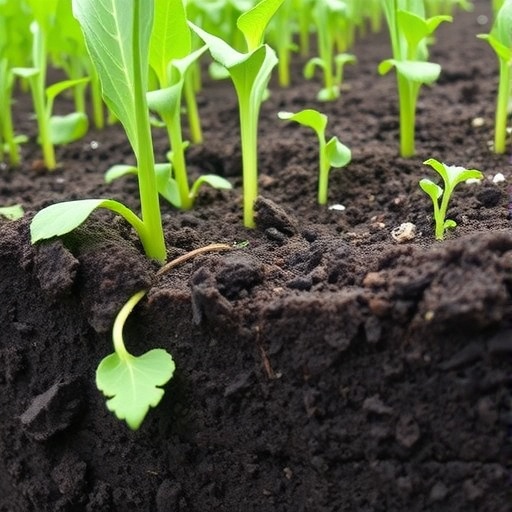
Soil degradation and pollution have emerged as critical challenges to global food security and agricultural sustainability. A groundbreaking review published in the journal Biochar highlights an innovative approach that marries two potent natural solutions: biochar and beneficial microbes. By immobilizing microbes within biochar, this method promises to remediate contaminated soils, enhance soil fertility, and boost crop productivity in a manner scalable from controlled laboratory settings to open farmland.
Biochar is created through pyrolysis, a process that thermochemically converts organic biomass under oxygen-limited conditions into a stable, carbon-rich material. Its intrinsic properties—high porosity, large surface area, and abundant chemical functional groups—enable biochar to act as a sponge for water and nutrients while simultaneously adsorbing toxic contaminants from soil. However, biochar alone lacks biological activity necessary for dynamic soil processes.
This is where beneficial microbes come into play. Microorganisms such as bacteria and fungi facilitate critical nutrient cycling, degrade harmful substances, and produce plant growth-promoting compounds. When these microbes are immobilized on biochar surfaces, the porous matrix provides a hospitable microenvironment that protects them from environmental stresses, improves their survival, and enhances their functional longevity in soil ecosystems.
The review surveys 92 studies, encompassing 85 pot experiments and 11 field trials, which systematically examine the synthesis, characterization, and application of biochar-immobilized microbes (BIMs). Various techniques exist for microbial immobilization including physical adsorption, entrapment within biochar pores, covalent bonding, and crosslinking. Each method presents trade-offs regarding microbial viability, attachment stability, cost-effectiveness, and scalability.
Physical adsorption remains the most straightforward and economical, relying on electrostatic and hydrophobic interactions between biochar surfaces and microbial cells. In contrast, chemical conjugation techniques provide stronger, more durable attachment but often involve reagents or conditions that could reduce microbial viability or increase production costs. Consequently, the choice of immobilization strategy must be tailored to specific remediation goals, environmental conditions, and agricultural practices.
Across numerous experimental contexts, BIMs demonstrated a remarkable capacity to ameliorate adverse soil chemical properties. For example, they effectively raised soil pH in acidic soils while enhancing cation exchange capacity. Such improvements directly translate into better nutrient retention and availability. Furthermore, enzymatic activities crucial for nitrogen cycling, including urease and dehydrogenase, were significantly elevated, indicating a biologically active and resilient soil microbiome.
BIMs also excel in bioremediation applications by simultaneously adsorbing pollutants and biologically transforming them into less toxic or inert forms. This synergistic interplay achieves remediation efficiencies reaching approximately 95% for heavy metals like cadmium and lead, and over 90% for organic contaminants such as pesticides and polycyclic aromatic hydrocarbons. Biochar’s adsorption concentrates pollutants near microbes, which catabolize these substances, facilitating cyclical regeneration of microbially active sites.
In terms of practical agricultural benefits, field experiments reveal compelling evidence for BIMs’ ability to augment crop yields—sometimes by nearly half—compared to control treatments using biochar or microbial inoculants alone. This yield enhancement is attributed to improved nutrient cycling, enhanced root architecture, elevated stress tolerance against drought or pathogens, and suppression of harmful microbes, collectively fostering a conducive rhizosphere environment.
Despite these promising outcomes, the review authors caution that the majority of research remains confined to pot experiments under controlled conditions, leaving critical knowledge gaps about BIM efficacy in complex, variable farmland ecosystems. Field deployment faces challenges such as microbial competition with native soil biota, fluctuations in moisture and temperature, and physical disturbances from tillage and machinery. Standardized protocols for application rates, timing, and integration with conventional farming systems are urgently needed to translate lab-scale results to the field.
Emphasizing this gap, the authors advocate for comprehensive long-term field trials that assess BIM stability, environmental safety, and economic viability. Advances in life cycle assessment and dose-response modeling will be essential to optimize application strategies that maximize benefits while minimizing costs and environmental risks. Engaging farmers in co-developing user-friendly BIM formulations is also crucial for widespread adoption.
This emerging synergy between biochar and microbial technology embodies a promising frontier for reconstructing degraded soils and fostering sustainable agriculture. By leveraging biochar’s physical-chemical properties alongside microbial metabolic versatility, BIMs can provide multifunctional soil remediation and fertility restoration strategies that address pressing global challenges in food security, soil health, and environmental protection.
If successfully transitioned from concept to practice, biochar-immobilized microbes could revolutionize land management paradigms. Their integration into regenerative agriculture systems offers a practical pathway not only to detoxify polluted lands but also to enhance soil resilience, increase crop productivity, and reduce reliance on synthetic agrochemicals. This interdisciplinary approach exemplifies how bioengineering and ecological principles can converge to support planetary health and sustainable food production into the future.
Cite Scienmag News
Alan Morgan. (June 9, 2026). Biochar and Beneficial Microbes Collaborate to Rehabilitate Polluted Soils and Enhance Crop Growth. Scienmag. https://scienmag.com/biochar-and-beneficial-microbes-collaborate-to-rehabilitate-polluted-soils-and-enhance-crop-growth/
Alan Morgan. "Biochar and Beneficial Microbes Collaborate to Rehabilitate Polluted Soils and Enhance Crop Growth." Scienmag, 9 June 2026, https://scienmag.com/biochar-and-beneficial-microbes-collaborate-to-rehabilitate-polluted-soils-and-enhance-crop-growth/. Accessed 3 September 2026.
Alan Morgan. "Biochar and Beneficial Microbes Collaborate to Rehabilitate Polluted Soils and Enhance Crop Growth." Scienmag. June 9, 2026. https://scienmag.com/biochar-and-beneficial-microbes-collaborate-to-rehabilitate-polluted-soils-and-enhance-crop-growth/


