

Saturday, October 24, 2026
Science
No Result
View All Result
  • Login
  • HOME
  • SCIENCE NEWS
  • CONTACT US
  • HOME
  • SCIENCE NEWS
  • CONTACT US
No Result
View All Result
Scienmag
No Result
View All Result
Home Science News Biology

Bacterial Effector Kinase Drives Heat Shock Response in Legionella-Infected Macrophages

October 24, 2026
in Biology, Medicine
Kristina Jarvis
By Kristina Jarvis Scienmag Editorial Profile - Infectious Disease Medicine
Reading Time: 2 mins read
0
Bacterial Effector Kinase Drives Heat Shock Response in Legionella-Infected Macrophages

Bacterial Effector Kinase Drives Heat Shock Response in Legionella-Infected Macrophages

65
SHARES
587
VIEWS
Share on FacebookShare on Twitter
ADVERTISEMENT

Researchers have mapped how large groups of virulence proteins from Legionella pneumophila, the bacterium behind Legionnaires' disease, shape the reaction of immune cells to infection. The team built a library of 14 mutant bacterial strains, each missing a different effector-rich stretch of the genome, deleting 85 effector genes in total. These effectors are delivered into host cells by the Dot/Icm type IV secretion system, and more than 330 of them are translocated during infection.

Many carry eukaryotic-like domains that mimic host proteins, but only a minority have been characterized, partly because effectors often perform overlapping functions that complicate the study of single genes. The multi-deletion approach allowed the researchers to test the collective impact of effector groups rather than individual proteins. None of the 14 mutants showed a defect in intracellular replication in THP-1 human macrophage-like cells, yet several were attenuated in amoebae.

One of the attenuated mutants lacked a predicted amino acid transporter. Transcriptional profiling of infected THP-1 cells revealed that wild-type L. pneumophila strain 130b triggers a strong inflammatory and cellular stress response in macrophages. Six of the mutants showed reduced interferon signalling, and one mutant stood out for a marked decrease in the global expression of host heat shock response genes, a transcriptional program controlled by the transcription factor heat shock factor 1 (HSF1).

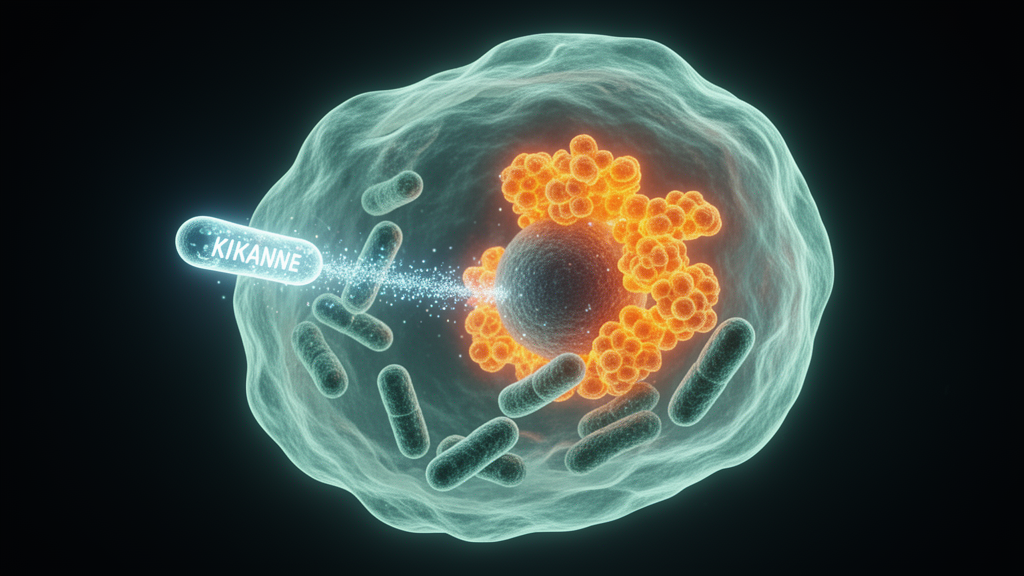
By generating further sub-deletions within that mutant, the team traced the heat shock effect to a single Dot/Icm effector: the bacterial kinase LegK4. LegK4 was responsible for inducing the host heat shock response via HSF1. The study, conducted in cell culture models, reinforces the value of multi-gene deletions for uncovering effector phenotypes that single-gene knockouts can obscure through redundancy.

It also identifies LegK4 as the bacterial trigger of the host heat shock response in Legionella-infected macrophages.

Subject of Research: Dot/Icm effector deletion mutants of Legionella pneumophila and host transcriptional responses in infected macrophages

Article Title: Multi-Dot/Icm effector mutants reveal distinct host responses in Legionella infected macrophages

Article References: Wibawa, R., Li, P., Gearing, L. J., Pidot, S., Faidiuk, Y., Wong, W., Ng, G. Z., McCaffrey, K., Hertzog, P. J., Pasricha, S., & Hartland, E. L. (2026). Multi-Dot/Icm effector mutants reveal distinct host responses in Legionella infected macrophages. PLOS Pathogens, 22(10), e1014083. https://doi.org/10.1371/journal.ppat.1014083

Image Credits: AI Generated

DOI: 10.1371/journal.ppat.1014083

Keywords: Legionella pneumophila, Dot/Icm, effectors, LegK4, HSF1, heat shock response, macrophages, interferon signalling, THP-1, amoebae, multi-gene deletion, host-pathogen interactions

Cite Scienmag News

Kristina Jarvis. (October 24, 2026). Bacterial Effector Kinase Drives Heat Shock Response in Legionella-Infected Macrophages. Scienmag. https://scienmag.com/bacterial-effector-kinase-drives-heat-shock-response-in-legionella-infected-macrophages/


Kristina Jarvis. "Bacterial Effector Kinase Drives Heat Shock Response in Legionella-Infected Macrophages." Scienmag, 24 October 2026, https://scienmag.com/bacterial-effector-kinase-drives-heat-shock-response-in-legionella-infected-macrophages/. Accessed 24 October 2026.

Kristina Jarvis. "Bacterial Effector Kinase Drives Heat Shock Response in Legionella-Infected Macrophages." Scienmag. October 24, 2026. https://scienmag.com/bacterial-effector-kinase-drives-heat-shock-response-in-legionella-infected-macrophages/

Tags: amoebaebacterial modulation of host inflammatory pathwaysbacterial strategies for intracellular survivalbacterial virulence mechanismsDot/IcmDot/Icm type IV secretion systemeffectorseffectors influencing interferon signalingeukaryotic-like domains in bacterial effectorsheat shock responseheat shock response in infected host cellshost immune response to Legionella infectionhost-pathogen interactionsHSF1interferon signallingLegionella pneumophilaLegionella pneumophila effector proteinsLegK4macrophage response to Legionellamacrophagesmulti-gene deletionmulti-gene deletion approach in bacterial pathogenesisTHP-1transcriptional profiling of infected macrophages
Share26Tweet16
Previous Post

Research report: The evolutionary accessibility of cultural fitness landscapes

Next Post

Supercurrent readout could spare quantum bits from measurement collapse

Related Posts

Research report: The evolutionary accessibility of cultural fitness landscapes
Biology

Research report: The evolutionary accessibility of cultural fitness landscapes

October 24, 2026
Dual-colour glow turns autoluminescent plants into quantitative gene reporters
Biology

Dual-colour glow turns autoluminescent plants into quantitative gene reporters

October 24, 2026
Mixed Tracer PET Scans and Biopsy Reveal Pitfalls in Monitoring Rare Aggressive Prostate Cancer
Medicine

Mixed Tracer PET Scans and Biopsy Reveal Pitfalls in Monitoring Rare Aggressive Prostate Cancer

October 24, 2026
Reported Echinococcosis in Xinjiang Peaked in 2017 and Fell to a 2022 Low, but the Best Forecast Model Depends on the Test
Medicine

Reported Echinococcosis in Xinjiang Peaked in 2017 and Fell to a 2022 Low, but the Best Forecast Model Depends on the Test

October 24, 2026
Rare but Treatable: Study Maps Serious Heart Rhythm Disorders in Newborns’ First Week
Medicine

Rare but Treatable: Study Maps Serious Heart Rhythm Disorders in Newborns’ First Week

October 24, 2026
Heart Model Shows Mitral Repair Trade-offs
Medicine

Heart Model Shows Mitral Repair Trade-offs

October 24, 2026
Next Post
Supercurrent readout could spare quantum bits from measurement collapse

Supercurrent readout could spare quantum bits from measurement collapse

  • Mothers who receive childcare support from maternal grandparents show more optimized

    Mothers who receive childcare support from maternal grandparents show more parental warmth, finds NTU Singapore study

    27656 shares
    Share 11059 Tweet 6912
  • University of Seville Breaks 120-Year-Old Mystery, Revises a Key Einstein Concept

    1061 shares
    Share 424 Tweet 265
  • Bee body mass, pathogens and local climate influence heat tolerance

    682 shares
    Share 273 Tweet 171
  • Researchers record first-ever images and data of a shark experiencing a boat strike

    546 shares
    Share 218 Tweet 137
  • Groundbreaking Clinical Trial Reveals Lubiprostone Enhances Kidney Function

    531 shares
    Share 212 Tweet 133
Science

Embark on a thrilling journey of discovery with Scienmag.com—your ultimate source for cutting-edge breakthroughs. Immerse yourself in a world where curiosity knows no limits and tomorrow’s possibilities become today’s reality!

RECENT NEWS

  • Supercurrent readout could spare quantum bits from measurement collapse
  • Bacterial Effector Kinase Drives Heat Shock Response in Legionella-Infected Macrophages
  • Research report: The evolutionary accessibility of cultural fitness landscapes
  • Residual-state accounting targets leftover inspection opportunity in UAV route planning

Categories

  • Agriculture
  • Anthropology
  • Archaeology
  • Athmospheric
  • Biology
  • Biotechnology
  • Blog
  • Bussines
  • Cancer
  • Chemistry
  • Climate
  • Earth Science
  • Editorial Policy
  • Marine
  • Mathematics
  • Medicine
  • Pediatry
  • Policy
  • Psychology & Psychiatry
  • Science Education
  • Science News
  • Social Science
  • Space
  • Technology and Engineering

Subscribe to Blog via Email

Enter your email address to subscribe to this blog and receive notifications of new posts by email.

Join 5,152 other subscribers

© 2025 Scienmag - Science Magazine

Welcome Back!

Login to your account below

Forgotten Password?

Retrieve your password

Please enter your username or email address to reset your password.

Log In
No Result
View All Result
  • HOME
  • SCIENCE NEWS
  • CONTACT US

© 2025 Scienmag - Science Magazine

Discover more from Science

Subscribe now to keep reading and get access to the full archive.

Continue reading