

Saturday, October 24, 2026
Science
No Result
View All Result
  • Login
  • HOME
  • SCIENCE NEWS
  • CONTACT US
  • HOME
  • SCIENCE NEWS
  • CONTACT US
No Result
View All Result
Scienmag
No Result
View All Result
Home Science News Medicine

Heart Model Shows Mitral Repair Trade-offs

October 24, 2026
in Medicine
Ophelia Keating
By Ophelia Keating Scienmag Editorial Profile - Health Services Research
Reading Time: 2 mins read
0
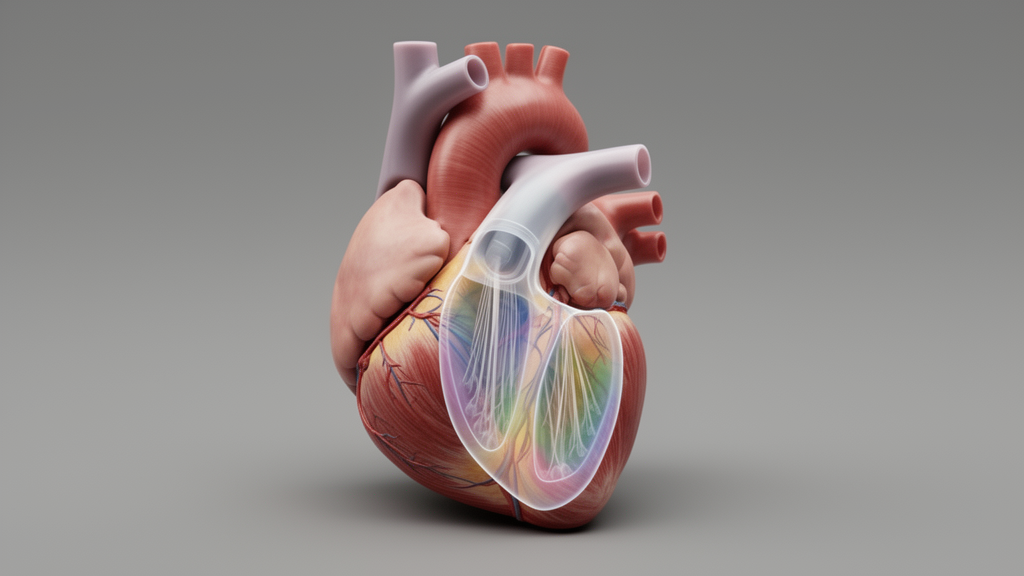
Heart Model Shows Mitral Repair Trade-offs

Heart Model Shows Mitral Repair Trade-offs

65
SHARES
587
VIEWS
Share on FacebookShare on Twitter
ADVERTISEMENT

A new computational study published in the Annals of Biomedical Engineering presents a whole-heart fluid-structure interaction model designed to simulate the mechanical and hemodynamic effects of transcatheter mitral valve repair. The research, led by a team including Boyce E. Griffith and Masod Sadipour, focuses on primary mitral regurgitation caused by chordal rupture. By extending a previously developed whole-heart model, the authors aim to quantify the structural and hemodynamic consequences of both the pathology and the subsequent edge-to-edge repair.

This approach allows for a detailed examination of how these specific cardiac conditions impact global cardiac mechanics, an area that remains difficult to predict using traditional clinical metrics alone. The study addresses a specific clinical scenario where chordal rupture leads to acute volume overload and elevated left atrial pressure. While transcatheter edge-to-edge repair devices are known to reduce regurgitation, their broader impact on diastolic filling and ventricular output has not been fully characterized.

The researchers utilized a three-dimensional fluid-structure interaction model derived from cardiac CT imaging to simulate three distinct conditions: a healthy baseline, the state of chordal rupture-induced regurgitation, and the post-repair state. This methodology enables a direct comparison of physiological parameters across these stages, bridging the gap between isolated valve mechanics and whole-organ function. The simulation employed the immersed finite element-difference method, which facilitates a fully coupled simulation of blood flow, valve dynamics, and myocardial contraction.

Key hemodynamic metrics, including regurgitant fraction, left atrial pressure, stroke volume, and stroke work, were calculated for each condition. These values were compared with clinical reference data to ensure the model accurately represented the physiological responses associated with the specific pathology. The results indicated that the simulated chordal rupture produced moderate-to-severe mitral regurgitation, with a regurgitant fraction of 38 percent.

This condition also caused the left atrial V-wave amplitude to double, a finding that is consistent with clinical observations of patients suffering from acute regurgitation. Following the simulated transcatheter mitral valve repair, the central regurgitant jet caused by the chordal rupture was eliminated. The regurgitant fraction decreased to 21 percent, and left atrial pressure returned to near-baseline levels.

However, the model also revealed a distinct side effect of the repair procedure. The double-orifice valve configuration created by the edge-to-edge repair generated dual high-velocity inflow jets during diastole. The study concludes that the repair effectively reduces regurgitation and atrial pressure while simultaneously influencing diastolic filling and ventricular output.

These findings underscore the importance of evaluating both regurgitation reduction and inflow characteristics when assessing the outcomes of transcatheter mitral valve repair. The potential of patient-specific computational modeling for procedural planning and optimization is highlighted by these results.

Subject of Research: Whole-heart fluid-structure interaction modeling of transcatheter mitral valve repair in primary mitral regurgitation

Article Title: A Whole-Heart Fluid–Structure Interaction Model for Transcatheter Mitral Valve Repair in Primary Mitral Regurgitation

Article References: Sadipour, M., Davey, M., Wells, D. R., Kheradvar, A., Vavalle, J. P., & Griffith, B. E. (2026). A Whole-Heart Fluid–Structure Interaction Model for Transcatheter Mitral Valve Repair in Primary Mitral Regurgitation. Annals of Biomedical Engineering. https://doi.org/10.1007/s10439-026-04368-3

Image Credits: AI Generated

DOI: 10.1007/s10439-026-04368-3

Keywords: mitral regurgitation, transcatheter repair, fluid-structure interaction, cardiac modeling, hemodynamics, diastolic filling, biomedical engineering, computational simulation, Whole-Heart, Fluid, Structure, Interaction

Cite Scienmag News

Ophelia Keating. (October 24, 2026). Heart Model Shows Mitral Repair Trade-offs. Scienmag. https://scienmag.com/heart-model-shows-mitral-repair-trade-offs/

Ophelia Keating. "Heart Model Shows Mitral Repair Trade-offs." Scienmag, 24 October 2026, https://scienmag.com/heart-model-shows-mitral-repair-trade-offs/. Accessed 24 October 2026.

Ophelia Keating. "Heart Model Shows Mitral Repair Trade-offs." Scienmag. October 24, 2026. https://scienmag.com/heart-model-shows-mitral-repair-trade-offs/


Tags: 3D cardiac CT imaging for valve modelingbiomechanicalbiomedical engineeringcardiac modelingcomputational modeling of mitral valve repaircomputational simulationdiastolic fillingeffects of chordal rupture on cardiac mechanicsfluidfluid-structure interactionfluid-structure interaction in cardiac simulationsglobal cardiac mechanics in heart diseaseheart hemodynamicshemodynamic impact of mitral regurgitationhemodynamicsinteractionmitral regurgitationpredictive modeling of mitral valve interventionsstructural and functional analysis of mitral valve repairstructuretranscatheter mitral valve repair outcomestranscatheter repairvolume overload and atrial pressure in mitral regurgitationWhole-Heart
Share26Tweet16
Previous Post

Entrepreneurs Show Roughly 10 Percent Lower Risk of Death in Two-Decade US Study

Next Post

Survey maps the challenge of verifying robustness in binary neural networks

Related Posts

Breath Signal at m/z 41.04 Rises During Ovulation in Small Pilot Study
Medicine

Breath Signal at m/z 41.04 Rises During Ovulation in Small Pilot Study

October 24, 2026
Weight-Loss Drugs and Bone: Review Finds Evidence Too Thin to Judge
Medicine

Weight-Loss Drugs and Bone: Review Finds Evidence Too Thin to Judge

October 24, 2026
Parent Feedback Points Toward Co-Designed Public Autism Mental Health Services
Medicine

Parent Feedback Points Toward Co-Designed Public Autism Mental Health Services

October 24, 2026
Governing Knowledge, Not Gadgets: What Keeps Chinese Maternal Health Physicians Satisfied at Work
Medicine

Governing Knowledge, Not Gadgets: What Keeps Chinese Maternal Health Physicians Satisfied at Work

October 23, 2026
Structured CTG Training Boosts Fetal Monitoring Skills of Nurses and Midwives
Medicine

Structured CTG Training Boosts Fetal Monitoring Skills of Nurses and Midwives

October 23, 2026
Nearly 38% of Danes Live With Chronic Disease Linked to Flawed Tissue Scaffolding
Medicine

Nearly 38% of Danes Live With Chronic Disease Linked to Flawed Tissue Scaffolding

October 23, 2026
Next Post
Survey maps the challenge of verifying robustness in binary neural networks

Survey maps the challenge of verifying robustness in binary neural networks

  • Mothers who receive childcare support from maternal grandparents show more optimized

    Mothers who receive childcare support from maternal grandparents show more parental warmth, finds NTU Singapore study

    27656 shares
    Share 11059 Tweet 6912
  • University of Seville Breaks 120-Year-Old Mystery, Revises a Key Einstein Concept

    1061 shares
    Share 424 Tweet 265
  • Bee body mass, pathogens and local climate influence heat tolerance

    682 shares
    Share 273 Tweet 171
  • Researchers record first-ever images and data of a shark experiencing a boat strike

    546 shares
    Share 218 Tweet 137
  • Groundbreaking Clinical Trial Reveals Lubiprostone Enhances Kidney Function

    531 shares
    Share 212 Tweet 133
Science

Embark on a thrilling journey of discovery with Scienmag.com—your ultimate source for cutting-edge breakthroughs. Immerse yourself in a world where curiosity knows no limits and tomorrow’s possibilities become today’s reality!

RECENT NEWS

  • Annenberg Survey: MAHA Support at 26%, Food Concerns Widespread
  • Survey maps the challenge of verifying robustness in binary neural networks
  • Heart Model Shows Mitral Repair Trade-offs
  • Entrepreneurs Show Roughly 10 Percent Lower Risk of Death in Two-Decade US Study

Categories

  • Agriculture
  • Anthropology
  • Archaeology
  • Athmospheric
  • Biology
  • Biotechnology
  • Blog
  • Bussines
  • Cancer
  • Chemistry
  • Climate
  • Earth Science
  • Editorial Policy
  • Marine
  • Mathematics
  • Medicine
  • Pediatry
  • Policy
  • Psychology & Psychiatry
  • Science Education
  • Science News
  • Social Science
  • Space
  • Technology and Engineering

Subscribe to Blog via Email

Enter your email address to subscribe to this blog and receive notifications of new posts by email.

Join 5,152 other subscribers

© 2025 Scienmag - Science Magazine

Welcome Back!

Login to your account below

Forgotten Password?

Retrieve your password

Please enter your username or email address to reset your password.

Log In
No Result
View All Result
  • HOME
  • SCIENCE NEWS
  • CONTACT US

© 2025 Scienmag - Science Magazine

Discover more from Science

Subscribe now to keep reading and get access to the full archive.

Continue reading