


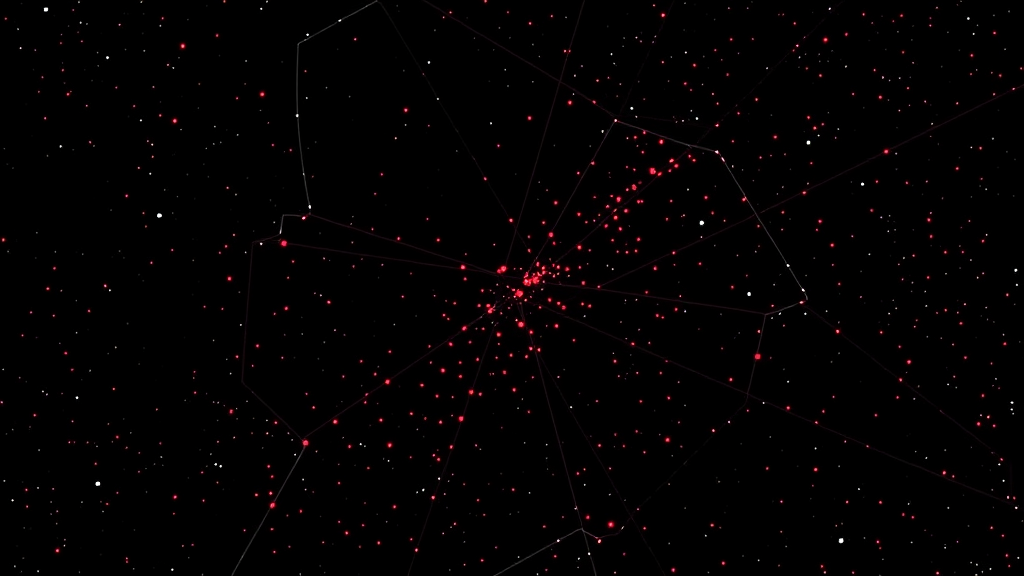
When the James Webb Space Telescope began scanning the distant Universe with unprecedented sensitivity, it did more than confirm long-standing theories about the first galaxies. It revealed a population of objects that nobody had predicted: compact, strikingly red sources that pepper deep infrared images at redshifts corresponding to a cosmic epoch when the Universe was only a fraction of its present age. These objects, quickly nicknamed “little red dots,” have become one of the most intensely debated topics in modern astrophysics. Their very existence challenges assumptions about how the first generations of stars and black holes formed, and a dedicated online meeting held in 2026 has now provided the clearest snapshot yet of where the field stands.
The “Little Red Dots 2026” workshop brought together an extraordinary concentration of expertise. Thirty-three invited speakers presented their latest results, nineteen researchers delivered rapid-fire flash talks, and in total 230 participants from institutions around the world joined the discussion. The event was explicitly dedicated to a single question: what, physically, are these compact red objects in the early Universe? That such a large community would converge on one class of sources reflects how profoundly the little red dots have unsettled the theoretical landscape. The meeting was chaired with the help of Jorryt Matthee and Roberta Tripodi, and the resulting report, published in Nature Astronomy by Dominik R. G. Schleicher of Sapienza Università di Roma, Andrés Escala of Universidad de Chile, Francesco Flammini Dotti of New York University Abu Dhabi, and Muhammad A. Latif of United Arab Emirates University, distills the state of a genuinely contested field.
The first little red dots were identified in early JWST surveys, with key discoveries reported by teams led by Jorryt Matthee and Jennie Greene in 2024 in the Astrophysical Journal. The sources stood out immediately for a combination of properties that seemed mutually incompatible. They are extremely compact, with sizes of only a few tens to a few hundred parsecs, yet they shine with luminosities that rival entire galaxies. Their spectral energy distributions peak in the rest-frame optical and are exceptionally red, a hallmark of either substantial dust attenuation or an intrinsically cool, dense source spectrum. Most strikingly, many of them exhibit broad emission lines, most notably broad H-alpha, a feature classically associated with gas moving at thousands of kilometers per second in the vicinity of an accreting supermassive black hole.
That spectroscopic signature propelled the little red dots to the center of the debate over black hole formation. If the broad lines trace a broad-line region, then each dot hosts an active galactic nucleus, and the inferred black hole masses typically fall between about one million and one hundred million solar masses, already assembled at redshifts of four to nine or beyond. Some of these black holes appear overmassive relative to their host galaxies by the standards of the local Universe, echoing other JWST discoveries of surprisingly massive early black holes. For theorists studying direct-collapse black holes and heavy black hole seeds, the population is a potential treasure trove, and work by researchers such as Muhammad Latif and colleagues has explored how the conditions of the pristine early Universe could plausibly produce such massive seeds.
Yet the active-galactic-nucleus interpretation is not without problems, and the workshop gave ample space to the tensions. Little red dots largely lack the X-ray emission that typically accompanies accretion onto black holes, a puzzle highlighted in studies by Tonima Ananna, Ákos Bogdán and collaborators. Many also lack the variability expected of standard accretion disks and show no strong evidence for the outflows or ionization signatures common in classical quasars. Robert Maiolino and collaborators, and independently Igone Juodžbalis and colleagues in a 2026 Nature paper, have argued for scenarios in which the accretion flow is dense and optically thick, potentially super-Eddington, burying the X-ray emitting inner region from view. Vasily Rusakov and collaborators, also in Nature, presented evidence bearing directly on the central engine question, and the accumulating dataset has forced modelers to consider accretion geometries very different from the thin disks of nearby quasars.
A rival family of models makes the debate even sharper: perhaps the little red dots are not dominated by black holes at all. Several groups have proposed that the compact red light comes from extraordinarily dense and massive stellar systems, sometimes described as nuclear star clusters pushed to physical extremes. Work by Lucio Mayer, Pedro Capelo, Lixin Zwick and Tiziana Di Matteo explored how compact massive structures could form, and Michele Brazzini and colleagues examined whether such stellar populations could reproduce the observed colors. More exotic proposals discussed at the meeting include the so-called supermassive star or “black star” scenarios, in which enormous, nearly monolithic stellar objects embed a central black hole and produce broad, dense-gas spectral features without a conventional quasar disk. The reported lack of variability and the peculiar line shapes have kept these stellar hypotheses alive, because a single compact stellar population could, in principle, mimic some quasar-like signatures while avoiding their drawbacks.
The community is now converging on a diagnostic strategy rather than a single verdict. Variability studies, deep spectroscopy of the broad lines, analysis of the balmer breaks seen in some of the brightest dots, and searches for X-ray and radio counterparts are being deployed to separate accretion-dominated from star-dominated scenarios. Josephine Baggen and colleagues examined the stellar mass and size constraints, finding that some dots imply stellar population properties that push against physical limits, while other analyses, including work by Ruochen Lin and collaborators, focus on the demographics and duty cycles of the population. Fabian Loiacono’s team and Connor Williams’ group have both contributed new observational constraints reported as preprints in 2026, illustrating how quickly the observational foundation is growing. The Emerging Populations initiative associated with the CEERS and related survey programs continues to expand the sample, providing the statistical power needed to test whether the dots form a homogeneous class or several physically distinct populations.
What is increasingly clear is that the answer matters far beyond the classification of a curious class of sources. If the little red dots are accreting supermassive black holes, they constrain the earliest chapters of black hole growth and may point to heavy seeds formed through direct collapse, with implications for the gravitational wave backgrounds targeted by pulsar timing arrays and for the buildup of the black holes later observed by LISA and electromagnetic surveys. If they are dense stellar systems, they probe star formation under conditions of extreme density that the local Universe simply cannot reproduce, testing the physics of star formation at gas surface densities orders of magnitude above those in today’s galaxies. And if the truth is mixed, the little red dots may record a brief transitional phase in which nuclear star clusters and nascent black holes coexist, evolve, and feed one another during the first billion years of cosmic history.
The Little Red Dots 2026 meeting made plain that this field is moving at a pace rarely seen in astronomy, with new JWST programs, deeper spectroscopy and theoretical simulations arriving almost monthly. As the workshop report by Schleicher and colleagues emphasizes, the community’s goal for the coming cycle is to convert a bewildering ensemble of colors, line widths and luminosities into a coherent physical picture of compact red objects in the early Universe. Whether these enigmatic sources turn out to be the cradles of the first supermassive black holes, the most extreme star clusters ever assembled, or something in between, they have already reshaped how astronomers think about the first billion years, and the next round of observations promises to bring one of the most exciting debates in astrophysics closer to resolution.
Subject of Research: The physical nature of little red dots, compact red objects discovered by JWST in the early Universe
Article Title: Little Red Dots 2026
Article References: Schleicher, D. R. G., Escala, A., Flammini Dotti, F., & Latif, M. A. (2026). Little Red Dots 2026. Nature Astronomy. https://doi.org/10.1038/s41550-026-02967-7
Image Credits: AI Generated
DOI: 10.1038/s41550-026-02967-7
Keywords: little red dots, JWST, early Universe, supermassive black holes, active galactic nuclei, high redshift galaxies, broad emission lines, compact sources, super-Eddington accretion, black hole seeds, nuclear star clusters, cosmic dawn
Cite Scienmag News
Grant Pearson. (September 12, 2026). Astronomers Race to Decode JWST’s Mysterious Little Red Dots. Scienmag. https://scienmag.com/astronomers-race-to-decode-jwsts-mysterious-little-red-dots/
Grant Pearson. "Astronomers Race to Decode JWST’s Mysterious Little Red Dots." Scienmag, 12 September 2026, https://scienmag.com/astronomers-race-to-decode-jwsts-mysterious-little-red-dots/. Accessed 4 October 2026.
Grant Pearson. "Astronomers Race to Decode JWST’s Mysterious Little Red Dots." Scienmag. September 12, 2026. https://scienmag.com/astronomers-race-to-decode-jwsts-mysterious-little-red-dots/


